BYD cuts 100,000 jobs despite record sales. The next phase of the global EV race?
The global electric vehicle market is entering a new phase.
For years, the conversation revolved around growth: more factories, more employees, more models and more deliveries. But as the EV sector matures, the focus is shifting toward something different: efficiency, margins and technological advantage.
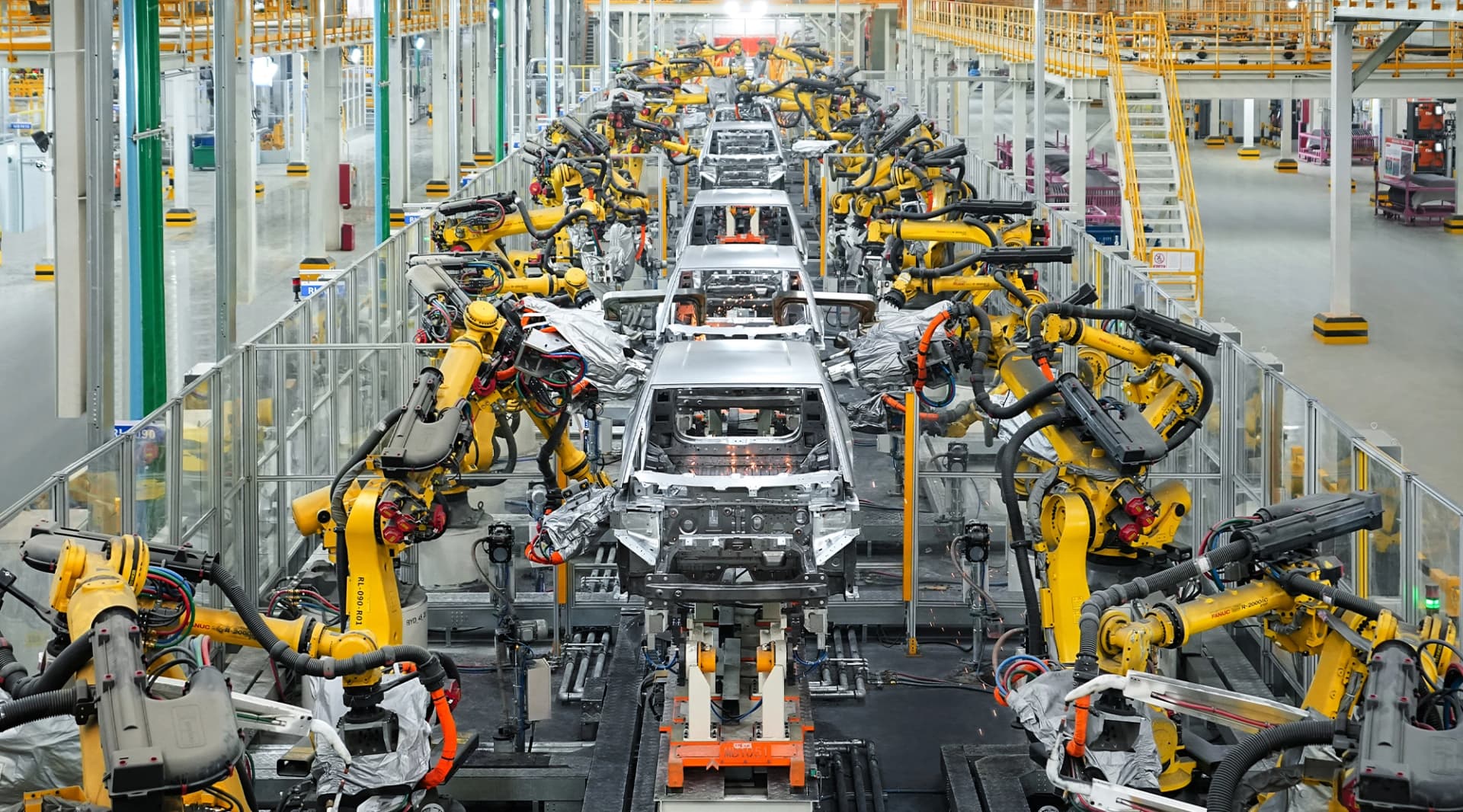
That transition is now visible at one of the world’s largest EV manufacturers. BYD has reduced its workforce by around 100,000 employees in 2025, bringing its total headcount down to roughly 870,000 people, according to Chinese industry sources.
Record revenue and deliveries
Despite the workforce reduction, BYD’s financial performance in 2025 reached new highs. The company reported revenue of 803.96 billion yuan (approximately €101 billion), while vehicle deliveries climbed to 4.6 million units worldwide.
International expansion is becoming an increasingly important part of that growth story. For the first time, overseas deliveries surpassed one million vehicles, reaching around 1.05 million units.
This milestone reflects the rapid expansion of BYD’s presence in global markets, including Europe, Southeast Asia and Latin America. The company is now widely considered one of the few EV manufacturers capable of competing with global giants such as Tesla and traditional groups like Volkswagen Group.
Profit pressure despite strong growth
However, growth does not automatically translate into higher profitability. BYD reported a net profit of 32.62 billion yuan (€4.1 billion) in 2025, representing a decline of around 19 percent compared with the previous year.
The main reason lies in the intense pricing competition currently shaping China’s EV market. Price reductions across the sector (triggered by a combination of government incentives, aggressive competition and rapid capacity expansion) have squeezed margins across the industry.
At the same time, BYD continues to invest heavily in future technologies. In 2025 alone, the company spent 63.4 billion yuan on research and development (€7.9 billion), focusing on next-generation batteries, electrification systems and charging infrastructure.
A global expansion strategy
The company’s international ambitions are equally clear. BYD has increased its 2026 export target to 1.5 million vehicles, a significant rise from earlier projections.
This expansion is partly driven by rising competition in the Chinese domestic market, where EV adoption is already extremely high and price competition is intense. As a result, manufacturers are increasingly looking abroad for the next wave of growth.
Europe in particular has become a key battleground, with Chinese brands launching new models across multiple segments. At the same time, BYD continues to strengthen its charging infrastructure and battery technology, two areas that could provide a long-term competitive advantage.
AutoNext Take
On the surface, cutting 100,000 jobs while posting record revenue may seem contradictory. In reality, it reflects a broader shift in the global automotive industry: the EV race is no longer about scale alone, it is about efficiency, technology and global reach.
The next chapter of electrification will likely be defined by companies capable of combining technological innovation, manufacturing efficiency and aggressive international expansion. And judging by its latest results, BYD intends to remain firmly at the center of that battle.