Did you know this car? The return of the Strosek MEGA 30 Speedster
If you’re deeply into Porsche history, the name Vittorio Strosek probably rings a bell.
In the 1980s and 1990s, his company Strosek Design was one of the most influential Porsche tuners in the world, responsible for some of the most radical and polarizing Porsche reinterpretations ever built.
Then, suddenly, things went quiet. A devastating fire in 2011 destroyed many of the original body molds used for Strosek projects, effectively putting an end to new cars for years. But now, the legendary design house has returned with something very special: the Strosek MEGA 30 Speedster.

A Porsche reinterpretation, not a restoration
At its core, the Strosek MEGA 30 Speedster starts life as a Porsche 964 Carrera 2 Cabriolet. But calling this project a simple restomod would be doing it a disservice. The donor car is completely disassembled and rebuilt from scratch, with new bodywork, modern engineering upgrades, and a design philosophy that stays faithful to Vittorio Strosek’s signature style.
Soft, flowing shapes define the entire car. Unlike modern supercars with aggressive creases and sharp edges, the MEGA 30 Speedster embraces smooth surfaces and organic curves. Strosek himself describes the result as “almost erotic design.”
Design details that make it unmistakably Strosek
Although the MEGA 30 Speedster revisits earlier Strosek ideas, the car is not a simple recreation of an old design. Several elements were carefully redesigned for this new generation:
classic round LED headlights replace the tiny units used on the original MEGA
turn signals derived from the Porsche 991 GT3 RS
new 19-inch five-hole wheels, a design dating back to Strosek’s student thesis from 1970
The proportions are extremely low and wide, giving the car a dramatic presence even when standing still. But the most recognizable element is the ultra-low hardtop with a small vertical rear window, a signature Strosek feature seen on several of the company’s Porsche conversions in the past.

Air-cooled power, naturally
Under the bodywork sits one of the key reasons enthusiasts love this project. Buyers can choose between two versions of the classic air-cooled flat-six:
3.6-liter engine – around 300 hp
3.8-liter RSR-spec engine – around 360 hp
The latter transforms the car into something close to a road-legal race machine. With lightweight internals, revised camshafts and a titanium exhaust, the engine only really wakes up above 4,000 rpm, where it delivers the kind of mechanical soundtrack modern turbocharged cars simply cannot replicate. For many enthusiasts, that raw experience is exactly the point.
Built to drive, not just to display
The chassis has also been carefully upgraded to match the performance. A KW V3 coilover suspension, reinforced chassis components and 964 Turbo brakes give the Speedster sharp and precise handling while still retaining some level of comfort.
Inside, the philosophy remains minimalist and driver-focused:
Recaro Pole Position seats
Momo Prototipo steering wheel
lightweight interior with minimal insulation
In other words: this is not a luxury GT. It’s a raw, mechanical driving experience.
Ultra exclusive
The Strosek MEGA 30 Speedster is also extremely rare.
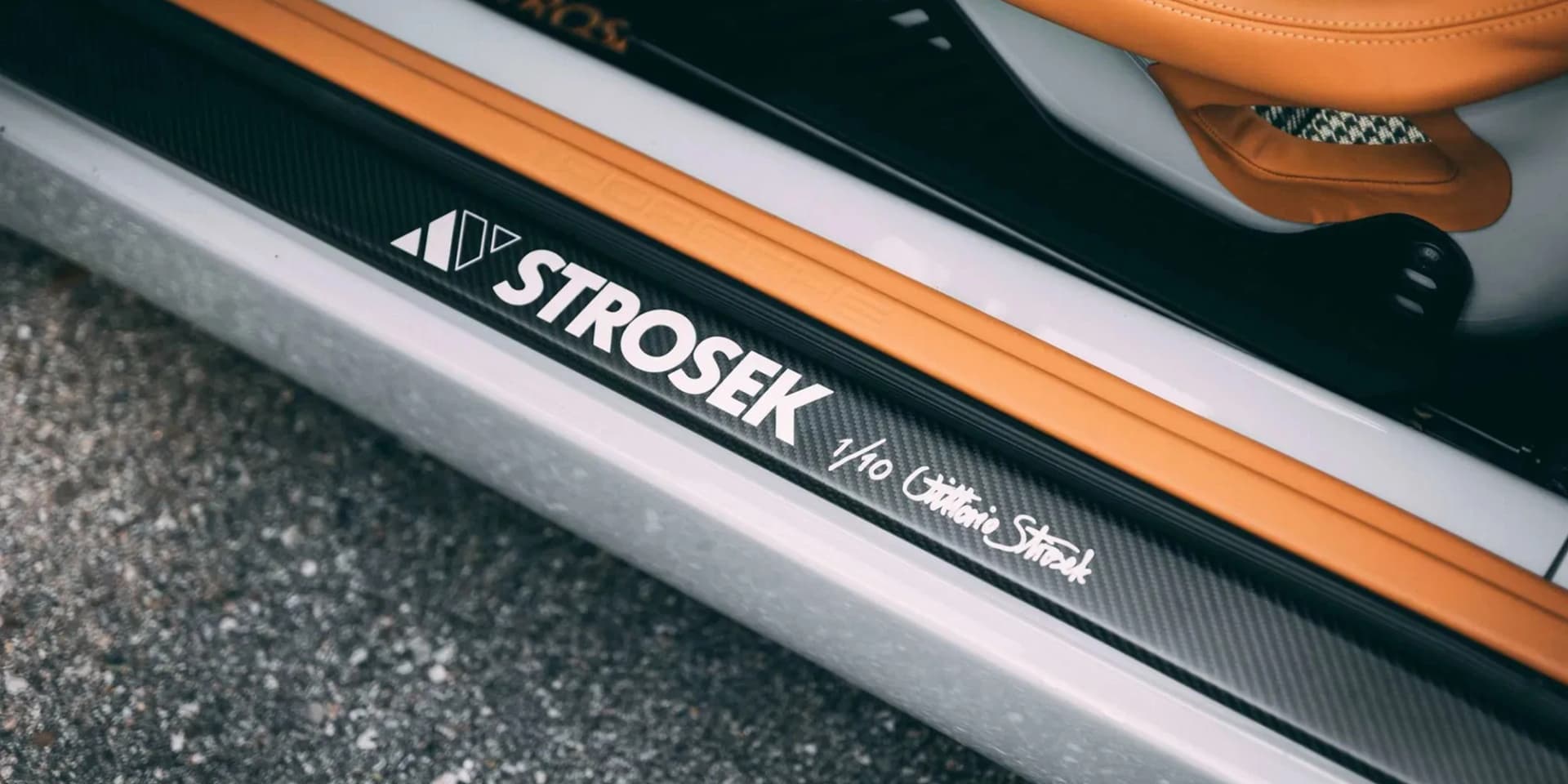
Only 10 Speedsters will be produced, alongside 30 Coupé versions. Prices start at roughly €500,000 before tax, depending on customization and engine specification.
Every car is personally signed by Vittorio Strosek, making each example a collector’s piece.
AutoNext Take
The return of Strosek Design is fascinating because it represents something the modern automotive world is slowly losing: individual design identity.
Cars like the Strosek MEGA 30 Speedster sit somewhere between restomod, coachbuilt special and rolling sculpture. They are unapologetically niche, highly emotional, and designed without the constraints that shape modern mass-produced vehicles.
In a world increasingly dominated by software-defined cars and electrification, creations like this remind us why the analog sports car still has such a powerful appeal. And perhaps more importantly: they prove that the passion behind car design never really disappears.