EU officials complain about EV charging stops. The irony is almost too perfect
The irony is strong. But the smarter take is not that EVs are bad. The smarter take is that Europe still has work to do.
There are few things more politically awkward than being slowed down by your own policy. That is now exactly the situation facing parts of the European Commission. The EU has been pushing hard for faster electrification across Europe, urging citizens, companies and carmakers to move away from combustion as quickly as possible.
At the same time, its own official vehicle fleet is being converted to zero-emission power, with the goal of becoming fully emission-free by 2027. On paper, that sounds perfectly logical. In practice, the official electric fleet reportedly struggles to make the Brussels-Strasbourg run without a charging stop.
Brussels to Strasbourg is not exactly a road trip to nowhere
The distance between Brussels and Strasbourg is roughly 440 kilometres. For many European drivers, that is a familiar kind of journey. Long enough to matter, short enough to feel like it should not be complicated. In a diesel or petrol car, it is a straightforward motorway run. You leave, you drive, you arrive.
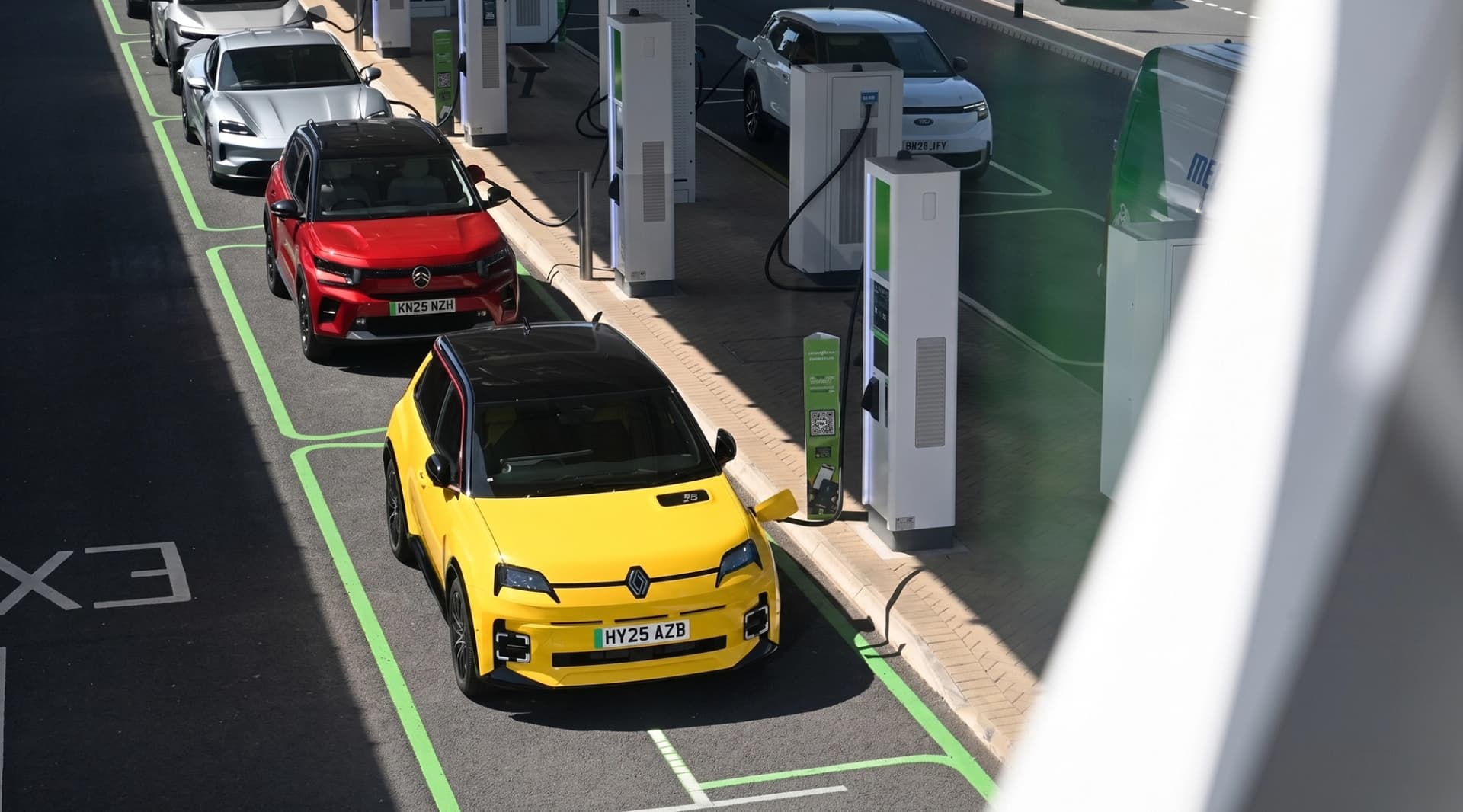
For European officials commuting between the Commission in Brussels and the Parliament in Strasbourg, the journey has reportedly become less seamless than expected. A charging stop in Luxembourg has become part of the routine, often adding around 20 to 30 minutes to the trip.
The fleet is becoming electric, but the use case is difficult
The European Commission’s fleet reportedly includes 128 vehicles, with around 80 percent already electric as part of the move towards a fully zero-emission fleet by 2027.
If policymakers ask citizens and industries to change, they should apply the same direction internally. The Commission using electric vehicles is therefore not the problem. In principle, it is exactly what should happen. The problem is that official fleet use is not always easy EV use.
These cars spend much of their time on high-speed motorway journeys, often with fixed schedules, security considerations and passengers who do not want uncertainty. Motorway driving is one of the least efficient environments for many EVs, especially at higher speeds.
Ursula von der Leyen does not have the same charging problem
The most symbolic part of the story is that European Commission President Ursula von der Leyen reportedly does not face the same EV charging frustration. Her official vehicle is understood to be a heavily armoured combustion car, reportedly in the highest protection class.
That sounds hypocritical at first but armoured vehicles are a very specific problem. Adding heavy protection can mean adding roughly two tonnes of mass, and there are currently very few electric cars capable of combining high-level security protection, long-distance range, charging practicality and official-duty reliability at that level.
The real issue is policy meeting reality
This is not proof that electric cars do not work. They do. For many drivers, in many use cases, EVs are already excellent. Urban driving, commuting, home charging, company cars and predictable daily routes can make enormous sense.
But the Brussels-Strasbourg story highlights something policymakers sometimes underplay. Not every use case electrifies at the same speed. Long motorway journeys are still a challenge for some drivers. Public fast charging is improving, but unevenly. Charging time is no longer the nightmare it once was, but it is still time. And when your schedule is tight, every charging stop becomes part of the experience.
Europe needs fewer slogans and better execution
The European EV transition has often been communicated as a moral and technological inevitability. In the long term, that may be true. But car buyers do not live in long-term policy documents. They live in Monday mornings, holiday traffic, winter range loss, company fleet rules, apartment parking, public charging queues and motorway detours.
That is why infrastructure matters as much as regulation. If Europe wants more people to accept electric mobility, the experience needs to be reliable, fast and boringly easy. Not just in major cities. Not just for early adopters. Not just for people with home charging.
AutoNext Take
The irony is strong. European officials pushing electrification while complaining about charging stops in their own electric fleet is almost too perfect as a headline.
A 440-kilometre motorway journey between two major political cities should not feel like a logistical puzzle in 2026. If the official fleet needs a Luxembourg charging stop, that is not a scandal. It is a signal. A signal that charging infrastructure, real-world range, vehicle choice and political timelines still need to match better.
Article via Gocar.be