Ex-Forza Horizon talent is building the open-world racing game car culture needed
The next big open-world racing game finally has a name. It is called Clutch.
Developed by British studio Maverick Games, the debut project comes with serious expectations. The studio is led by Mike Brown, former creative director of Forza Horizon 5, and the game is aiming for something that sounds very interesting: part professional racing, part underground street culture, part cinematic action sandbox.
A racing game with two worlds
The story follows two siblings with exceptional talent behind the wheel. By day, they compete in R1K, a prestigious racing championship with more than a century of history and a reputation as the ultimate proving ground for elite drivers.
By night, they move through The Midnight Collective, an illegal underground car community built around style, risk and control at the edge of chaos. That dual-world setup is clever.
It gives the game a clean contrast: official circuit racing on one side, street racing and chase-driven action on the other. It also gives Maverick Games more room than a traditional racing title, because the story can shift between polished motorsport, underground tension and cinematic driving spectacle.
Forza Horizon polish meets Need for Speed energy?
The obvious comparison is Forza Horizon. That is inevitable, given the people involved. Maverick Games clearly understands presentation, world-building and accessible performance driving. But Clutch does not look like a simple Horizon clone. It seems to lean harder into narrative, danger and action.
There are hints of Need for Speed, touches of Fast & Furious absurdity and a stronger focus on scripted moments, police-style chases and cinematic set pieces. One revealed example even shows a car using a grappling mechanic to pull itself around a corner at speed.
Customisation goes deeper than body kits
This might be the most interesting part. Clutch will include the expected customisation: seats, steering wheels, exhausts, neon lighting, body parts and visual upgrades. But it goes further.
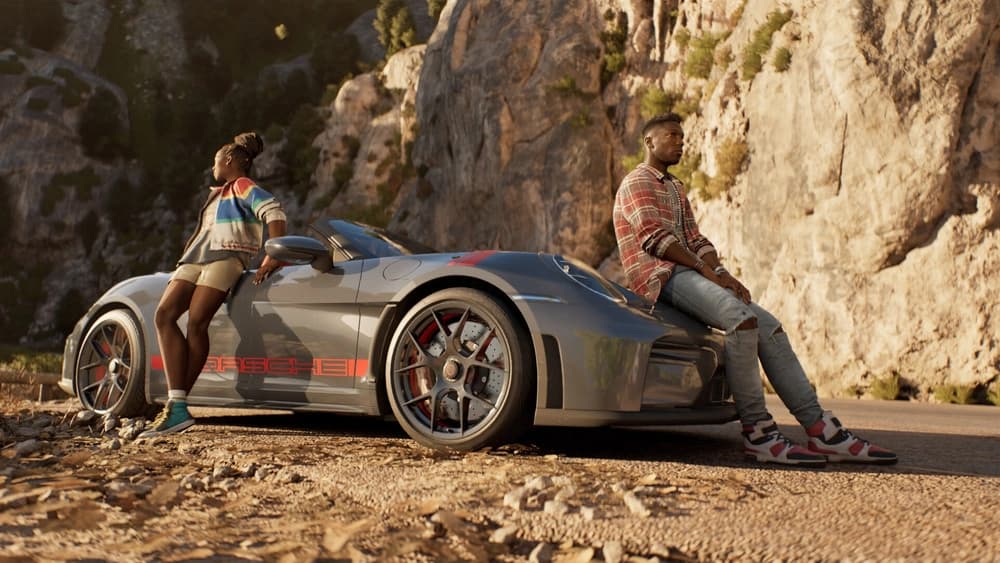
Players can apparently personalise small interior details: a drink in the cupholder, receipts on the dashboard, a hoodie on the passenger seat, a dangling object from the mirror. That sounds almost ridiculous at first. Then you realise it might be brilliant.
Because car culture is not only about the parts you bolt on. It is also about the life inside the car. The mess. The ritual. The small objects. The personal signs that this machine belongs to someone. That is where Clutch could feel different.
AutoNext Take
The ingredients are strong. Ex-Forza Horizon talent. A cinematic open world. Real car culture references. Customisation that goes beyond wings and wheels. And a world that seems to understand that a car is sometimes defined as much by the hoodie on the back seat as by the engine under the bonnet.
We are watching this one closely. Because if Clutch gets the balance right, it could be the racing game car people have been waiting for.