F1's 2030 V8 keeps its turbo because six circuits limit noise
Six city noise limits have just decided the shape of Formula 1's next engine
Formula 1 and its engine manufacturers have settled the main points of the rules that follow the current cycle: a 3.0-litre V8, still turbocharged, with a far smaller hybrid attached to it. Motorsport.com reports that a naturally aspirated version was on the table and lost, because six venues on the calendar run under noise-emission limits and an atmospheric 3.0-litre eight would have sailed straight through them.
The 3.0-litre V8 is F1's largest engine since the V10s ended in 2005
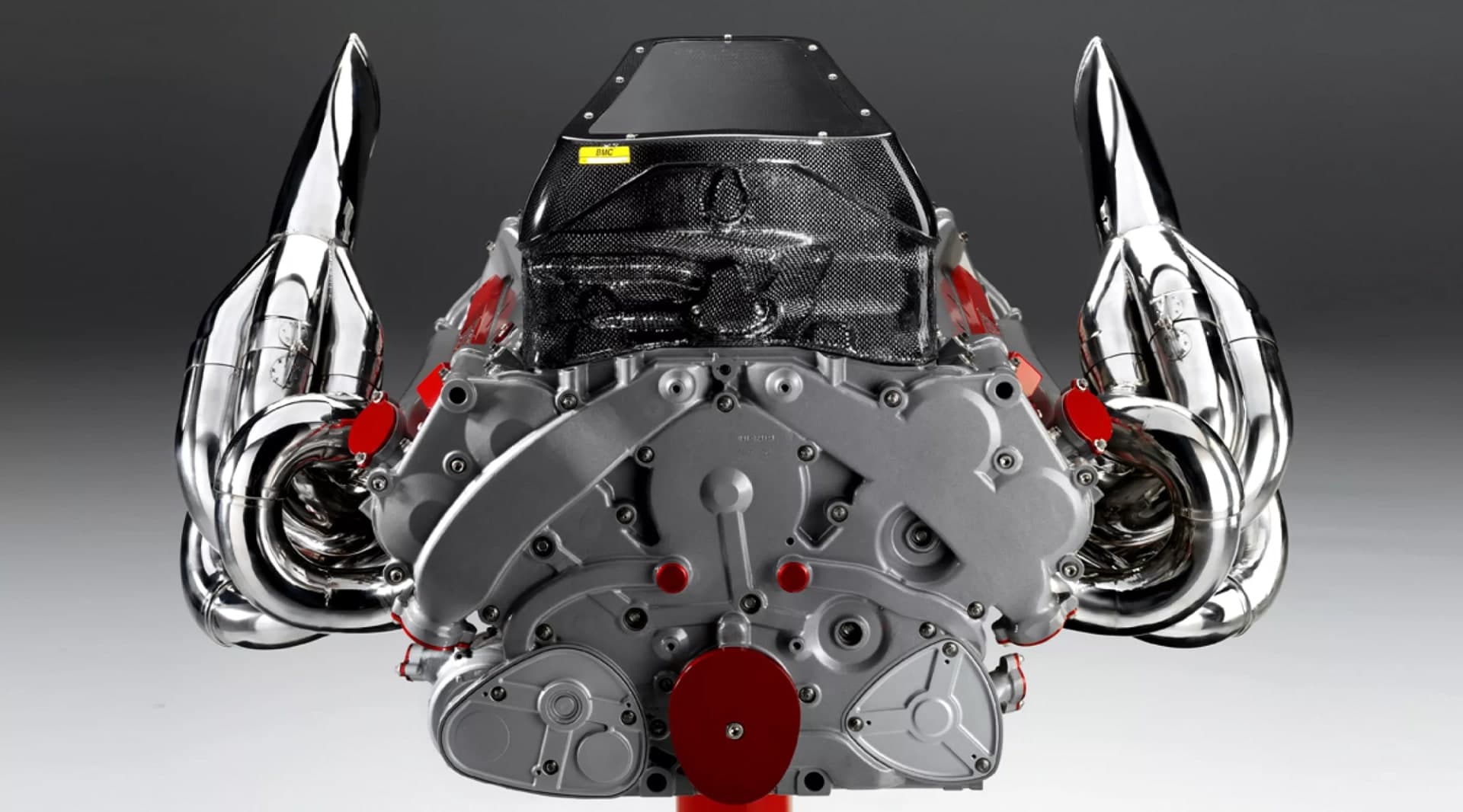
The combustion engine grows from 1.6 litres to 3.0 and from six cylinders to eight, the biggest capacity Formula 1 has allowed since the 3.0-litre V10s were outlawed after 2005. The V8 era that followed, from 2006 to 2013, ran 2.4 litres, so this is not a return to that engine. It is a return to the one before it. The last 3.0-litre V8 to race in Formula 1 was the Cosworth DFV, which won 155 grands prix between Jim Clark's victory at Zandvoort in 1967 and Michele Alboreto's in Detroit in 1983, and remains the most successful engine the sport has had. The 2030 unit keeps a turbocharger the DFV never needed.
Melbourne, Miami, Madrid, Singapore, Baku and Las Vegas set the ceiling
Those six venues enforce noise-emission limits, and all but Melbourne are street or part-street circuits cut through a city. Madrid's Madring runs partly on public roads around the IFEMA exhibition grounds, and Albert Park sits inside a residential suburb. An atmospheric 3.0-litre V8 would have been dramatically louder than the current V6, loud enough that holding some of those races would have become impossible rather than merely awkward. Keeping a small turbocharger buys a sound still described as considerably louder than today's power units while staying inside the permits. The turbo survives, in part, as a silencer.
The electric motor falls from 350 kW to 100 kW
The 2030 package uses a simplified 100 kW electric motor against the 350 kW the current generation deploys, a cut of just over 70 percent, and the stated aim is to keep a link to road-car technology without repeating the complexity of the last decade. The correction is already under way. In 2027 the MGU-K drops to 300 kW outside overtake mode while the combustion engine rises to 420 kW, the same rebalancing that shortened every grand prix to 290 km. In 2028 the engine climbs again to 450 kW for a 60:40 split. Each step walks back from the near-even balance the 2026 rules were built around, and 100 kW closes the argument.
A 135 kg power unit would weigh barely more than today's engine alone
The 2026 regulations set a minimum of 185 kg for a complete power unit and 130 kg for the combustion engine on its own. Taking at least 50 kg out puts the 2030 target near 135 kg, five kilograms above what the current V6 is allowed to weigh before a single electrical component is bolted to it. That is the figure with the clearest consequence. A Formula 1 car weighs 768 kg this season against 642 kg in 2013, the last year of the previous V8s, and every kilogram of that has come out of how the cars change direction. Noise is what fans hear. Weight is what drivers feel.
Push-to-pass would replace DRS, and 2030 arrives a year early
DRS was retired at the end of the 2025 season and there is no intention of bringing it back. The replacement under discussion is closer to IndyCar's push-to-pass: a temporary power boost the driver deploys under set conditions, rather than a wing flap that opens on command. That detail is not settled, and neither is the start date. A 2030 introduction would end the current technical cycle a year ahead of schedule, which is what FIA president Mohammed Ben Sulayem asked for in May. None of it is binding until the World Motor Sport Council signs it off.
AutoNext Take
A noise permit has settled the architecture of Formula 1's next engine, and the sport has made the right call. The naturally aspirated V8 is the one every fan nostalgic for 2005 actually wanted, and it would have left Singapore, Las Vegas and Melbourne unable to hold their races at all. A small turbocharger costs some volume and keeps six weekends on the calendar, which is a trade worth making. What arrives with it is the package Formula 1 has needed for a decade: eight cylinders, roughly 135 kg of power unit and an electric motor too small to decide a grand prix on its own.
The World Motor Sport Council has not seen any of this yet, and 100 kW is where it will be attacked. Audi, Honda and Ford all committed to Formula 1 on a 350 kW hybrid that would now last four seasons, and each has a commercial reason to argue the number back up. If 100 kW survives into the published 2030 regulations, this is the largest step away from complexity Formula 1 has taken since it went hybrid in 2014. If it returns above 150 kW, the manufacturers won the meeting and the V8 is mostly a badge on a familiar car.