Ferrari has two new cars coming, and a biofuel case for keeping the V12 alive
Vigna did not have to bring up biofuels on a call about new models. He did it anyway, right after Ferrari's first EV sold out its entire allocation
Speaking on Ferrari's latest earnings call, CEO Benedetto Vigna confirmed that two more new models will debut before the end of 2026, on top of an order book that is already full through 2027. He also used the same call to make a pointed case for biofuels, a signal that Ferrari has no intention of treating electrification as its only path forward.
The order book number that actually matters
Full allocation through 2027 is not a throwaway line. The 296 Speciale and 12Cilindri families are both completely sold out, including the limited-run 12Cilindri Manuale, all 1,499 units of which are already spoken for. The Ferrari Luce, the brand's first series-production electric model, has sold out its entire 2026 global allocation as well, with Chinese orders alone now pushing into 2027. For a company that spent recent weeks fielding criticism over the Luce, that is a pointed answer.
Ferrari is retiring cars on purpose, not by accident
Shipments of the 296 GTS, Roma Spider, and SF90 XX all declined this past quarter, and Ferrari has confirmed they are entering their final scheduled phase-out. That decline is not a demand problem, it is a deliberate volume cap designed to protect exclusivity, and it is being offset on the other side by ramping deliveries of the Amalfi, 849 Testarossa, and F80 coupe. Ferrari is managing its own scarcity in both directions at once.
What the two new debuts are likely to be
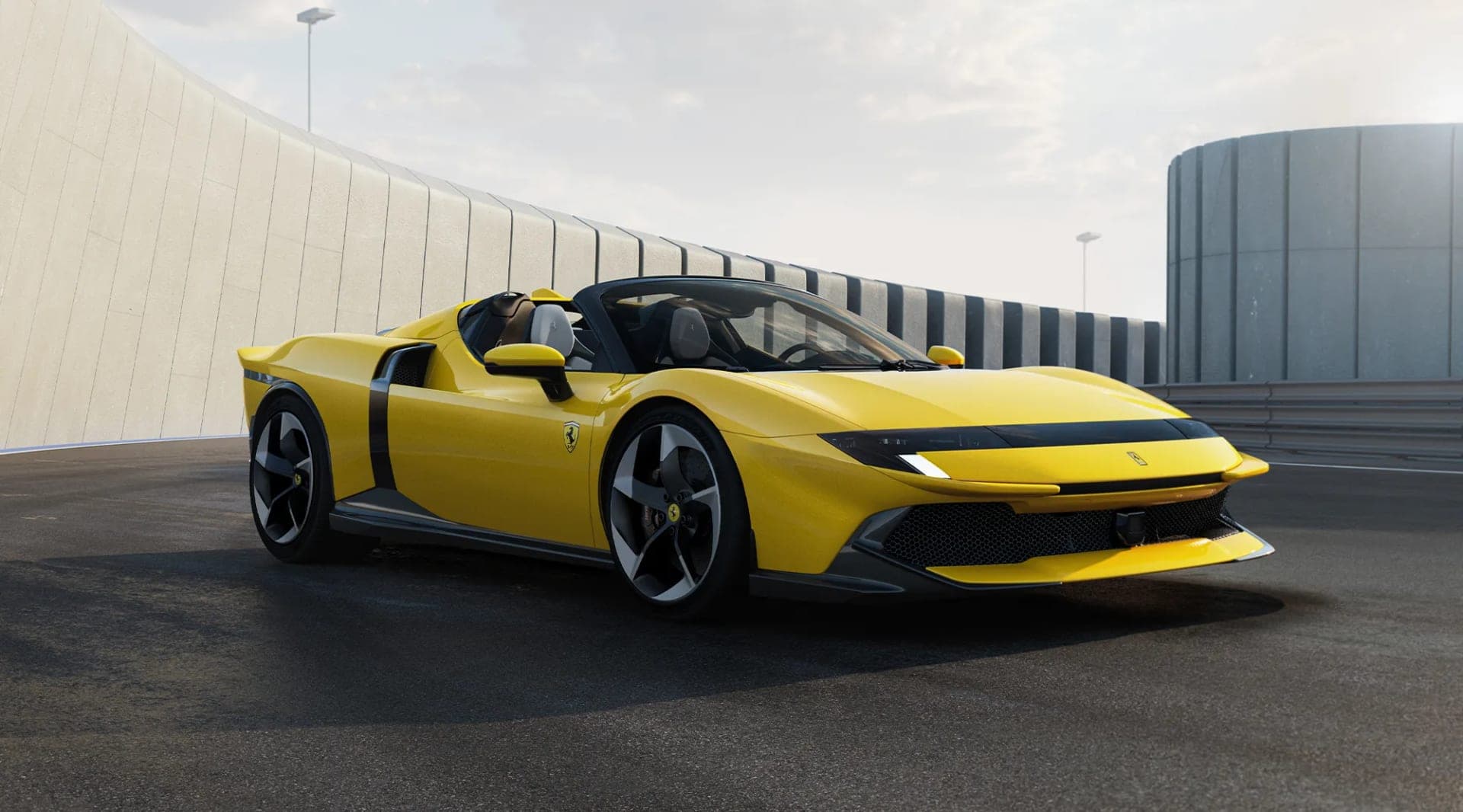
Neither Vigna nor any other executive named the two upcoming models on the call, which is standard practice for a brand that regularly sells out limited editions before announcing them publicly. The leading candidate is an F80 Aperta, an open-top version of the tri-motor hybrid hypercar that keeps the coupe's 1,184 hp powertrain and is rumored to be limited to 399 units against the coupe's 799, timed to open Ferrari's 80th anniversary celebrations. The second is expected to be a more track-focused 12Cilindri variant with front and rear aerodynamic updates, a weight reduction, and more power than the standard car's 830 hp. Its name is not settled: some reports call it the 12Cilindri GTO or 12Cilindri MM, others the Versione Speciale, and until Ferrari confirms one, treat all three as guesses.
Why Ferrari is talking about biofuels now
Vigna used the same call to stake out ground on combustion engines. "We place biofuels in the category of carbon-neutral fuels. For us, they are part of that group, and they work well in our engines. We have already tested different types of carbon-neutral fuels, and the engine performs very well. Nothing changes," he said, without naming which fuels or engines were involved. Coming directly after news of the Luce's sold-out allocation, the timing reads less like a passing comment and more like reassurance aimed squarely at the buyers who have not asked for an electric Ferrari.
AutoNext Take
Selling every car you can build for two straight years is the kind of problem most manufacturers would love to have, and Ferrari using that position to keep launching new limited runs rather than easing off is exactly the scarcity strategy the brand has run for decades. None of this is an accident.
The biofuels line is the part worth reading twice. "Nothing changes" is doing a lot of work in that quote, and Vigna never said which fuels or which engines were actually tested. Ferrari is not choosing between electric and combustion, it is keeping both doors open for as long as regulators and customers let it, and the Luce's sold-out status gives that hedge more credibility than it would have had on its own.