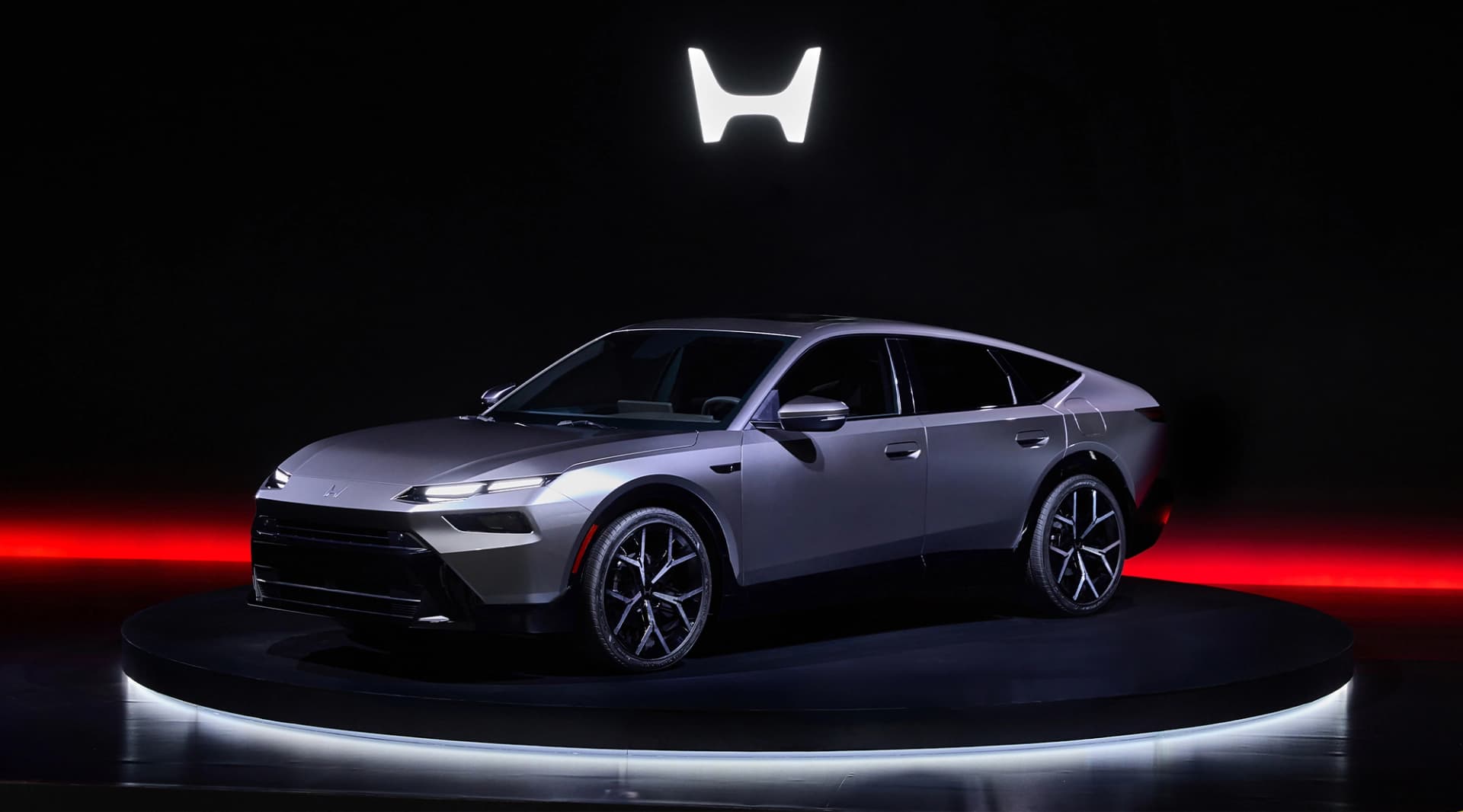
Honda Hybrid Sedan Prototype previews new hybrid push
Honda is making its next move very clear.
During its 2026 global business briefing in Japan, the brand revealed a new Honda Hybrid Sedan Prototype, previewing one of 15 next-generation hybrid models planned globally by the end of the fiscal year ending March 2030, primarily for North America. Honda says these new models will start arriving from 2027, using an all-new hybrid system and next-generation platform.
15 new hybrids by 2030
Honda’s strategy is direct. The brand will reallocate more development and production resources into hybrid models, accelerate market launches and increase the number of products in this space. Global CEO Toshihiro Mibe said Honda believes hybrid models will remain key to addressing environmental challenges.
The next-generation two-motor hybrid system targets more than 10% better fuel economy, while Honda also aims to reduce system costs by more than 30% compared with the hybrid system introduced in 2023. A new electric AWD unit is also being developed for more precise and responsive motor control.
Honda is not abandoning EVs completely, but priorities have changed
Honda says it will continue preparing a competitive EV hardware platform for future demand, while continuing research into all-solid-state batteries. It also mentions expanding EVs in Japan’s kei-car segment, including an electric N-BOX planned for 2028.
Honda is putting today’s money, capacity and urgency into hybrids. It will reallocate excess capacity at its Ohio plants to petrol and hybrid vehicles, make all North American plants capable of building hybrid models, and convert part of its LG Energy Solution joint-venture EV battery production lines to hybrid battery production.
Europe: relevant strategy, uncertain product
The prototype appears primarily tied to Honda’s North American push. But the strategy behind it still matters here. European buyers are also split between full EV adoption, hybrid practicality and increasing cost pressure. We see the same tension everywhere: EVs are improving fast, but not every buyer has charging access, budget certainty or confidence in residual values.
Honda’s challenge in Europe is different from North America, though. The brand’s European footprint is smaller, and its recent EV attempts have not exactly reshaped the market. If Honda wants to stay visible here, it needs more than rational hybrid technology. It needs cars people actually notice.
AutoNext Take
Honda has always been strong when it follows its own engineering logic instead of copying everyone else. A next-generation hybrid push fits the brand perfectly: efficient, technically clever, reliable and sensible. If the new system really improves fuel economy by more than 10% while cutting costs by 30%, Honda could have a very strong bridge product for the next decade.
But the danger is obvious. Honda already feels quieter than it should in Europe, and the EV conversation will not disappear. Brands like Hyundai, Kia, Volkswagen, Stellantis, Renault and Chinese newcomers are moving fast. If Honda leans too hard into “sensible” and forgets desire, it risks becoming invisible.