Opel Astra Sports Tourer Electric proves its real-world efficiency
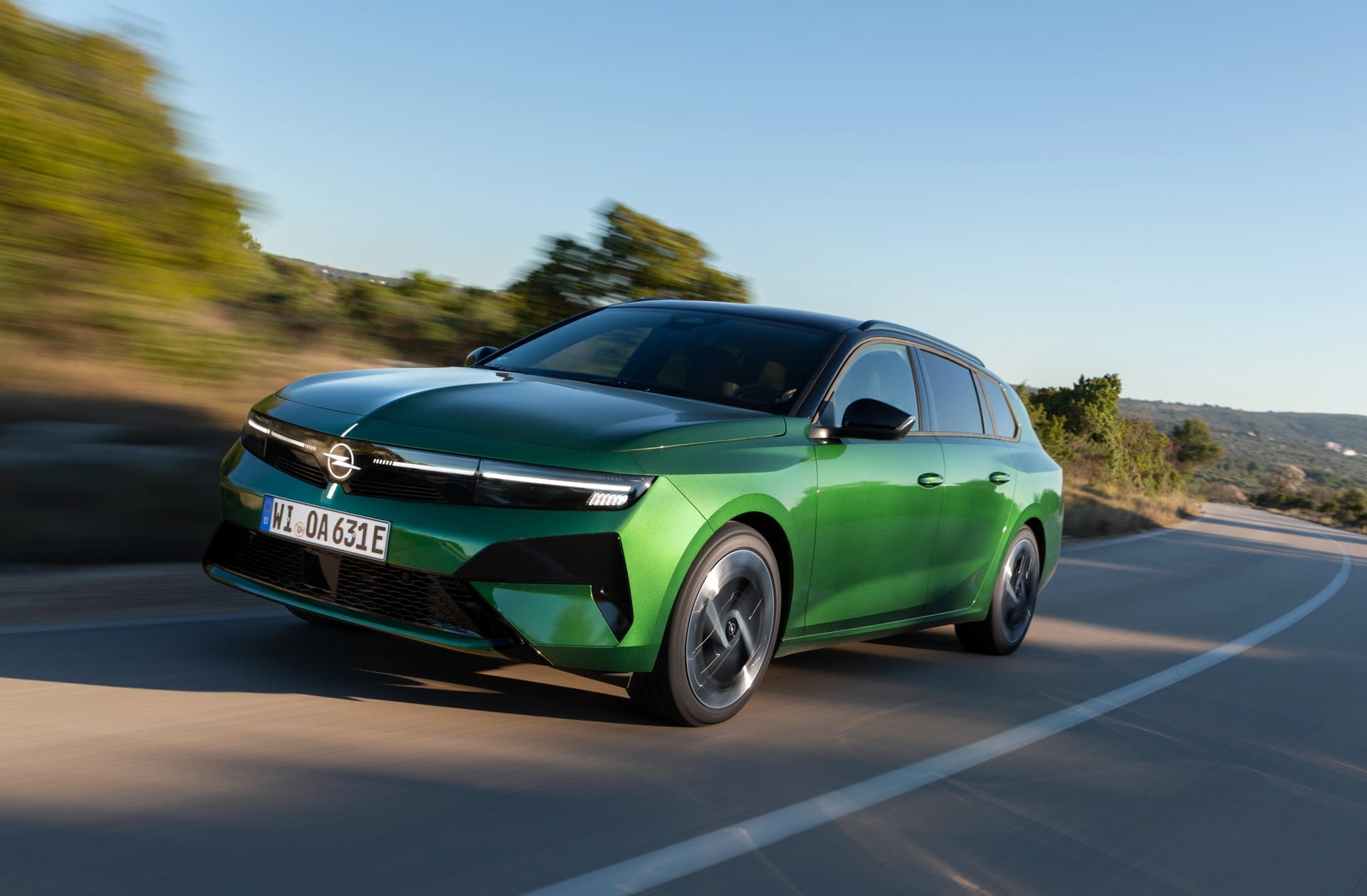
The Astra Sports Tourer Electric proves that an electric estate can be genuinely efficient in the real world.
During the international dynamic launch in Croatia, the Opel Astra Sports Tourer Electric fleet averaged 15.7 kWh/100 km over around 200 test drives and more than 14,000 kilometres across Dalmatia. That figure sits directly within Opel’s official WLTP consumption rating of 15.6 to 15.8 kWh/100 km.
Real-world efficiency is the actual headline
Plenty of EVs look good in official figures. The more interesting question is what happens when journalists drive them on real roads, in mixed conditions, over routes that include coastal roads, towns, country roads, motorways and mountain sections.
That is why Opel’s Croatia result matters. The tests were not carried out according to one fixed laboratory-style driving pattern. They happened during normal media drives, with changing temperatures and weather conditions, on challenging routes through Dalmatia.
For normal buyers, that is more relevant than a launch control number. Because an EV estate is not bought to win traffic-light races. It is bought to carry people, luggage, children, bikes, work equipment and holiday chaos without turning every charging stop into a planning session.
445 km WLTP from a usable family package
The updated Astra Sports Tourer Electric uses a 58 kWh battery, with 55 kWh usable capacity, and offers up to 445 km WLTP range. That is around 35 km more than before, helped by further aerodynamic fine-tuning.
Power comes from a 115 kW electric motor, or 156 hp, with 270 Nm of torque. The car accelerates from 0 to 100 km/h in 9.5 seconds, while top speed is electronically limited to 170 km/h.
But they are also honest. This is not supposed to be an electric performance car. It is supposed to be a practical compact estate that happens to be electric. And in that role, efficiency matters more than fireworks.
Charging is acceptable, not spectacular
The Astra Sports Tourer Electric can DC fast charge at up to 100 kW, with 20 to 80% taking around 30 minutes. The Dutch press release also confirms the car is available from €37,599.
Is 100 kW impressive in 2026? No. Not when cars like the Polestar 3 are moving to 800V architecture and 350 kW charging, or when Hyundai, Kia, Porsche and other brands have made faster charging feel almost normal in more expensive segments.
But context matters. At this price point, in this body style, and with this efficiency level, the Astra does not need to win the charging-speed war. It needs to be predictable, usable and affordable enough to make sense for families and company-car drivers.
The estate body is the underrated part
Europe still understands estates. Not everyone wants an SUV, and not every family needs a tall crossover with compromised aerodynamics and inflated pricing. A compact electric estate gives you a lower driving position, better efficiency, useful luggage space and a more traditional driving feel.
The EV market has become crowded with SUVs, but a properly efficient electric estate is still surprisingly rare. Opel may not be building the most emotional electric car in Europe, but it is building one of the more rational ones.
V2L and battery preconditioning make it more useful
For the first time, it offers Vehicle-to-Load, allowing owners to power external devices such as e-bikes at a holiday destination. The battery can also be preconditioned from the cabin, helping optimise charging and performance depending on temperature.
AutoNext Take
The 15.7 kWh/100 km result is the strongest part of the story. If an electric estate can match its WLTP consumption during real-world media drives, that is exactly the kind of credibility buyers need. Not every EV needs to be spectacular. Some need to be dependable.
Efficient electric estates make more sense than half the oversized electric SUVs currently flooding the market. Lower, lighter, more practical, less thirsty and easier to live with. The Astra Sports Tourer Electric may not be cool in the obvious way, but it is quietly relevant.