Honda's wireless road wants to charge moving trucks at 150 kW
Honda's road charger is built to go in when the motorway gets new asphalt
Honda R&D, working with builder Taisei Corporation and its paving arm Taisei Rotec, has developed a road-embedded system that charges electric vehicles while they drive. Trials on the Tateyama Expressway in Chiba, east of Tokyo, start from fiscal 2027, which opens on 1 April 2027, with up to 150 kW going into heavy trucks. Logistics fleets come first, private cars later.
Honda builds the inverter into every road coil, a world first
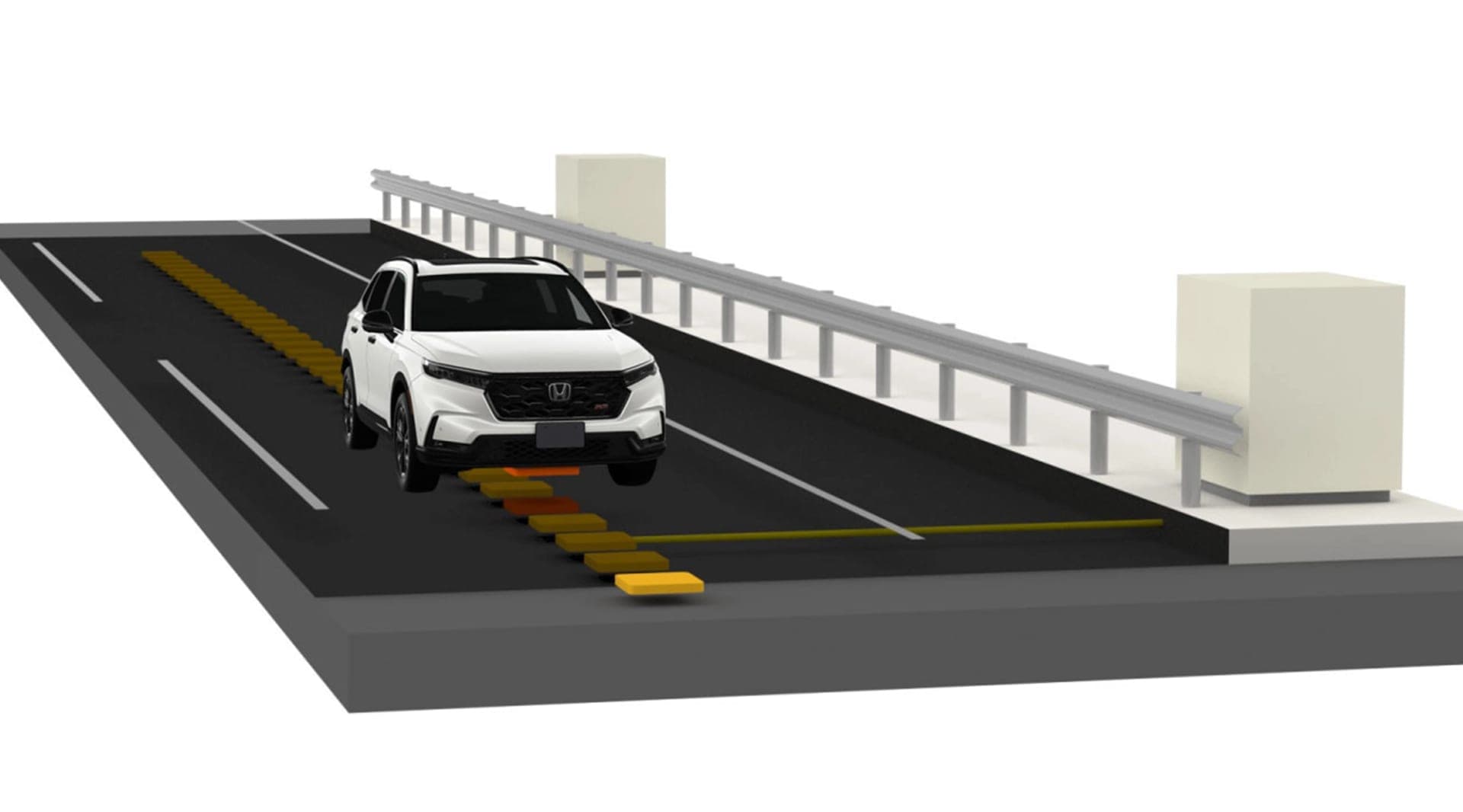
Each of Honda's ground units combines an inverter and a charging coil in one sealed box, buried in the lane and fed by a shared DC power line. Distributing direct current to self-contained units cuts the cabling and the number of components that have to go under the asphalt. Honda says no one had publicly disclosed that configuration before the end of September 2026. A receiving unit under the vehicle picks up the energy through magnetic coupling, with no physical contact. Honda has worked on charging in motion since 2021, and the joint research with Taisei began in 2025.
Taisei's design drops the coils into milled asphalt during resurfacing
The units are shaped to sit in strips milled out of existing pavement, so a motorway operator could fit them during routine resurfacing rather than rebuilding a lane from the base up. The pavement and hardware are rated for commercial vehicles of around 20 tonnes. From the end of 2026, a new test track at Taisei's T-FIELD/TAMURA site will run loaded vehicles over the units for the equivalent of one million passes of a standard 49-kilonewton wheel load, while engineers measure charging performance and stray electromagnetic fields.
NEXCO East's Tateyama Expressway trial targets 150 kW for trucks
The public test runs under the Tateyama Project, which East Nippon Expressway Company (NEXCO East) will operate on the Tateyama Expressway in Chiba Prefecture from fiscal 2027. Honda and its partners want to confirm up to 150 kW for large commercial vehicles at motorway speed, and to prove the hardware survives real traffic. Trucks go first because every charging stop is time a haulier is not paid for, and freight runs on fixed routes. Honda itself says the cost against conventional fast chargers still has to be worked out.
France's A10 already passed 200 kW, Sweden's E20 died on cost
Europe has already tested the idea at higher power. On a 1.5 km stretch of the A10 near Saint-Arnoult-en-Yvelines, Vinci Autoroutes and Electreon reported in October 2025 an average transfer above 200 kW, with peaks over 300 kW, feeding a truck, a van, a bus and a car at traffic speed. Sweden went the other way. The procurement for its first permanent electric road, on the E20 between Hallsberg and Örebro, was cancelled in August 2023 over rising costs, and the government removed the project from its national transport plan in February 2025.
Honda's charging road is a freight tool before it is a car feature
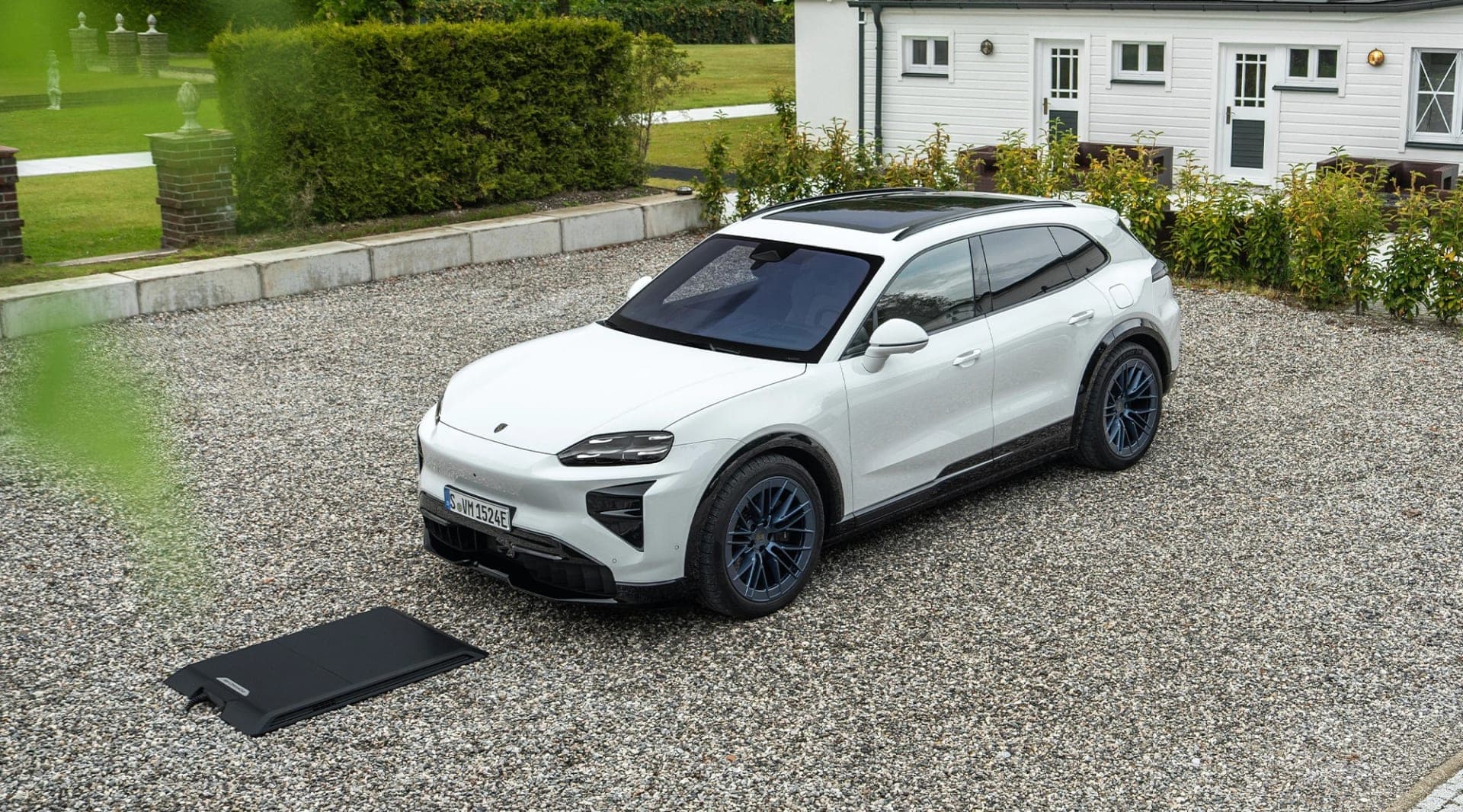
For drivers of electric cars, nothing changes soon. The system is designed with passenger cars in mind as well, but each one would need a receiving unit, and no carmaker has announced one for sale. Static wireless charging is only now reaching showrooms, with Porsche's 11 kW pad for the Cayenne Electric, while the plug race has moved on to Geely's 1,800 kW charger. For Honda, the project also keeps an electric thread visible after it cancelled its 0 Series before launch.
AutoNext Take
Europe's electric roads never failed on physics. The A10 has moved more than 200 kW into vehicles at motorway speed, and Sweden's E20 still never got built, because nobody would fund it. By packing the inverter into each coil and making the units fit a milled strip of asphalt, Honda and Taisei are trying to turn an electric road from a construction project into a resurfacing job, and that is where the money gets decided.
Honda has not published a cost per kilometre, and until it does the 150 kW figure is the less important half of the story. If the Tateyama trial produces that number during fiscal 2027 and it lands close to the price of a truck stop full of fast chargers, motorway operators in France and Scandinavia will have a reason to reopen files they closed. If it does not, Japan will have built a better test strip, and the logistics industry will keep plugging in.