Hyundai Boulder Concept: even Hyundai dreams of building a Defender rival
As cities grow denser, the dream of adventure grows stronger.
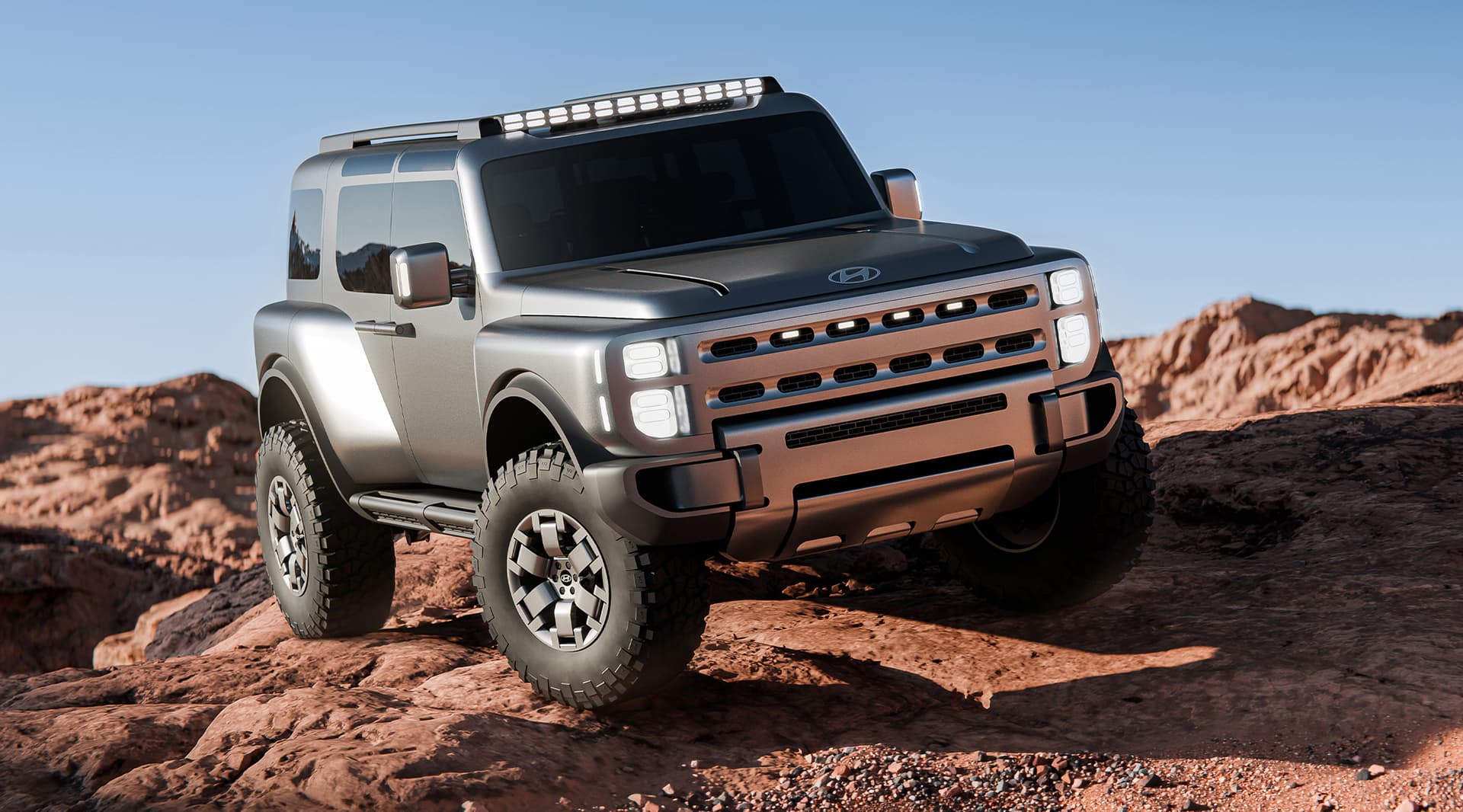
That is exactly the context in which Hyundai unveiled the Hyundai Boulder Concept at the New York Auto Show. At first glance, it looks like another boxy adventure SUV. But the Boulder represents something Hyundai has never done before: a true ladder-frame off-roader.
In other words, Hyundai may finally be preparing its answer to icons such as the Land Rover Defender, Jeep Wrangler, and Ford Bronco. And that alone makes the Boulder far more significant than a typical concept car.
Every brand dreams of a Defender rival
The truth is that almost every manufacturer dreams of building a vehicle that can compete with legendary off-roaders. Models like the Mercedes-Benz G-Class, Ineos Grenadier, and the Defender have proven that authentic off-road capability still carries enormous appeal, even in an era dominated by electrification and digitalisation.
Hyundai has long offered a broad lineup (from compact city cars to performance EVs and hydrogen-powered SUVs) but one ingredient was still missing: a hardcore ladder-frame off-roader. The Boulder Concept changes that narrative.
It previews Hyundai’s first-ever body-on-frame architecture, designed to support a new generation of rugged vehicles. The most obvious candidate is a midsize pickup truck expected before the end of the decade, but the architecture could also underpin a production SUV inspired by the Boulder itself. For European readers, this may sound like a vehicle primarily designed for the American market, and that is largely true. But the concept still reveals an important shift in Hyundai’s global ambitions.
“Art of Steel”: when form follows function
Visually, the Boulder Concept follows Hyundai’s new “Art of Steel” design philosophy. The idea is simple: design should reflect purpose. Rather than overly sculpted surfaces or decorative elements, the Boulder emphasises structure, strength and practicality.
The boxy silhouette, short overhangs and upright proportions immediately evoke classic off-road vehicles. Functional details reinforce the theme. The SUV features roof racks, safari-style side windows and a full-size spare wheel mounted on the tailgate, all elements that highlight its adventure-focused character.
Massive 37-inch mud-terrain tyres, combined with generous approach, departure and breakover angles, suggest that Hyundai is serious about off-road capability. It may be a concept for now, but the message is clear: Hyundai wants to show it understands the visual language of real off-road machines.

A functional, adventure-ready interior
Inside, the Boulder continues the theme of practicality. The cabin combines durable, washable materials with a futuristic layout, designed for outdoor lifestyles and demanding environments.
Instead of one large central screen, the dashboard integrates multiple smaller displays and physical controls, which are easier to operate when driving off-road. Vehicle information is projected onto the lower section of the windshield through a wide head-up display, replacing the traditional instrument cluster.
AutoNext Take
For European enthusiasts, the Hyundai Boulder Concept may initially feel like a vehicle designed for another continent. But its significance goes beyond geography. The Boulder reflects a broader trend in the automotive industry: the renewed fascination with authentic off-road vehicles.
Whether the final production model will look as bold as this concept remains to be seen. But if the brand manages to translate even part of the Boulder’s rugged character into a production vehicle, the off-road segment could soon gain a very interesting new player.