Mazda 6e Wins 2026 World Car Design of the Year: A Bold Electric Sedan with Familiar DNA
In a rapidly evolving EV landscape, the Mazda 6e clearly struck a chord.
The recognition marks the third time that Mazda Motor Corporation has won the prestigious design award. The brand previously claimed the title with the Mazda MX‑5 in 2016 and the Mazda3 in 2020. The result was decided by a jury of 98 automotive journalists from around the world, who evaluated 90 eligible vehicles competing for the design crown.
An electric sedan that refuses to look like every other EV
The Mazda 6e represents one of the brand’s most important steps into the electric era. Yet rather than reinventing its design language entirely, Mazda chose a more nuanced strategy: evolution instead of revolution.
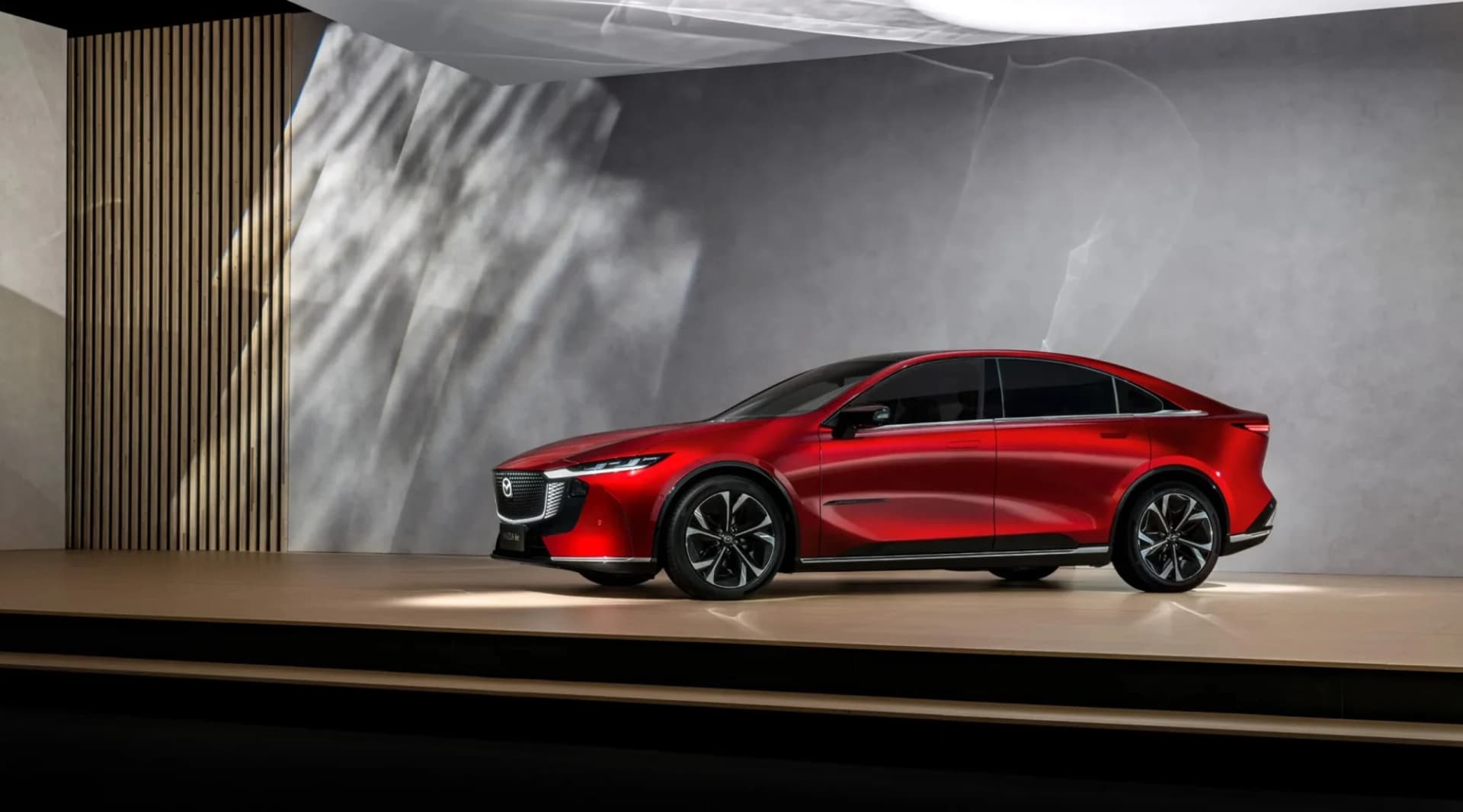
The sedan retains the essence of Mazda’s Kodo Design, a styling philosophy built around movement, simplicity and sculpted surfaces. Instead of adopting the boxy proportions often associated with electric vehicles, the 6e features a low, coupe-like silhouette, long bonnet proportions and clean body surfaces.
The result is a car that feels more like a traditional sports sedan than a typical EV. This design decision is not accidental. Many electric cars prioritise packaging efficiency, maximizing interior space at the expense of visual drama.
Mazda took the opposite approach, ensuring that the car’s proportions remain emotionally appealing even within the constraints of an electric platform. It is a strategy that aligns closely with the brand’s long-standing philosophy: cars should move the heart as much as the body.
Design that integrates with the electric platform
The jury behind the World Car Design of the Year award evaluates more than just aesthetics. Design must also complement a vehicle’s function, engineering and concept. In the case of the Mazda 6e, the judges recognised how the exterior design integrates with the underlying electric architecture.
Clean surfaces reduce visual complexity, while aerodynamic efficiency plays a central role in shaping the car’s form. The result is a design that feels modern without abandoning the brand’s identity.
That balance is particularly important for a manufacturer like Mazda, which has built its reputation on consistent, recognisable design language over the past decade. The 6e therefore represents a careful transition, adapting the brand’s visual DNA to the realities of electrification.
AutoNext Take
Many brands have opted for radical design changes, creating EVs that look entirely disconnected from their heritage. Mazda’s strategy appears more restrained and perhaps more confident.
By evolving the Kodo design philosophy rather than replacing it, the Mazda 6e proves that an electric vehicle can still feel unmistakably like a Mazda. That approach may ultimately prove to be one of the company’s strongest assets.
Because in a market increasingly filled with anonymous electric crossovers, design identity might become just as important as battery range or charging speed. And judging by this award, Mazda’s designers understand that perfectly.