Europe's carmakers are losing to BYD, its chipmakers are signing up
Eighteen chips in every new car, and a shorter road to the biggest buyer
Melexis is not a name that ever appears on a bonnet, yet it is inside almost everything with four wheels. The Belgian company reckons the average new car built anywhere in the world carries eighteen of its chips: small sensors that read position, temperature, current and pressure, then hand those readings to the systems that actually do the driving.
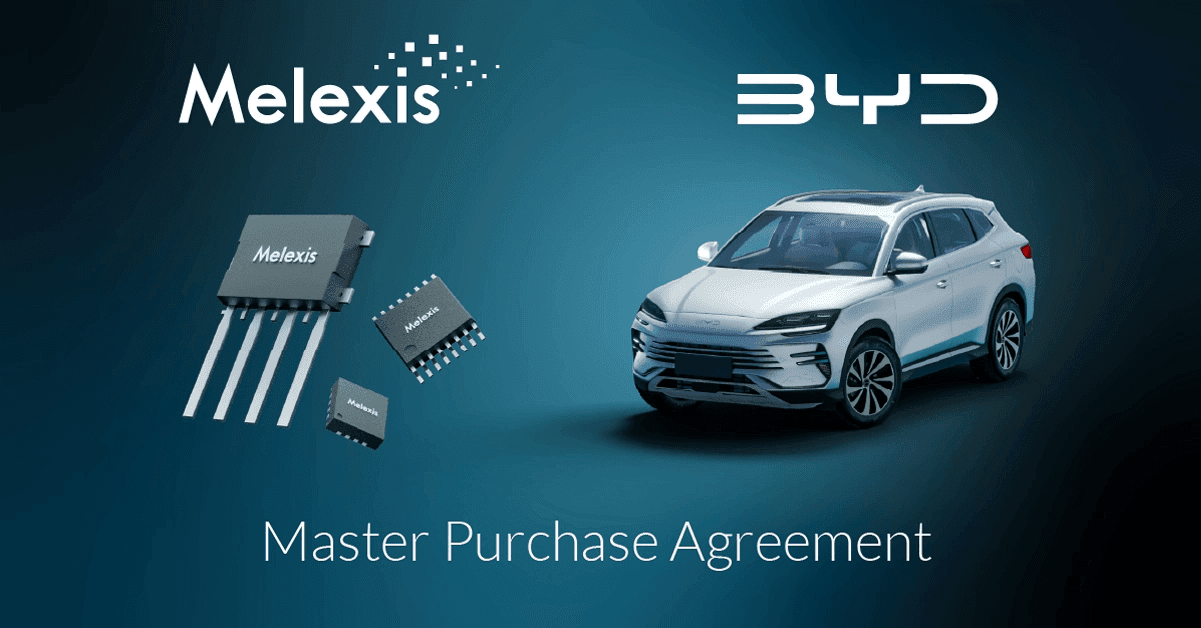
On 25 August it signed a Master Purchase Agreement with BYD, which promotes it to a direct supplier inside the Chinese group's global procurement system. No figure was attached to the announcement. The significance sits in the structure, not the number.
From the second row to a seat at the table
Until now Melexis reached BYD the way most chip firms reach a carmaker: through tier-one suppliers who buy the components, build them into a module and sell the module on. The new agreement removes that layer. BYD buys from Ieper directly, and the two engineering teams end up on the same side of the wall.
The scope is broad rather than niche. Powertrain, thermal management, battery systems, braking, steering and lighting are all covered, along with products aimed at industrial and robotics work, which is a useful reminder that BYD is not only a carmaker. Dieter Verstreken, VP China Strategy at Melexis, called the shift a natural evolution of a collaboration that has been running for years.
Szeged turns this into a European question
BYD's Hungarian plant at Szeged has moved from trial builds to series production this year, aiming at a capacity of roughly 200,000 cars with the Dolphin Surf first down the line. Nothing in the Melexis agreement is specific to Hungary, but a factory on European soil needs European content to justify being there rather than shipping cars in.
The pattern is no longer limited to one brand. SAIC is building MG's first European plant in Galicia, and every such project turns into an order book for European component makers, whatever it does to European carmakers.
Suppliers are hedging faster than carmakers
Melexis booked €217 million of sales in the second quarter of 2026, up three percent on the year. Growth in that business no longer arrives from Wolfsburg or Stuttgart. It arrives from wherever cars are being built in volume, and increasingly that means a Chinese company, in China or in Europe.
Europe's carmakers have spent two years watching Leapmotor become the fastest-growing brand on the continent while arguing that only three Chinese EV makers actually make money. Their suppliers reached a simpler conclusion. You do not have to beat the new volume to be paid by it.
AutoNext Take
There is something clarifying about a chip company's balance sheet. It does not care which badge ends up on the car, only how many cars there are. Melexis signing directly with BYD is not a betrayal of European industry, it is European industry noticing where the volume went and following it, years before most carmakers will say the same thing out loud.
The risk sits on the other side of the ledger. A supplier base that grows on Chinese order books becomes harder to rally when Brussels next asks it to prop up a European one. Europe still has the engineering. It is slowly losing the argument about who gets to use it.