The spherical fuel tank on Porsche's lightest ever racing car saved just seven kilograms
When your whole car weighs 400 kilograms, you start looking for grams in places no one else would think to.
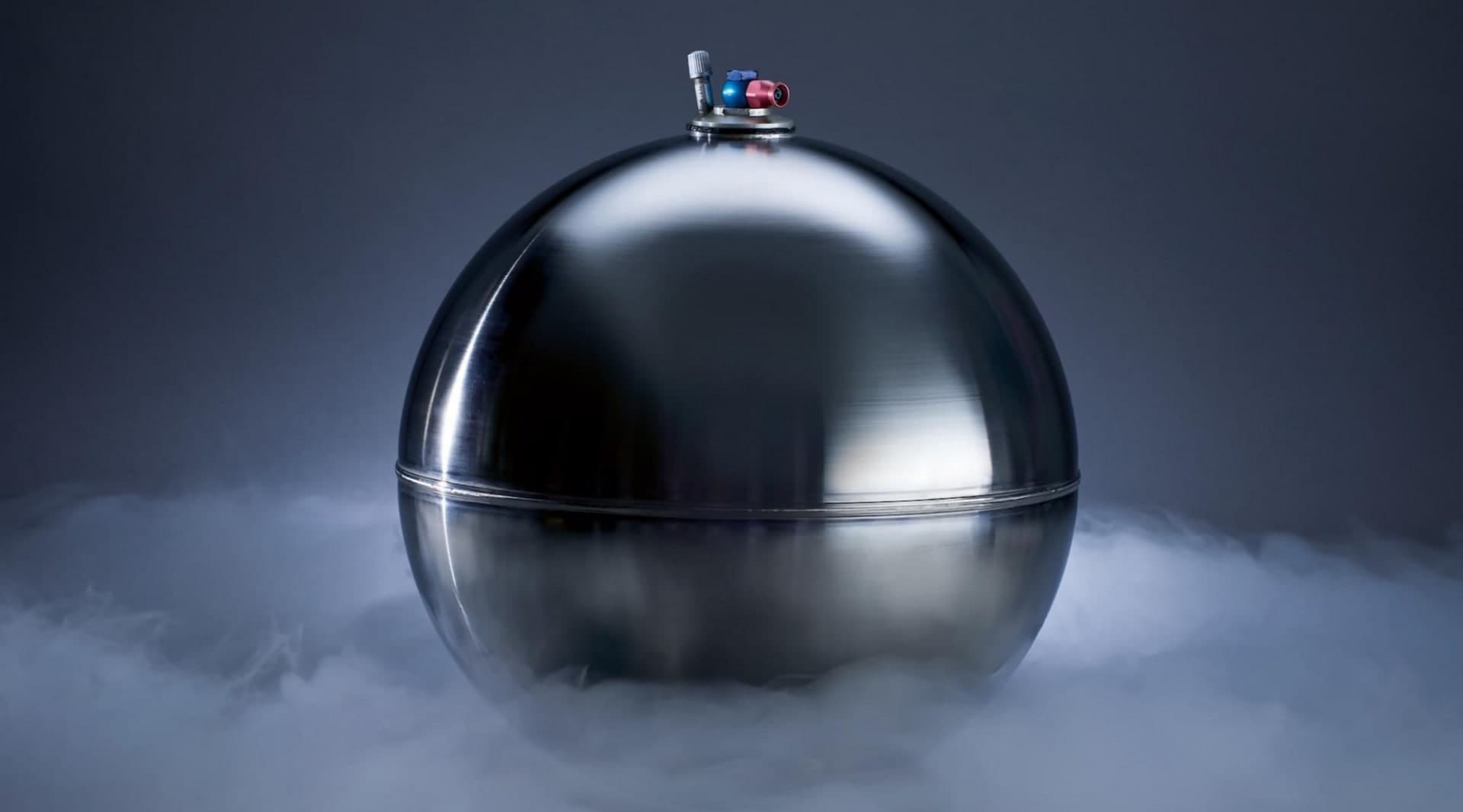
Porsche has revisited one of the most extreme cars it ever built, the 1968 909 Bergspyder, a hillclimb special created for the European Hill Climb Championship and, at roughly 400 kilograms, still the lightest racing car in the company's history. Almost every part of it was an exercise in shedding weight, but the detail that best captures the madness is the fuel tank, which Porsche made as a titanium sphere.
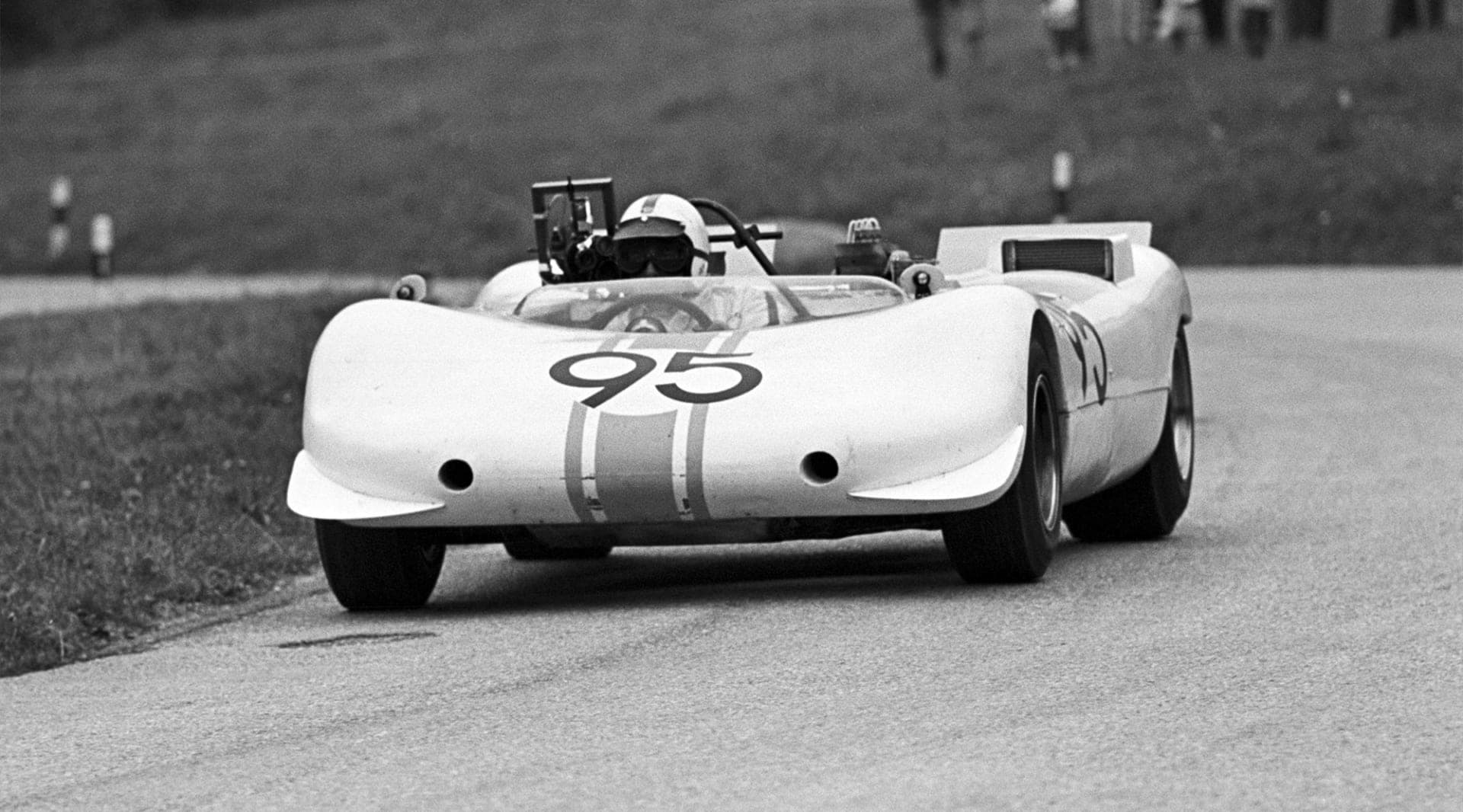
A fuel tank shaped like a ball
The spherical tank is a beautiful piece of lateral thinking. It was formed from titanium just 0.8 millimetres thick and worked as a pressure vessel, with a rubber bladder inside and nitrogen pressurised to around 15 bar filling the gap between the titanium shell and the rubber. That pressure pushed the fuel out and straight into the mechanical injection pump through a hose, which meant the car did not need a fuel lift pump at all. Deleting that pump saved up to seven kilograms. The sphere was not chosen for looks either, because a ball is the strongest and lightest shape a pressure vessel can take, so it let Porsche use the thinnest possible material.
Weight was the whole point
Everything else followed the same logic. The 909 used titanium for its chassis springs, brake calipers and parts of the engine, an aluminium space frame, beryllium brake discs, magnesium engine components and a glassfibre body that weighed just 10 kilograms. This was hillclimb racing, a discipline of short, explosive sprints up a mountain where power-to-weight matters more than anything, and Porsche chased that ratio with a single-mindedness that bordered on obsession. Nothing was too small to question if it could be made lighter.
Small car, serious pace
The result was tiny and ferociously quick. At 3.48 metres long, 1.80 wide and just 0.75 tall, the 909 was powered by a two-litre flat-eight producing 275 hp, which for a 400 kilogram car meant a power-to-weight ratio of around 1.4 kilograms per horsepower. It could reach 100 km/h in 2.5 seconds and run to as much as 250 km/h. Only two were built, driven by Gerhard Mitter, Rolf Stommelen and Rudi Lins, and in 1968 Stommelen took it to third at Gaisberg and second at Mont Ventoux.
Why it still matters
The 909 was more of a rolling laboratory than a championship winner, and that was rather the point. The lessons Porsche learned about weight and its distribution in this car fed directly into the later 908/3, which went on to win the 1970 World Sportscar Championship. The spherical fuel tank never became a fixture, but the mindset behind it, that every gram is worth fighting for, became part of how Porsche went racing.
AutoNext Take
There is something wonderful about a company caring enough to reinvent the fuel tank in pursuit of seven kilograms. The 909 Bergspyder comes from an era of racing when engineers were free to try almost anything, and a titanium sphere pressurised with nitrogen is exactly the sort of gloriously uncompromising idea that era produced. It is easy to admire the big numbers, the 400 kilograms and the 2.5-second sprint, but it is the small, obsessive details that tell you what Porsche really is. This is a company that has always believed the right way to go faster is to take weight out, the same instinct that still shapes its most purist road cars today, and it has been proving it, one gram at a time, for a very long time.