Porsche spent three years turning one man's GT2 RS into a Le Mans lookalike
Porsche just spent three years and built three prototypes to make a car it will only ever build once.
On paper, the new Porsche 911 GT2 RS Flachbau is a wealthy enthusiast's fantasy made real: a road-going GT2 RS reshaped into a slantnose tribute to the 935/78 Le Mans racer known as Moby Dick, commissioned through Porsche's Sonderwunsch department by a single, unnamed customer. It is stunning, and the internet has already decided it loves the flattened nose and the white-and-blue Martini graphics. But the pretty pictures bury the genuinely remarkable part. To build this one car, for one person, Porsche ran what amounts to a full new-model development programme, and in doing so it quietly rewrote what the word bespoke is allowed to mean.
What Porsche actually built
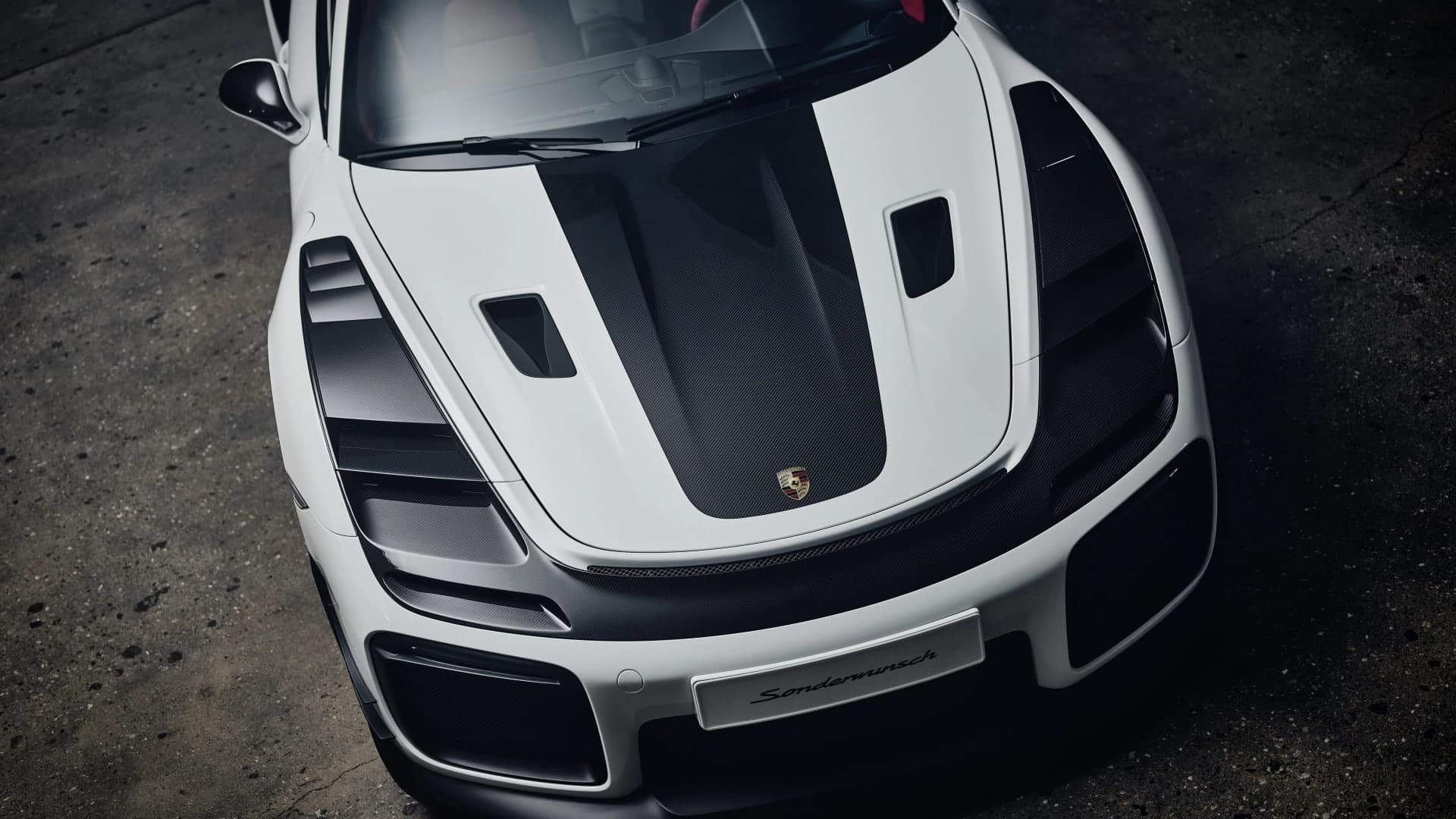
The donor is a 2018 911 GT2 RS, the 991.2 version with the Weissach Package, and its 700 hp twin-turbo flat-six is left untouched. Everything around it, though, is new. The signature is the flat nose: reprofiled front wings with slatted air outlets and a staggered, tiered LED headlight arrangement that reinterprets the old pop-up slantnose look for the modern era. It wears Grand Prix White, the colour Porsche first mixed for a 911 back in 1974, with a U-shaped graphic across the bonnet echoing the Martini-liveried 935/78, plus matte black and exposed carbon accents. There is a manually adjustable rear wing on S-shaped mounts borrowed from the 911 GT3 R, good for 554 kg of rear downforce at 340 km/h, and the whole car is 31.6 kg lighter than a standard GT2 RS with the Weissach Package. Inside, the front keeps its red Alcantara and leather while the rear is stripped to bare, Grand Prix White-painted metal, the audio and infotainment gone, the wiring loom left visible. The carbon bucket seats are embroidered Flachbau RS with an outline of the Nordschleife. Porsche has not disclosed a price. Designer Grant Larson, who also penned the 2018 modern 935, led the look.
Bespoke used to mean a sticker and a flat nose
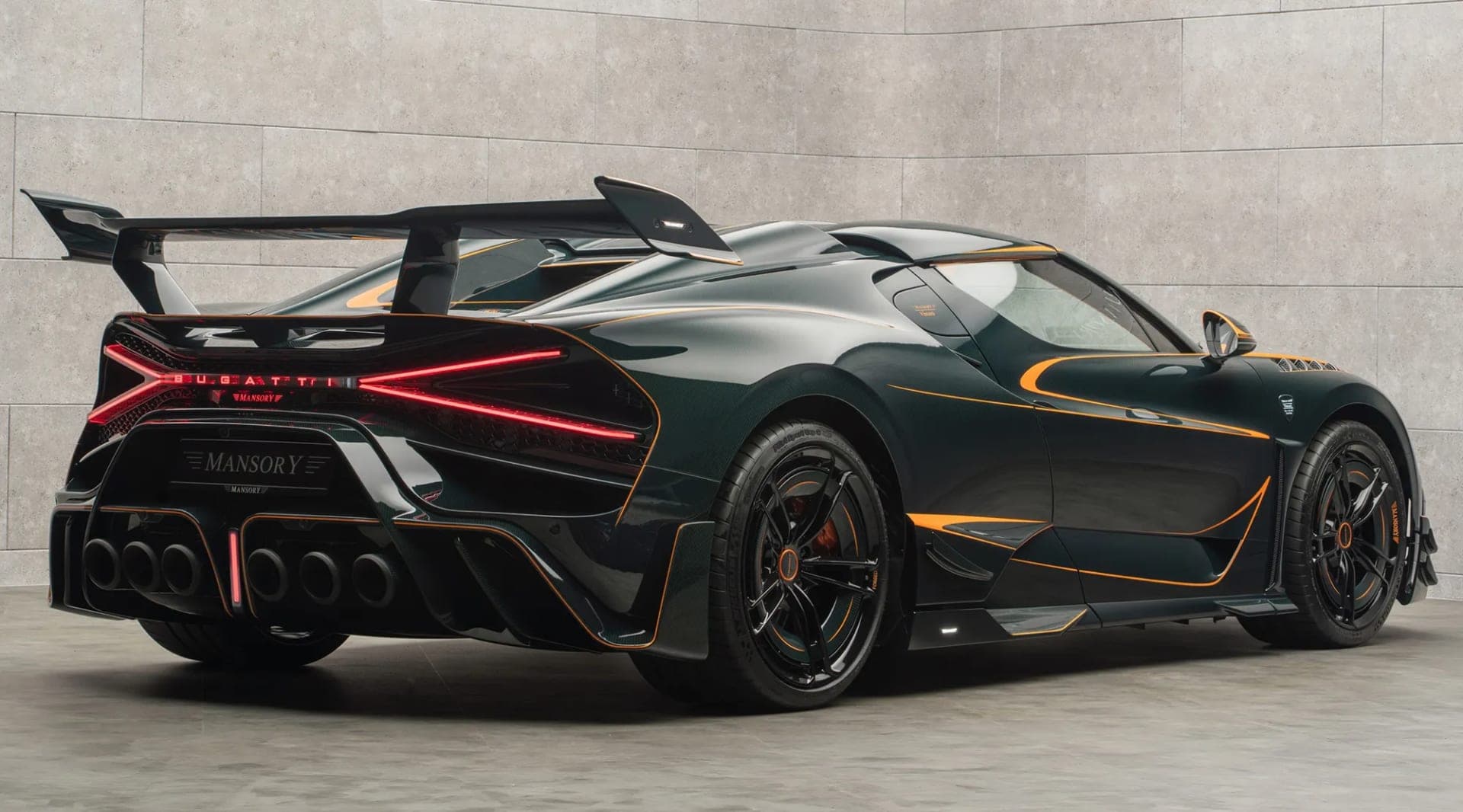
To see why this matters, rewind to the last time Porsche did this. In the 1980s the factory sold slantnose Flachbau conversions of the 911 as a cosmetic option, giving well-heeled customers the look of the Le Mans 935 without much beyond the flattened nose and pop-up lights to back it up. It was appearance, not engineering, and that is still exactly what bespoke means almost everywhere else. The aftermarket houses that dominate car week build astonishing-looking one-offs, but the recipe is bodywork and trim over an unchanged car; a Mansory rebody is a wardrobe change, not a re-engineering. That is the tradition this new Flachbau appears to sit in, right up until you read how it was made.
Now bespoke means the whole factory
Because the Flachbau RS did not get a cosmetic makeover, it got a development programme. Porsche says the project ran for nearly three years and produced three separate test vehicles. Engineers ran crash simulations and airbag-deployment analysis, CFD and wind-tunnel aerodynamics, and hydropulse vibration testing of the new rear wing. The car did more than 50 laps of the Nürburgring-Nordschleife and endurance testing equivalent to roughly 150,000 km of customer use, with test driver Lars Kern signing off the result and Manthey helping develop it. Converting a 911 to a slantnose, says Porsche's individualisation boss Alexander Fabig, proved very challenging, precisely because it had to remain crash-safe and road-legal. This is bespoke as a full engineering discipline, the same rigour Porsche applies to a car it will sell by the thousand, spent on a fleet of exactly one. It is the thing no aftermarket rebody can match, and the reason it costs whatever it costs.
A one-off with a commercial tail
There is one more detail that reframes the whole exercise. In May 2025 Porsche filed for protection of the names Flachbau and Flachbau RS at the European Patent Office, and you do not trademark a car you intend to build only once. Read alongside the three-year programme and the three prototypes, the economics start to make sense: this was never really about a single client's wish. It looks far more like research and development for a future Sonderwunsch product, a template Porsche can offer again, the way its Sonderwunsch department already turns rare requests into finished cars, and the way Ferrari monetises its own Special Projects one-offs. The car wearing chassis-of-one today is probably the pilot for a small, spectacularly expensive series tomorrow.
AutoNext Take
It would be easy to call this decadent, and it is; three years, three prototypes and a full crash-and-endurance programme to make one man's GT2 RS resemble a 1978 racing car is excess by almost any measure. But dismiss it on those grounds and you miss what Porsche is actually demonstrating. It has taken personalisation, historically the industry's most cosmetic corner, and turned it into hard engineering, with the crash lab, the wind tunnel and the Nordschleife all brought to bear on a single customer car. That draws a hard line between factory bespoke and the aftermarket: anyone can flatten a nose, but only the factory will validate, homologate and warranty the result.
So enjoy the Moby Dick homage for the gorgeous object it is, but read the Flachbau RS as a statement of intent. Porsche is telling its wealthiest customers, and its rivals, that its Sonderwunsch arm can engineer almost anything to full production standard, and the fresh trademarks suggest it plans to sell that capability more than once. The slantnose is the bait. The real product is the proof that, at Porsche, a run of one can now come with the same engineering as a run of ten thousand. That is a weapon no tuner on earth has, and this beautiful, absurd one-off is how Porsche chose to show it off.