Range Rover Electric is late because its front motor overheated in Dubai
Orders open at £154,070, nearly three years after the waiting list did
Land Rover opened the waiting list for an electric Range Rover in December 2023. Orders open today, in September 2026, with roughly 80,000 names on that list and prices starting at £154,070 in Britain and €163,500 in Germany. The hold-up was not the battery and it was not the software. It was one motor, on the front axle, that could not survive a Dubai sand dune.
An induction front motor could not survive Dubai's Big Red dune
JLR originally fitted an induction motor to the front axle because it freewheels more cleanly when it is not driving, which is worth real range on a motorway. During extreme testing in 2024 the car had to climb and descend Dubai's Big Red dune five times in a row, and the motor overheated and stopped delivering full power. Replacing it with a permanent-magnet unit meant doubling the supply of the rear drive unit, redesigning the front cradle and rewriting the software. Rachel Hogg, who has run the programme for five years, called it a big decision that took time to get right. The re-engineering took 18 months.
Two 354 PS motors, and a car that is quoted at 550 PS
Each axle carries a permanent-magnet motor rated at 354 PS, and the Range Rover Electric is sold as a 550 PS car. That gap is deliberate. JLR says neither drive unit needs full power at the same moment as the other, and letting both run flat out would trigger more traction interventions and cost efficiency. Torque is 850 Nm, about 100 Nm more than the 4.4-litre twin-turbo V8 manages, which is worth 0 to 100 km/h in roughly 4.5 seconds and 80 to 120 km/h in as little as 2.7 seconds. Silicon carbide semiconductors let the traction software react inside 50 milliseconds.
118.5 kWh across 344 cells, and 22 minutes from 10 to 80 percent
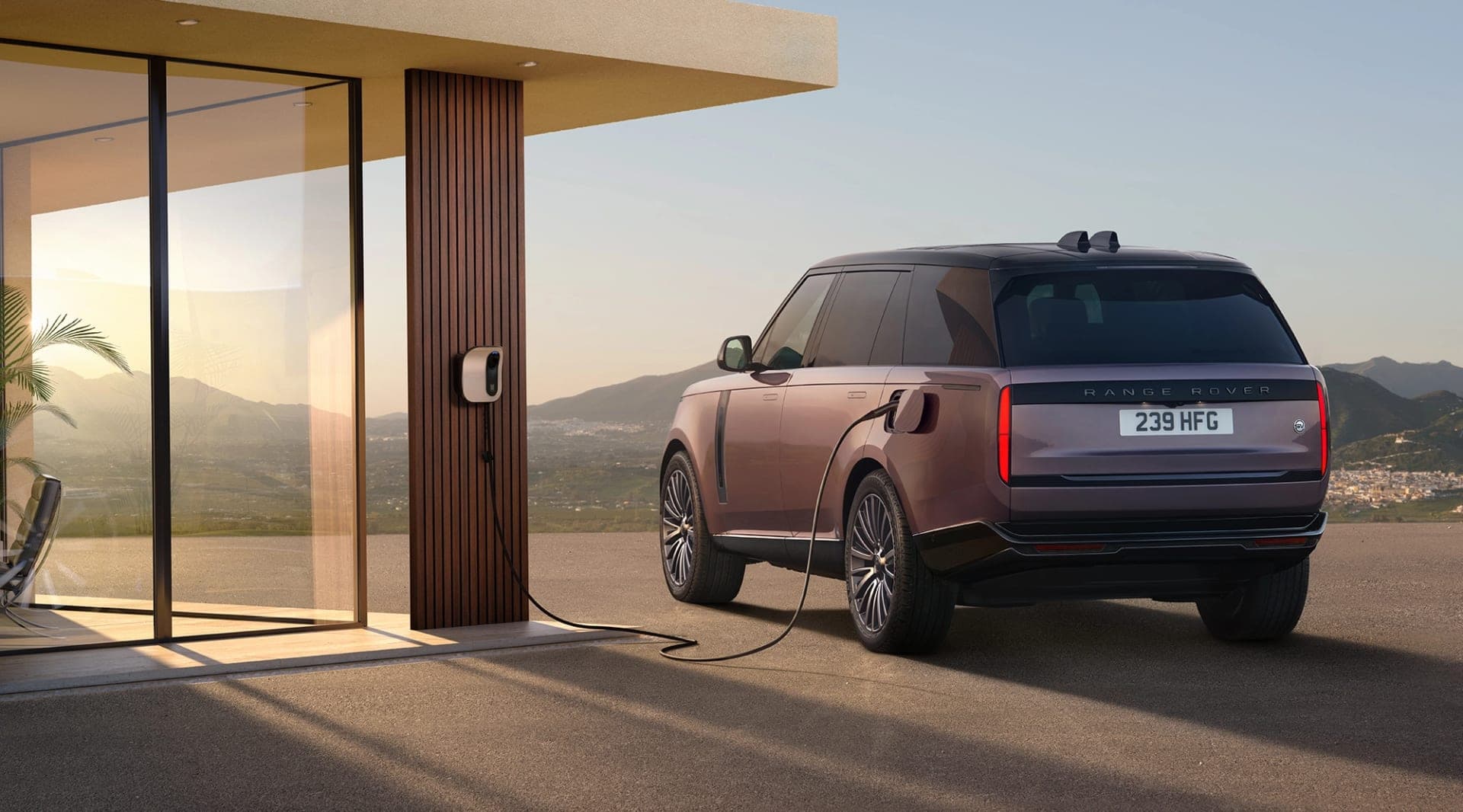
The usable battery is 118.5 kWh, built from 344 prismatic cells stacked in two layers and run at 800 volts. On a 350 kW DC charger that is 10 to 80 percent in around 22 minutes, or 220 km of WLTP range added in ten. WLTP range is 599 km, and JLR publishes a real-world figure of 535 km alongside it, which most manufacturers do not. ThermAssist recovers waste heat to warm the cabin, cutting heating energy by 40 percent and adding up to 40 km of range in the cold. The pack is warranted for eight years or 160,000 km.
Towing drops to 2,500 kg, against 3,500 kg for the V8
The electric Range Rover tows 2,500 kg. The combustion car tows 3,500 kg and the plug-in hybrid 3,000 kg, so this is the first Range Rover in a very long time to give up a full tonne of towing capability, and JLR's own head of public charging says most owners will tow at some point. Almost everything else survives. Wading depth stays at 900 mm, the car will pull away from rest on a 33-degree slope and keep climbing a rolling 45-degree one, and the battery sits low enough to drop the centre of gravity by 88 mm.
£154,070 in Britain, €163,500 in Germany, 80,000 on the list
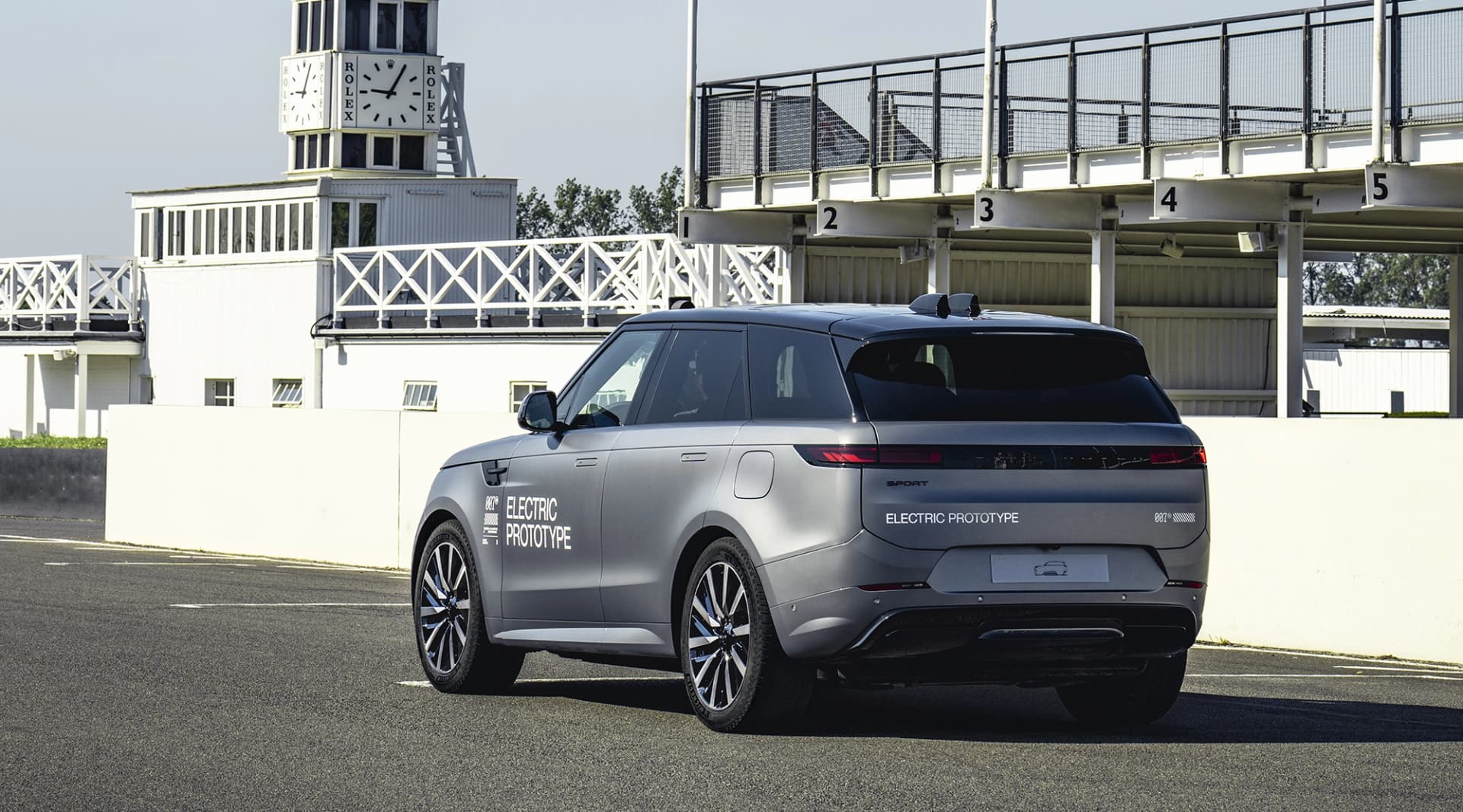
Prices start at £154,070 for a short-wheelbase Autobiography in Britain and €163,500 in Germany, rising to £190,320 for the SV Black and £225,240 for the long-wheelbase version of it. Land Rover showed the car in public at Goodwood in July and would not attach a single number to it then. Around 80,000 people are now on the waiting list, more than two-thirds of them new to the brand and a fifth already driving an EV. Production is at Solihull, where JLR says 9,000 staff have been retrained for electrification, with first deliveries late this year. The Range Rover Sport Electric, sharing this powertrain, follows shortly after.
AutoNext Take
JLR chose the delay, and it was the right call. The induction motor worked everywhere except the one place a Range Rover is supposed to be unstoppable, and shipping it would have handed every reviewer the same paragraph to write. The choice was not free, though. The electric Defender has slipped into the 2030s, the Sport Electric now arrives behind this car instead of beside it, and 18 months of engineering capacity went on re-solving a problem the company had already solved once.
The number worth watching is not the 599 km. It is the 2,500 kg. Land Rover defended its range figure with 360 million analysed journeys and a claim that they cover 97 percent of what owners do, and it has published nothing comparable for towing, where it has just cut a Range Rover by a full tonne. If 2,500 kg is still the number when the Sport Electric arrives, JLR has decided the towing customer keeps buying the V8, and an 80,000-name waiting list will not change its mind.