The designer behind a 720 hp hypercar now builds windscreen-less Porsche speedsters
A Catalan designer who built a 720 hp carbon-tubbed hypercar in 2005 spent over a decade away from cars entirely. His comeback project strips a Porsche 718 Spyder RS down to a speedster, limited to 19 units
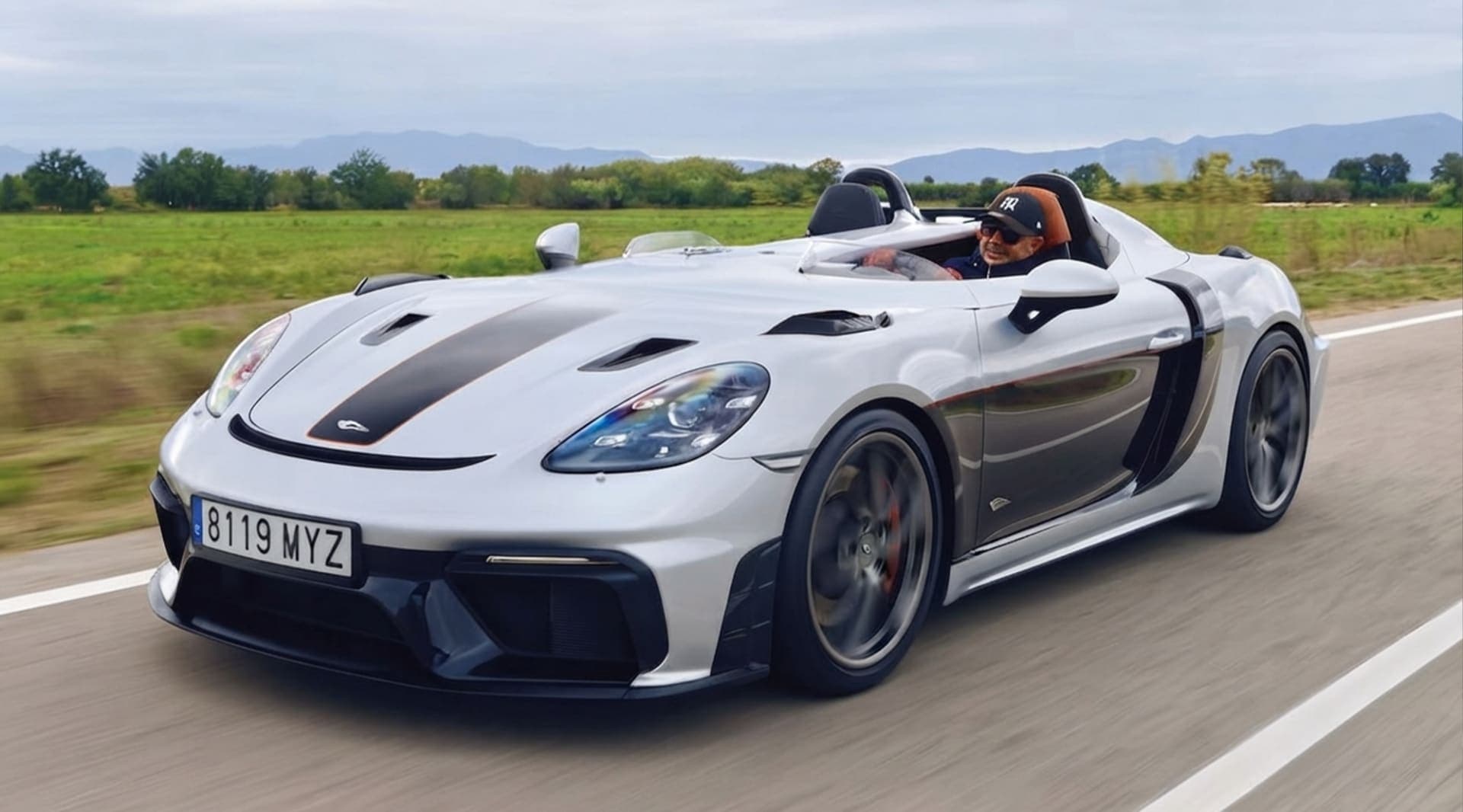
Rubau Cars, the small Girona-based coachbuilder run by industrial designer Josep Rubau, has unveiled a bespoke speedster built on the Porsche 718 Spyder RS, stripped of its windscreen and A-pillars and left with only a small aerodynamic screen ahead of the driver. It uses Porsche's own race-derived MA176 flat-six, tuned from 500 hp up to 550 hp, paired exclusively with a PDK gearbox. Only 19 examples will be built across three donor platforms, the 718 Spyder RS, 911 Cabriolet and 918 Spyder, each one honouring a specific year from Porsche's record 19 overall victories at Le Mans between 1970 and 2017.
From a carbon hypercar to a family workshop in Girona
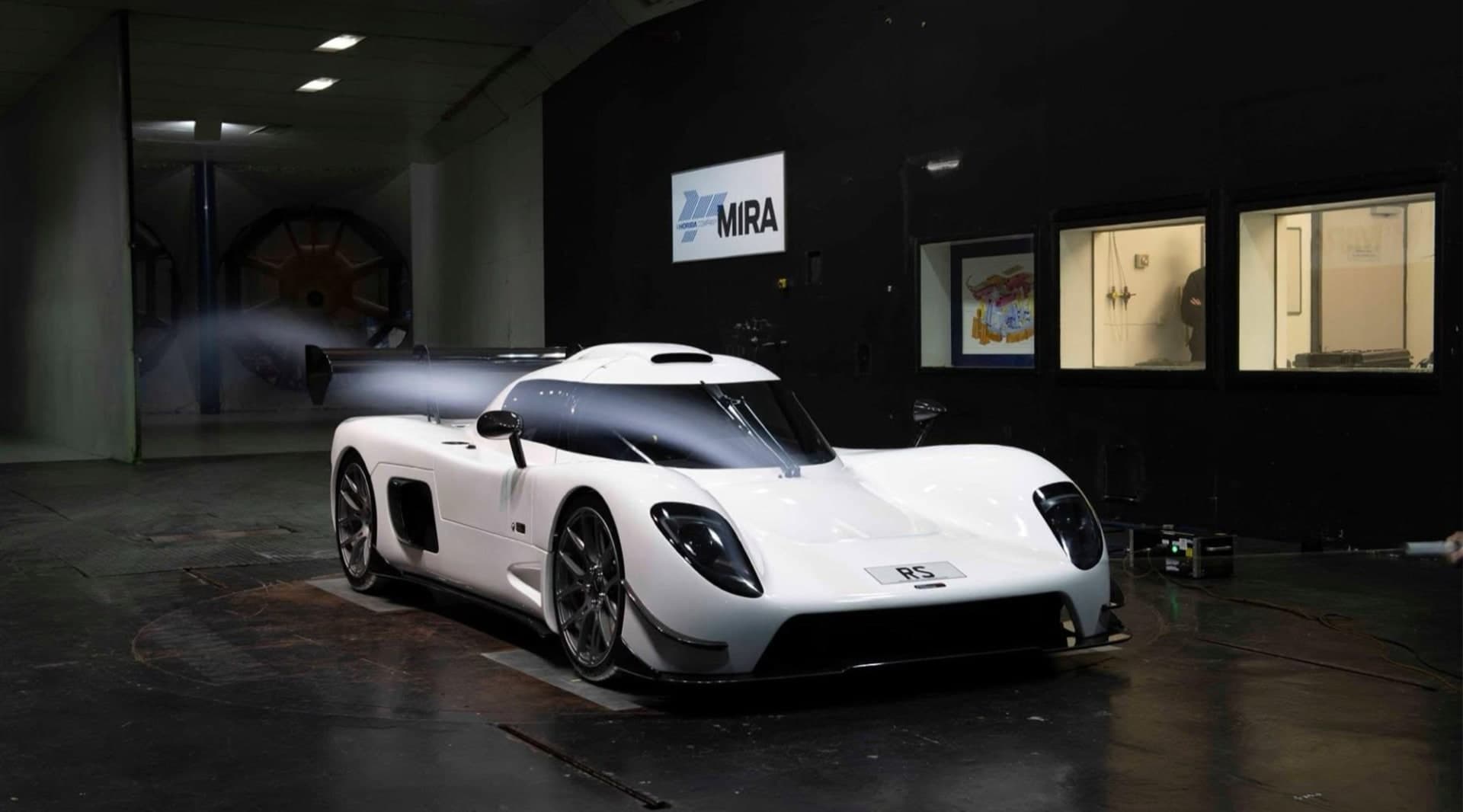
Josep Rubau is a Barcelona-born industrial designer who studied at the University of Barcelona before earning a place on the Royal College of Art's automobile design masters in London, one of only 12 selected worldwide for the 1996-1997 course. He went on to work at Volkswagen's Advanced Design Studio, contributing to the Beetle Dune concept in 2000, before unveiling his own creation, the Tramontana, at the 2005 Geneva Motor Show. That open-wheel hypercar rode on a carbon fibre tub, weighed roughly 1,263 kg and produced 710 hp; the later Tramontana R added a Mercedes V12 good for 720 hp, a 0-201 km/h time of 10.15 seconds and a top speed of 327 km/h. Seven were sold at €650,000 each. In between, Rubau founded Red Shark Bikes, a low-centre-of-gravity water bike company he later rode across Antarctica with school friends. Rubau Cars, founded in 2021, brought him back to cars as a family business, with his wife handling administration, son Iu working as mechanical engineer, and daughter Júlia running the business side.
A speedster with no windscreen, built on a Porsche most owners would not touch
The design removes the windscreen and A-pillars entirely, leaving occupants exposed behind a small aero screen, a deliberate throwback to 1950s sports-racing cars rather than a modern safety compromise. The dual cockpit splits driver and passenger with a removable central structural strut, a detail lifted straight from period racing cars, while carbon fibre bucket seats styled after the 918 Spyder wear an asymmetrical tan-and-black leather scheme, hand-stitched from leather sourced primarily from UK farms. Every body panel is custom-built in aluminium or carbon fibre to each client's preference, and the bespoke titanium exhaust, handcrafted in Madrid, is finished to echo 1960s-style welds. The bodywork itself is described by the company as a "German silver" finish, giving the car a raw, unpainted look.
The engineering underneath the theatre
Under the panels sits the MA176 flat-six from the 718 Spyder RS, producing 500 hp as standard and tunable to 550 hp, spinning to a 9,000 rpm redline. The gearbox is PDK only, a limitation noted by testers who wanted the option of a clutch pedal on a car built around the idea of driver connection. The prototype weighs roughly 1,418 kg, and Rubau says the production carbon fibre version will shed around 43 kg from that figure. Aerodynamic changes cut drag by 12 percent and lower the centre of gravity by 8 percent, while carbon fibre strut bracing lifts torsional rigidity by roughly 17 percent, past 20,000 Nm per degree, which Rubau claims makes the car stiffer than a 996-generation 911 coupé.
Nineteen cars, nineteen tributes to Le Mans
Each of the 19 examples, spread one per market across the 718 Spyder RS, 911 Cabriolet and 918 Spyder donor platforms, carries its own numbered plaque referencing a specific year from Porsche's Le Mans wins, along with the race distance covered that year and a quote from the winning driver. Buyers can commission a car built from a new Spyder RS or convert a car they already own, which keeps the project closer to a coachbuilding commission than a traditional limited production run. Rubau Cars has not disclosed pricing for the conversion.
AutoNext Take
A tiny Girona workshop turning Porsche's own track-focused Spyder RS into an even more stripped-back, windscreen-less tribute to Le Mans is a genuinely interesting idea, and Josep Rubau has the pedigree to make good on it. Building a 720 hp carbon hypercar in 2005 was not a small achievement, and coming back to cars after two decades with a project this specific, rather than another attempt at a headline hypercar, says something about what actually interests him now.
The PDK-only gearbox is the one decision that sits awkwardly next to a company built entirely around the phrase "the spirit of driving." Removing the windscreen and A-pillars is a genuine, if extreme, way to sharpen the connection between driver and road, but doing that while denying the option of a manual gearbox feels like solving half the problem. Nineteen cars and no public pricing also means most people will only ever read about this one, which does not make it a less compelling story, only a more theoretical one.