Stellantis and Leapmotor want to go deeper and this says everything about Europe’s EV problem
This is not just another corporate joint venture story.
It is a clear sign of where the European EV market is heading: lower costs, faster development, Chinese battery-electric technology, European production and a much stronger focus on affordability.
Stellantis already became Leapmotor’s largest shareholder in 2023 with an approximately 21% stake, while the two companies created Leapmotor International, a joint venture controlled 51% by Stellantis and 49% by Leapmotor. That company has the exclusive rights to sell and manufacture Leapmotor products outside Greater China.
A deeper EV partnership built around Europe
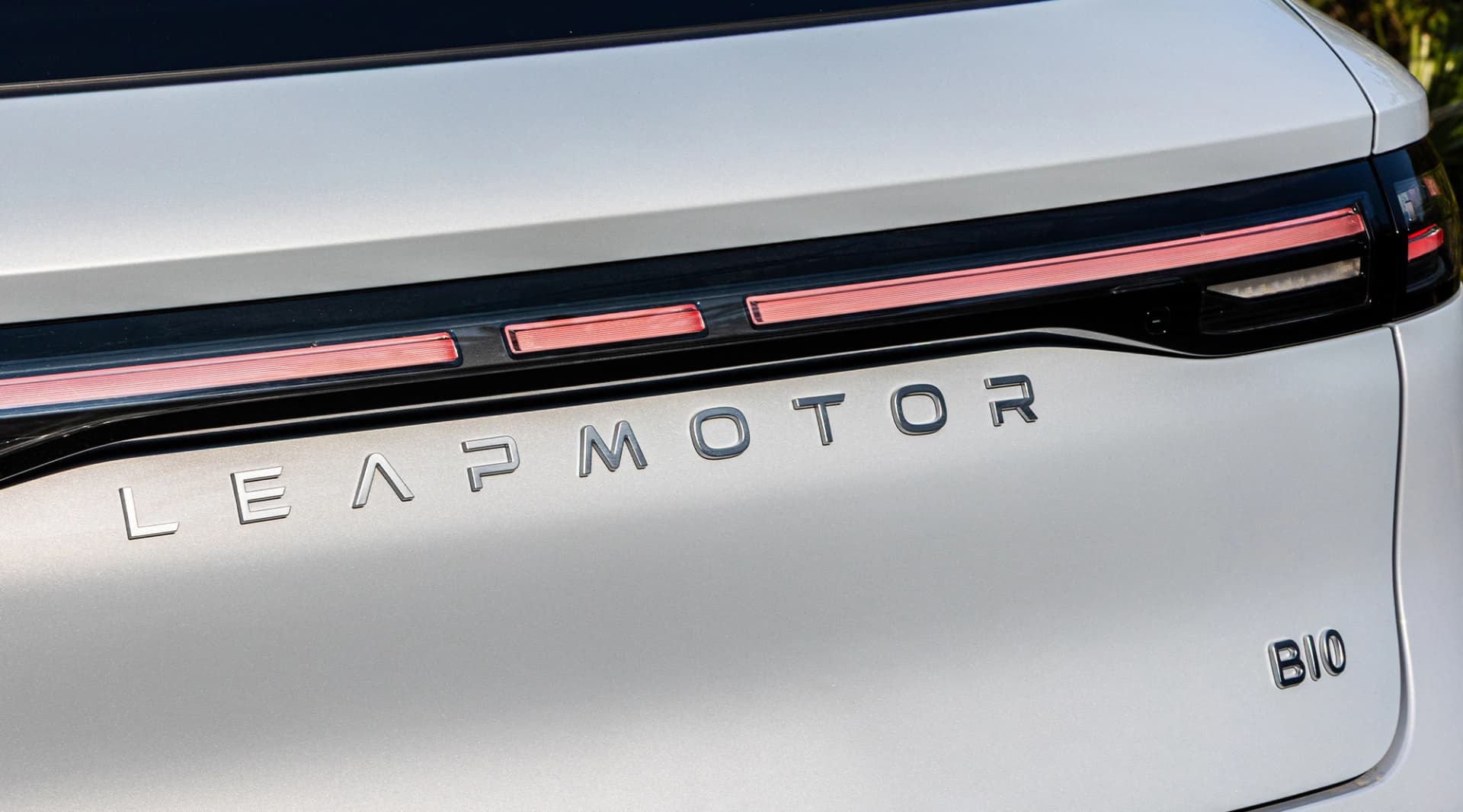
The first major move concerns the Stellantis plant in Zaragoza, Spain, historically one of Opel’s most important production sites. Stellantis and Leapmotor are studying the addition of a new production line at the Figueruelas plant, where an all-new electric Opel C-SUV could be built from 2028. That model would be produced alongside the Leapmotor B10, which could potentially start production there as early as 2026.
It could benefit from components enabled by the Leapmotor International ecosystem, helping Stellantis make the car more affordable for European customers. In simple terms: Stellantis wants to use part of China’s EV supply-chain advantage, but localize production in Europe.
Villaverde could become part of the next phase
The second important location is Villaverde, Madrid. Stellantis and Leapmotor are discussing the allocation of future Leapmotor products to the plant, potentially from the first half of 2028. This is especially relevant because production of the Citroën C4 at Villaverde is planned to end.
There is also a bigger structural element under discussion: the potential transfer of the plant’s ownership to Leapmotor International’s Spanish subsidiary.
It would mean Leapmotor’s international growth is no longer only about importing cars into Europe. It would become a more deeply localized industrial strategy, aligned with upcoming Made-in-Europe requirements and intended to serve European, Middle Eastern and African markets.
Leapmotor gives Stellantis something it badly needs
Since launching the T03 and C10 in Europe in 2024, Leapmotor International has expanded to more than 850 sales and service points across the region and recorded more than 40,000 shipments in Europe in 2025. The brand has also expanded beyond Europe into South America, Asia-Pacific, the Middle East and Africa, and entered Mexico in April 2026.
For Stellantis, which has been under pressure in Europe’s EV transition, Leapmotor offers speed, cost structure and fresh product momentum. For Leapmotor, Stellantis offers manufacturing capacity, regulatory experience, dealer infrastructure and regional credibility.
Opel could be the key test
The all-new Opel C-SUV BEV could become the most important test of this deeper partnership. Opel needs competitive electric models that feel European, affordable and modern. If Stellantis can use Leapmotor-linked components while keeping Opel’s design, brand identity and European production footprint intact, the result could be commercially powerful.
European customers may accept Chinese technology inside a European-built EV, especially if the price and product are strong. But they will not accept a car that feels like a rebadged shortcut.
AutoNext Take
Stellantis knows the European EV market is moving faster than its own affordable EV pipeline. It also knows Chinese manufacturers are no longer waiting outside the gate. They are already selling, scaling and learning quickly in Europe.
So instead of only trying to fight them, Stellantis is using one of them. Stellantis can combine European production, Opel brand strength, Leapmotor’s cost base and faster development cycles, this could become a very powerful model.