Toyota's GR KART is priced at a quarter of a European kart
Toyota's cheapest GR has 5 hp, four strokes and no number plate
Toyota Gazoo Racing put the GR KART on sale across Japan on 10 September at 385,000 yen, about 2,150 euros, through 36 kart tracks and seven GR Garage dealers. Toyota's chief engineer for the project, Naoaki Ito, set the target in May 2025: roughly a quarter of the price of a European-made kart. The next-cheapest GR, a base GR86, costs 2,936,000 yen in Japan, more than seven times as much.
385,000 yen buys 215 cc, 83 kg and a belt drive
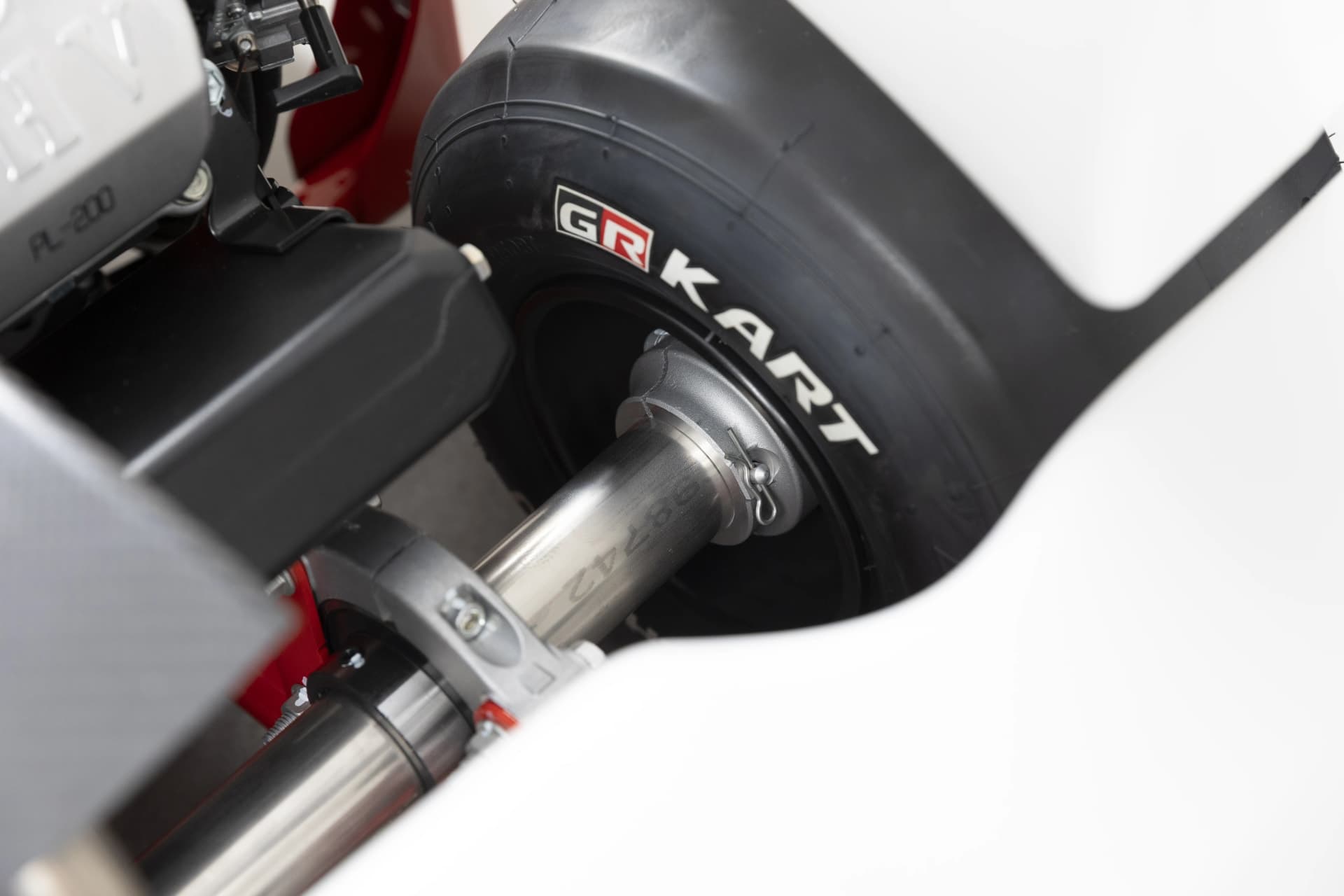
The GR KART is 1,820 mm long, 1,160 mm wide, sits on a 1,045 mm wheelbase and weighs 83 kg with its oil in. Power comes from a 215 cc air-cooled four-stroke single with an overhead-valve head, the kind of industrial engine that normally runs a pump, driving the rear axle through a centrifugal clutch and a toothed belt with an automatic tensioner, so there is no chain to oil or adjust. The prototype Toyota showed at Fuji in May 2025 was rated at 5 hp continuous and reached about 80 km/h, and Ito said then that the kart was never meant to be the fastest thing on the track. It runs on pump petrol or carbon-neutral fuel.
The GR KART fits in a Toyota Noah without disassembly
Transport is where Toyota spent its engineering. The kart slides into a Noah or Voxy, Japan's mid-size family minivans, in one piece, and one adult can load it alone. It also stands upright for storage with fuel and oil still inside, which no ordinary kart tolerates: the carburettor is a diaphragm type with no float chamber, the oil catch tank is designed for vertical storage and the filler is angled so petrol does not leak when the kart is on its tail. A separate stand and fixing kit are sold for the job.
One kart for every driver from 135 to 185 cm
The pedals slide and the steering wheel tilts, each on a single latch, so a child of 135 cm and an adult of 185 cm can share one kart on the same afternoon. A ballast box takes up to 15 kg for racing and has a transponder mount built in. The chassis frame is ordinary steel tube rather than a chromoly alloy, welded by robot at Toyota, and the rear axle is stainless steel. The safety list reads like a list of karting's known accidents: a bumper shaped to stop another kart riding over a rear tyre, stopper pins so a rear hub cannot walk off the axle, a throttle cable routed so it cannot stick open, and a seat with a hand-rest on top so nobody grabs the hot silencer climbing out.
Toyota's Gamagori workshop builds it and the GR app licenses you
Every kart is assembled at the Gamagori GR KART Workshop in Aichi, a small plant Toyota runs on its own production system, and the company argues that a car factory's cost discipline is what makes the price possible. Ownership runs through the GR app: it carries the theory course a beginner needs, then issues a driver's passport that stands in for a separate track licence at participating circuits. Racing in the SL Kart Meeting series still requires that series' own licence. Spares and accessories come from a dedicated Rakuten store, there is no warranty, and the kart can never be registered for the road. Twelve of them race on the closed streets of Gotsu in Shimane on 13 September, three days after the first one was sold.
Japan only: 36 tracks, seven GR Garages and no export plan
Toyota has said nothing about selling the GR KART outside Japan, and its distribution is the reason: the kart is sold where it can be driven, at circuits, not through the wider Toyota dealer network. Ito was explicit in 2025 that Toyota was not entering the kart business, only creating an entry level that did not exist. That is the same argument Akio Toyoda, the Morizo behind the GR Yaris Morizo RR, has made for years: motorsport should be something a family takes up the way it takes up football or baseball. The irony for European readers is that the benchmark Toyota beat by a factor of four was a European kart.
AutoNext Take
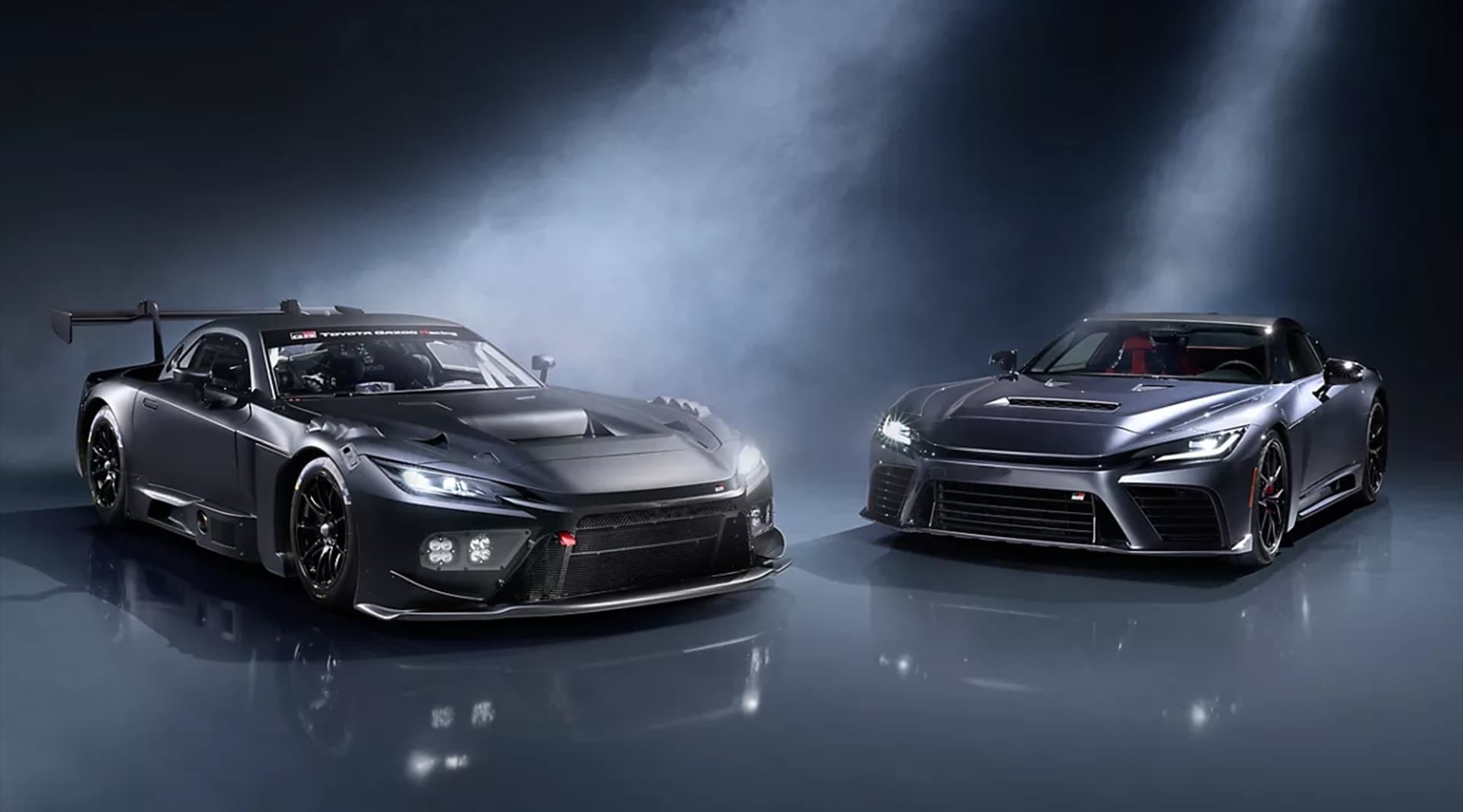
The kart is the least important part of the GR KART. Any chassis builder in Lonato can weld a steel frame around a 215 cc industrial single; none of them sells a minivan it fits in, an app that replaces the track licence, a parts store you can order from at midnight and a dealer network that also sells your next car. Toyota has priced a whole entry route into motorsport at 385,000 yen, and the route, not the price, is what the GR GT at the other end of the range has never had beneath it.
The number to watch is not 385,000 yen but 36. A kart is only as cheap as the nearest place you can run it, and today that means 36 tracks in a country of more than 120 million. If that list is still in the thirties in September 2027, the GR KART is a well-made piece of merchandise. If it has doubled, Toyota will have built the one thing Max Verstappen's 100-kart Silverstone weekend showed everyone wants and nobody sells: a way in.
Follow us on Google News.
Set AutoNext as your preferred source on Google Discover.