Volvo drops its 2026 outlook as European EV sales jump 51%
Europe now buys nine of every ten electric cars Volvo sells
Volvo Cars withdrew its full-year 2026 outlook for volume and cash flow on 2 October, the same day it reported a 10.7 percent fall in third-quarter retail sales to 141,609 cars. China and the United States caused the slide. Europe went the other way: sales there rose 2 percent, and fully electric sales jumped 51 percent.
Volvo withdraws its 2026 guidance two weeks after a 13-model plan
Volvo Cars will no longer meet its 2026 volume and cash-flow targets, and it has chosen not to replace them with new short-term guidance. In July it still forecast roughly break-even free cash flow for the year. It now warns of a significant hit to third-quarter core earnings and cash flow, on top of the raw-material, currency and depreciation costs it had already flagged. The timing hurts: on 17 September Volvo presented 13 new models by 2030 and an 8 percent operating margin target, which it says still stand. The warning lands four days after the office hiring freeze came to light.
Volvo's China sales fell 40.6 percent to 20,284 cars
Greater China cost Volvo 13,888 cars in the third quarter, 82 percent of the group's 17,006-car decline. Deliveries there fell from 34,172 to 20,284. Mild-hybrid and petrol models took the damage, dropping 52 percent to 14,000 cars, while plug-in hybrids rose 46 percent. Volvo sold just 968 fully electric cars in China in three months. It blames growing price pressure from local manufacturers and a premium segment that shrank by double digits, a market where a foreign premium badge no longer commands the price it once did.
Volvo's US electric sales nearly halved as Americas volume fell 14 percent
Volvo sold 30,777 cars in the Americas, 14 percent fewer than a year earlier, and its fully electric sales there fell 47 percent to 3,626. Part of that is a high base: American buyers rushed into electrified cars last year before the federal tax credit expired at the end of September 2025. Mild-hybrid and petrol sales slipped only 4 percent, so the gap is about electric demand rather than the brand. Volvo also cites weak consumer sentiment and fiercer competition among SUVs.
Volvo sold 40,466 electric cars in Europe, 45 percent of its sales there
In its Europe and rest-of-world region, Volvo delivered 90,548 cars, up 2 percent, and 40,466 of them were fully electric, against 26,829 a year earlier. That region now supplies 64 percent of Volvo's global volume and 90 percent of its electric sales. Part of the shift came at the expense of plug-in hybrids, down 30 percent to 17,517, which suggests buyers are skipping the halfway step. Volvo's reply is a new generation of long-range plug-in hybrids, which has not yet entered production.
The EX60 ramp-up at Torslanda now decides Volvo's cash flow
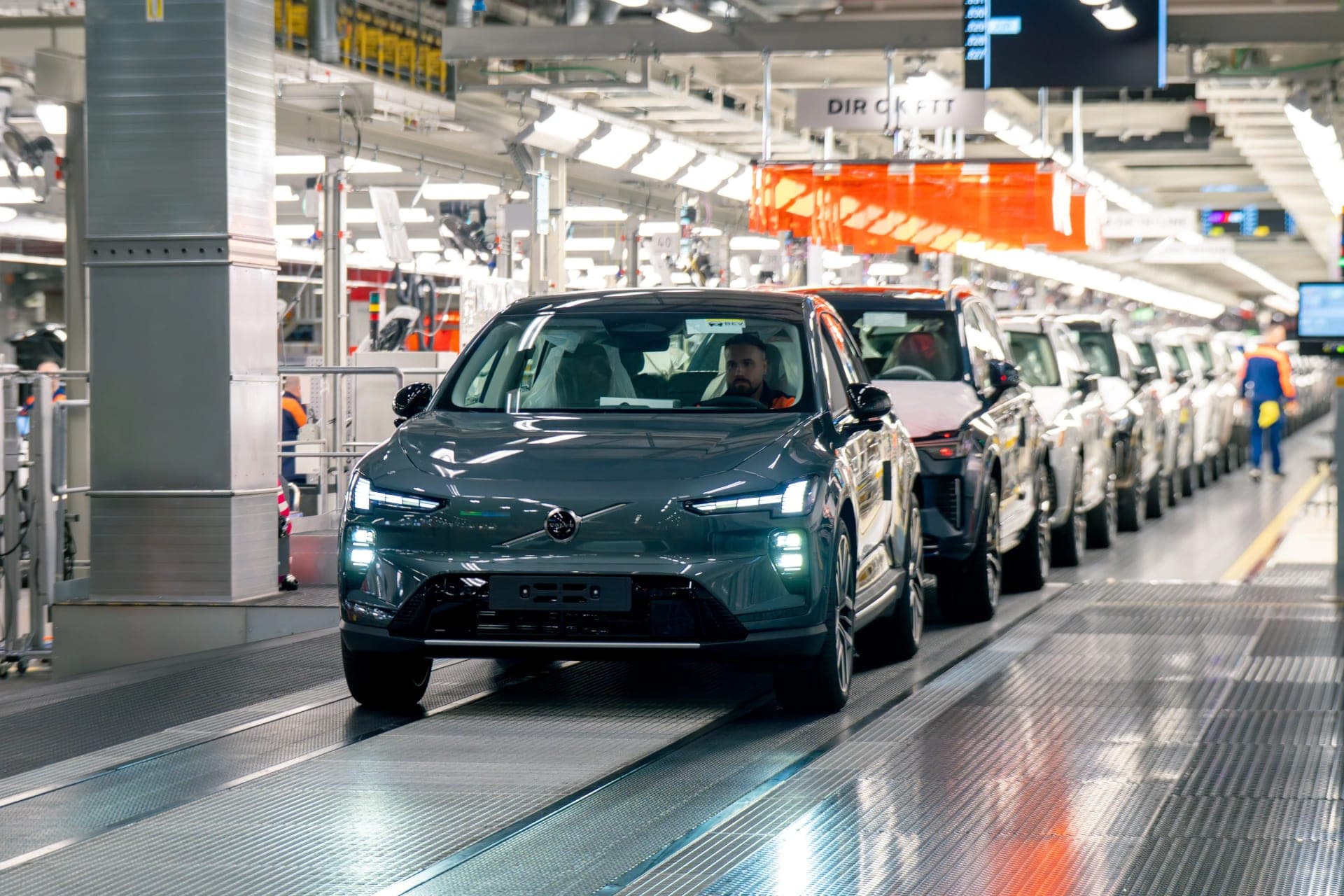
Volvo blamed most of its SEK 5.2 billion second-quarter cash outflow on building up stock of the EX60 at Torslanda. Those cars now have to reach customers, and Volvo says production is still ramping up. Chief commercial officer Erik Severinson names the electric SUV as the car leading European demand. The full third-quarter results, including the cash figure, follow on 23 October, when Volvo also promises details of further measures. Those measures arrive before Klaus Zellmer takes over as chief executive.
AutoNext Take
Volvo's problem is geography, not its electric strategy. In Europe, where it switched earliest, it added 13,637 electric sales and grew overall. In China, where its volume still rested on mild hybrids and petrol engines, it lost 15,144 of those cars. The withdrawn guidance also removes the year-end cash recovery that made September's hiring freeze look like a precaution, and our own expectation of a strong fourth quarter goes with it.
On 23 October Volvo has to show that Europe is paying for the losses elsewhere. A third-quarter cash outflow smaller than the SEK 5.2 billion of the second quarter would mean the EX60 is turning from stock into revenue, and the 8 percent margin plan stays credible. A larger one would put the 13-model offensive up for cuts before most of it reaches a showroom.