Your cruise control is built to ignore a car that was never moving
The system is excellent at following traffic and surprisingly poor at noticing traffic that has already stopped.
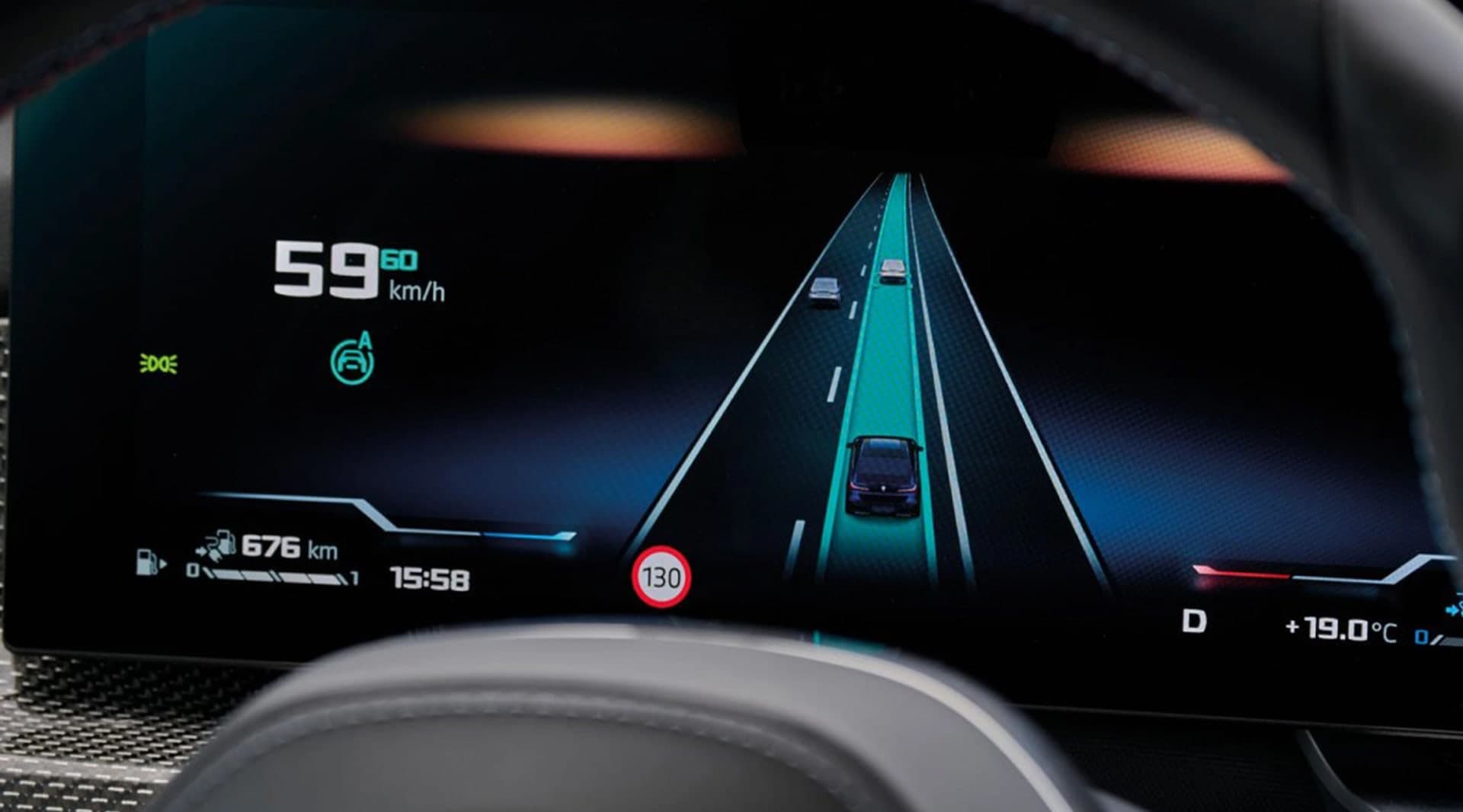
Adaptive cruise control is the most trusted piece of assistance technology in Europe, and the trust runs ahead of the engineering. Set it on a busy motorway and it holds a gap, slows for the lorry pulling out, picks the speed back up when the lane clears, and does it all so smoothly that within twenty minutes you have quietly promoted it from a convenience to a safety net. Then the car in front changes lane, and behind it sits the back of a traffic jam that has not moved in ten minutes, and your car does nothing at all. This is not a fault, not a cheap sensor and not a manufacturer cutting corners. It is a deliberate design decision taken in the radar software, for a reason that makes complete sense once you know it, and it is disclosed in your handbook in a sentence almost nobody reads: the system may not react to stationary vehicles. Every brand words it slightly differently and most bury it under a heading called limitations. It is the single most important paragraph in the manual of a modern car, and the gap between what that paragraph says and what drivers assume is where a whole category of motorway crashes lives.
Why the radar throws away the thing you are most worried about
The sensor doing most of the work sits behind the badge or in the lower grille, and it is a millimetre wave radar. It does two things well: it measures how far away something is, and it measures how fast that something is closing on you, by reading the frequency shift in the reflection. What it does poorly is tell you what the something actually is. To that radar, a car standing still in your lane and a steel sign gantry over your lane produce a very similar return: a solid metal object, dead ahead, approaching at exactly your own road speed. So does the crash barrier on a bend, the manhole cover in the tarmac, a road sign on a gantry leg and every parked car on the hard shoulder. If the software braked for all of them, the car would be undriveable, panic stopping every few hundred metres. So it does the only thing it sensibly can. It trusts objects that are moving, tracks those, and largely discards returns that show no motion of their own, treating them as roadside furniture unless the forward camera can positively confirm otherwise. The thing you are most afraid of, a vehicle that is not moving, sits on exactly the wrong side of that filter.
The failure has a shape, and it is always the same one
There is an important distinction hiding here, and it explains why the system feels so much better than that description suggests. If your car has been tracking a vehicle ahead, and that vehicle slows from 120 to 80 to 30 and finally to a standstill, the radar keeps hold of it the whole way down, because it was a moving object the entire time it was being watched. Any modern stop and go system will follow it to a complete stop and sit there. That works, and it is why the technology feels dependable in stop start traffic. The dangerous case is the object your car has never seen move. The classic version is the lane change: you are following a car at motorway speed, that car swings out at the last moment because the driver has spotted the queue, and the queue is revealed to your radar as a wall that has been stationary since before you arrived. The same thing happens coming out of a fast bend, over the crest of a rise, at the end of a roadworks section and behind a broken down vehicle. In every one of those cases your car has roughly one second of camera evidence to overrule its own filter, and you have the same second to react yourself.
Emergency braking is a different system with a different promise
The obvious objection is that every new car sold in Europe now has automatic emergency braking, which became mandatory for new type approvals in July 2022 and for every newly registered car from July 2024. That is true, and it is a genuinely valuable system, but it is not the backstop drivers imagine. Emergency braking is separate software with a separate job. It does target stationary vehicles, usually by combining the camera with the radar so it has two opinions before it slams the brakes on. It is deliberately tuned to intervene late, because a system that brakes early and often for phantom targets gets switched off by the driver or, worse, gets rear ended. And crucially, its design goal is to reduce the speed of an impact, not to guarantee there is no impact. It performs best at the lower speeds where it is most rigorously tested and where the physics are on its side. Nothing on your car makes a promise about avoiding a stationary vehicle at 120 km/h, and no manufacturer claims one. Emergency braking turns a very bad crash into a survivable one. That is the whole offer.
What quietly blinds the sensors
The radar looks through the badge or a plastic panel in the grille, and the camera looks through a small clear patch of your windscreen just ahead of the mirror. Both are easier to disable than people expect. Heavy motorway spray degrades radar performance, packed snow and thick mud across the badge can stop it outright, and so can an aftermarket number plate surround, a badly mounted front plate, a bike rack or a nose cone bug shield sitting in the beam. The camera loses the plot with a smeared windscreen, a worn wiper blade, low winter sun straight into the lens or a chip in the wrong place. A windscreen replacement is the underrated one, because the camera has to be recalibrated after the glass is changed and a car that skips that step aims its safety systems slightly wrong for the rest of its life. When the dashboard says the sensor is obstructed or the system is unavailable, treat that as the car telling you honestly that it has stopped watching the road. Drive the next stretch as though the feature does not exist, because for now it does not.
The gap setting matters more than the speed setting
Most drivers set the shortest following distance within a week of buying the car, because the longest one keeps inviting people to cut in. That is a fair annoyance and a bad trade. Adaptive cruise control brakes gently on purpose, using only a fraction of the deceleration the brakes can actually deliver, so that it never startles the driver or the traffic behind. On the shortest gap setting at motorway speed you have handed the system a problem it cannot solve with the force it is allowed to use, and you have taken away the space you would need to solve it yourself. Two gaps up costs you nothing except the occasional queue jumper, and it converts a late detection into a manageable one. The same logic applies to conditions. Spray, fog, low sun and the greasy first rain after a dry spell all degrade what the sensors can see and what the tyres can do at the same moment, which is exactly when a system tuned for gentle inputs is least able to help.
What to actually do
None of this is an argument for switching the system off. It is an argument for knowing precisely which job you have delegated and which job is still yours. Use it as a foot, never as a pair of eyes.
Read one page of your handbook: the limitations paragraph in the adaptive cruise control section. If it names a speed above which the car will not react to stationary objects, that number is worth knowing by heart.
Treat every queue as entirely your responsibility. Brake lights three cars ahead, a bridge with traffic backed up under it, hazard lights on the hard shoulder: cover the brake pedal and assume the car has seen nothing.
Watch for the lead car pulling out. That is the exact moment the system loses its target, and the moment the road most often has something standing still behind it.
Run a longer gap setting than feels necessary. Adaptive cruise brakes softly by design, so the space is the only part of the safety margin you control.
Keep the badge, the lower grille and the windscreen ahead of the mirror clean, and clear packed snow or mud before setting off rather than wondering later why the system dropped out.
Think twice before fitting a bike rack, a plate surround or a bug deflector across the front of the car, and check afterwards that no assistance warnings appear.
After any windscreen replacement, ask for written confirmation that the forward camera was recalibrated, and keep it with the service history.
Switch it off in dense fog, heavy spray, narrow roadworks lanes and stop start city traffic where cars cut in constantly. Those are the conditions it was never designed for.
Frequently asked questions
So will my car stop for a stationary vehicle or not?
It depends entirely on whether the car was tracking that vehicle while it was still moving. Slow down behind a car that gradually comes to a halt and a modern stop and go system will follow it to a standstill without drama. Arrive at speed at something that was already parked in your lane and you are relying on the forward camera to override a radar filter in the time it takes to close the gap. The honest answer is that your car might stop, and that you should never plan on it. Your own handbook will phrase this more carefully than any general article can, which is precisely why it is worth reading.
Is a newer or more expensive car better at this?
Generally yes, and not by as much as the price difference suggests. Higher resolution radar, better camera fusion and in a few cars an extra sensor type all raise the confidence with which a stationary object can be identified rather than filtered away, and the newest systems are meaningfully better at recognising a stopped queue than a system from ten years ago. But the underlying physics has not changed, the filter is still there for the same good reason, and the limitations paragraph still appears in the manual of the most expensive car on sale. Buy the newer system, keep the same habits.
Is this the same as self-driving?
No, and the distinction is legal as well as technical. Adaptive cruise control, with or without lane centring, is driver assistance. You remain the driver in the eyes of every European traffic code, you are responsible for the vehicle at all times, and a system that beeps, nudges or brakes is advising you rather than replacing you. The same logic applies to the speed warning system every new car in Europe now has. A handful of manufacturers offer genuinely conditional automated systems in specific countries, at low speeds, on approved motorways, and those are separate products with their own approvals and their own strict boundaries.
Why does it sometimes brake hard for nothing at all?
That is the same filter viewed from the other side, and it is the price of setting it anywhere except maximally cautious. A steel bridge joint, a large road sign on a bend, a lorry in the next lane on a tight curve or a car turning across the road ahead can all briefly look like a threat in your own lane. The car brakes, nothing happens, and you feel foolish. Report it if it becomes a pattern, because sensor alignment and software updates both fix real cases of this, but understand that a system tuned never to brake unnecessarily would also be a system that missed real obstacles.
Should I just stop using it?
No. Used properly it is one of the better things to happen to long distance driving in Europe. It holds a steadier speed than any human foot, keeps a consistent gap, removes a low level workload that accumulates into fatigue over three hours, and on a busy motorway it smooths the concertina effect that causes jams in the first place. The failure mode described here is narrow and specific, and the countermeasure costs nothing: a longer gap, your eyes up the road, and the understanding that the system manages the traffic it can see moving, while the stopped traffic is still your problem.