The child seat in your car is legal to use and illegal to sell
Nothing about the seat changed on 1 September 2024. Everything about selling it did.
On that date the European Union closed the market to child seats approved under the old UN Regulation 44. Shops had to clear the shelves, and a classified ad offering one second-hand is now an ad for something that cannot lawfully be sold at all. What the ban did not do is reach into the car. Using an R44 seat you already own remains entirely legal, and no end date has been set anywhere in Europe. That leaves millions of families in an odd position: a perfectly serviceable piece of safety equipment became unsellable overnight, and most owners have never looked hard enough at the orange sticker on the side of it to know which standard they are living with. The two labels look almost identical and rest on completely different ideas. R44 sorts children by weight, R129 sorts them by height. Under R44 a child could be turned to face forward at 9 kg, a figure plenty of babies reach before their first birthday. Under R129 they stay rear-facing until at least 15 months. And R44 never tested a side impact at all, in any of its versions, while R129 makes that test compulsory. If you have one seat in the car and a rough idea that it is fine, this is the fifteen minutes that tells you whether it is.
Two orange labels, and only one of them ever tested a side impact
The label is a small orange sticker on the side or the back of the shell, and its first line settles which world you are in. An R44 seat reads ECE R44/04 and gives a weight range: 0 to 13 kg, 9 to 18 kg, 15 to 36 kg. An R129 seat gives a height range in centimetres instead, typically 40 to 87 cm, 76 to 150 cm or 125 to 150 cm, with a maximum weight alongside it. Weight was always a poor proxy for the thing that matters, because two children of identical weight can stand 10 cm apart, and it is height that decides where the shoulder, the head and the belt actually meet. R129 added the compulsory side-impact test, a more sensitive crash dummy with instrumentation in the neck and abdomen, the 15-month rear-facing minimum, and, on i-Size seats, ISOFIX mounting that removes the two commonest fitting errors in one go: a belt threaded through the wrong slot, and a seat left loose enough to move. None of that was asked of R44. Be clear about what this does not mean, though. A correctly fitted R44 seat with the harness properly tightened is vastly better than no seat, and better than an R129 seat fitted badly. The standard sets the floor. What happens on the school run sets the rest, and the crash these seats are really designed around is not a motorway pile-up but an ordinary impact at 50 km/h on a country road, the kind that often begins with a swerve, which is exactly the moment not to swerve.
The EU wrote both 135 and 150 centimetres into the same law
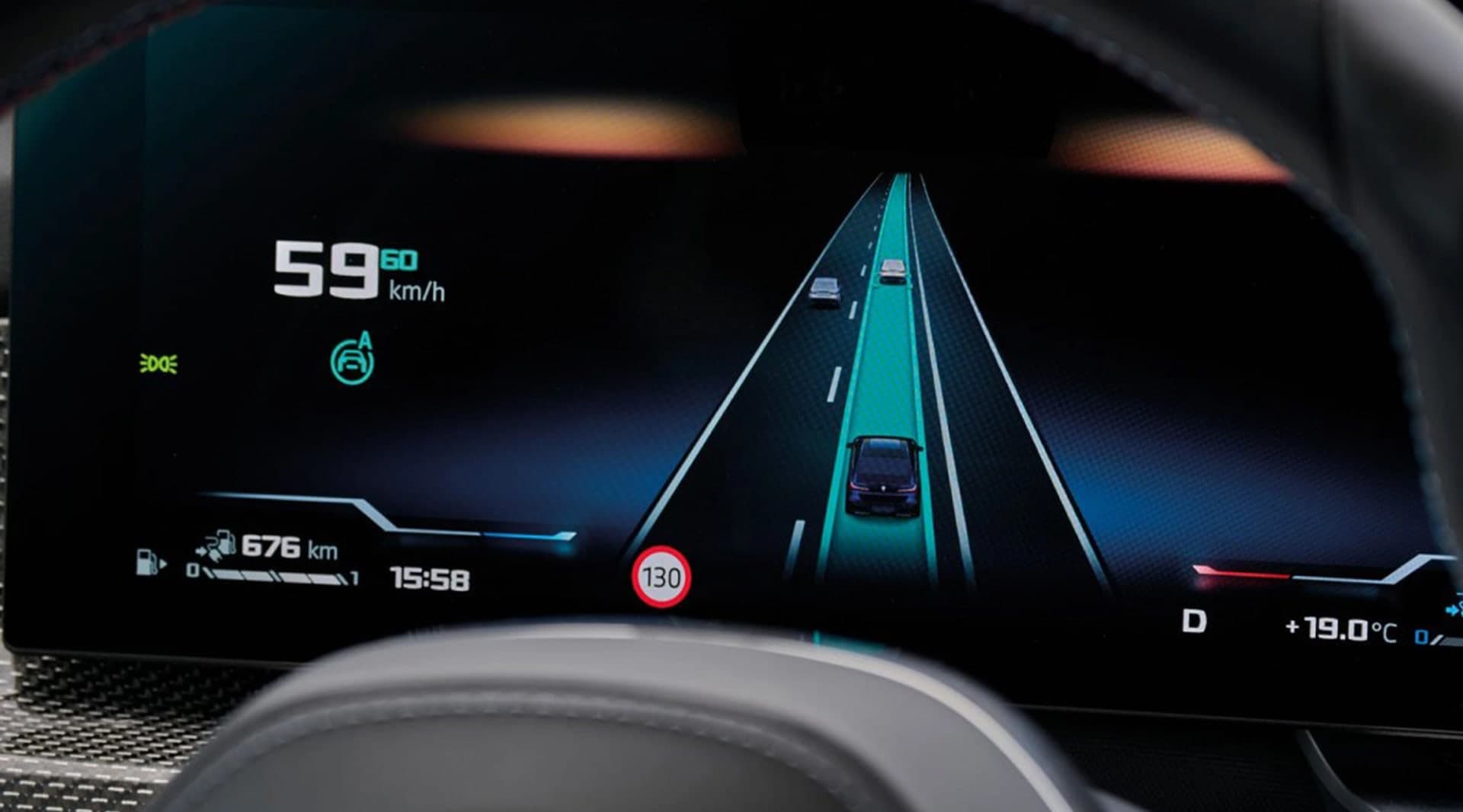
Drivers assume the differences between countries are national stubbornness. They are not: both numbers come from the same European text. Directive 91/671/EEC, as amended in 2003, sets the baseline that a child under 150 cm must travel in a restraint suited to their size, and then expressly allows member states to let children between 135 cm and 150 cm use an adult belt instead. Each country simply picked one of the two numbers Brussels offered. Germany applies 150 cm or 12 years, whichever comes first. Austria applies 150 cm or 14 years. Italy applies 150 cm. Belgium, the Netherlands, France, Spain and Portugal stop at 135 cm. The practical consequence is that a 140 cm ten-year-old riding legally on a plain seat belt in Antwerp or Lyon needs a booster the moment the car reaches Aachen or the Brenner, and no sign at the border will mention it. Note also what the rule is measured on: a standing height, taken against a doorframe, not the age on a passport. It is the same pattern as the speed warning every new car in Europe now beeps at you, a European rule that arrives in your car without anyone explaining it to you.
The mistakes that actually get punished are about where the child sits
One rule is the same everywhere in the EU: a rear-facing seat may never go in front of an active passenger airbag. It has to be switched off first, usually with a key-operated switch in the end of the dashboard or a menu item, and there is a confirmation light that is worth looking at before you drive away. Beyond that, countries diverge sharply on whether a child may sit in front at all. Spain keeps anyone under 135 cm out of the front seats unless the rear seats are unusable or already occupied by other children. France bars under-tens. Portugal keeps under-twelves and anyone under 135 cm in the back. Germany, Belgium, the Netherlands, Italy and Austria all allow a correctly restrained child up front, which catches visitors out in the other direction. The penalties are not symbolic either: roughly 300 euros in Spain, 135 euros in France, 174 euros in Belgium, 140 euros in the Netherlands, 80 to 323 euros plus five licence points in Italy, and in Austria a scale that can reach four figures where the child was genuinely endangered. Italy then adds a requirement almost nobody outside the country has heard of. Since November 2019, a child under four must travel with an anti-abandonment alarm, a pressure-sensing pad or seat that pairs with a phone and warns you if you walk away from an occupied seat. It binds Italian-registered vehicles, and foreign-registered vehicles driven by Italian residents. A family arriving on holiday in a Belgian or Dutch car is outside it. Anyone hiring an Italian car with a toddler is inside it, and the rental desk will not always say so.
The second-hand seat is where the saving and the risk meet
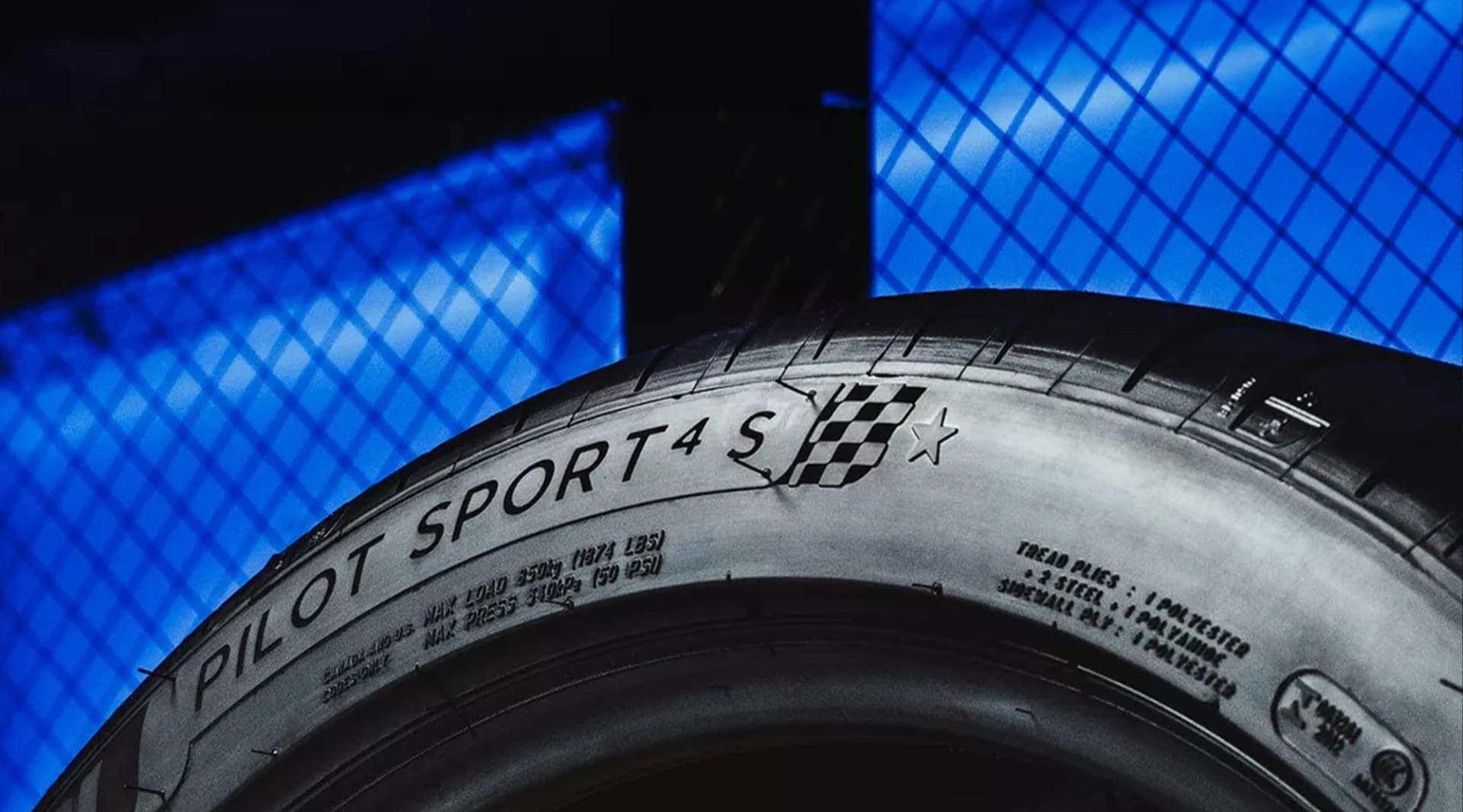
The sale ban has quietly killed a market that used to be worth a few hundred euros a year to the average family. An R44 seat can no longer be offered for sale anywhere in the EU, classified sites and second-hand shops included, and a retailer with stock still on the shelf is in breach. Handing one down inside the family is a different act from selling, and the ban is written around placing a product on the market, but the safety questions do not care which of the two you are doing. Plastic ages. Manufacturers stamp a production date into the shell, usually a small dial or a moulded month and year on the underside, and most manuals put the service life at six to ten years. A seat that has been in a crash has to be replaced even when nothing is visible, because the energy goes into deforming the shell and stretching the webbing whether or not it leaves a mark. Neither of those things can be verified from a stranger's photograph. It is precisely the problem of the four-digit code on your tyres: the date that decides everything is moulded into the product, and hardly anyone reads it. One relic is still circulating in large numbers, and it is the one worth acting on today. The backless booster cushion, the flat 15 euro slab that lives in the boot for grandparents' duty, has not been approvable for a child under 125 cm or 22 kg since February 2017, because a cushion cannot route the diagonal belt across the shoulder and offers nothing whatsoever sideways. Older ones stayed legal to use, which is why so many are still in cupboards, and why they get grabbed for exactly the short, distracted trips where the crash happens.
What to actually do
All of this is settled in a quarter of an hour with the rear door open, and most of it never needs doing again.
Find the orange label on the side of the shell and read the first line. ECE R44/04 with a weight range, or R129 with a height range in centimetres. Everything else follows from that one line.
Measure your child standing, in socks, and write the number down. That figure, not their age, is what an officer applies: 150 cm in Germany, Austria and Italy, 135 cm in Belgium, the Netherlands, France, Spain and Portugal.
Keep them rear-facing for as long as the seat allows, not just to the 15 months R129 demands. A small child's head is proportionally far heavier than an adult's, and the neck holding it is not built for a frontal impact.
Never put a rear-facing seat in front of a live airbag. Switch it off, then look for the confirmation light on the dashboard before you move.
Check the production date moulded into the shell against the service life in the manual, typically six to ten years. A seat that has spent its life baking in a parked car ages faster than one that has not.
Retire the backless booster cushion for anyone under 125 cm. It positions nothing across the shoulder and protects nothing sideways, and a high-back booster costs less than the fine in Spain.
Do not buy a used seat. R44 ones cannot lawfully be sold at all now, and with any seat you cannot verify crash history or true age from a photograph.
Before a long trip, check the strictest rule on the route rather than the one at home, and pack the booster you thought your child had outgrown.
Take the winter coat off before the harness, not after. A padded coat compresses in a crash and leaves slack the strap never had. Aim for the harness flat over the collarbone with no more than a finger's thickness of play.
Frequently asked questions
Is my R44 child seat illegal now?
No. Using it is legal and no end date exists. What ended on 1 September 2024 is the selling of R44 seats in the EU, new and second-hand alike. Keep using yours, fit it properly, and replace it when your child outgrows it or the production date and the manual say its time is up. The replacement will be an R129 seat, because nothing else is on sale.
At what height can my child use the adult seat belt?
Legally, 135 cm in Belgium, the Netherlands, France, Spain and Portugal, and 150 cm in Germany, Austria and Italy. Both numbers come from the same EU directive, which is why neighbours disagree. Practically, run the belt-fit test before you celebrate: the diagonal should cross the middle of the shoulder rather than the neck, the lap belt should sit on the hip bones rather than the stomach, the back should be against the backrest and the knees should bend at the edge of the seat. If any of those fail, keep the booster whatever the law allows.
Can I still use a booster cushion without a backrest?
An older cushion approved from 15 kg is still legal to use, which is the source of the confusion. But no new model has been approvable for a child under 125 cm or 22 kg since February 2017, and the reason is worth understanding: the cushion only raises the child. It cannot pull the diagonal belt off the neck, it cannot stop a sleeping head falling out of the belt, and it offers nothing at all in a side impact. A high-back booster does all three.
Can I sell or hand on the seat we have finished with?
An R44 seat cannot be sold at all in the EU, including privately and through second-hand shops. An R129 seat can still be sold, but ask yourself what a stranger can verify: not the crash history, not whether it was ever dropped hard onto concrete, not always the age. Passing one to a sibling or a close friend is a different matter, because you can vouch for both. That is the only second-hand transfer really worth making.
Does the seat have to be ISOFIX or i-Size?
No. R129 covers belt-installed seats as well as ISOFIX ones. The i-Size label is a compatibility promise: such a seat fits any seating position in the car marked i-Size, with no list to check. An ISOFIX seat without that label comes with a vehicle compatibility list you do have to check, and an older car may have no ISOFIX anchor points at all, in which case a correctly belted R129 seat is the right answer rather than a compromise.