M+S is a claim your tyre maker wrote itself, and four countries stopped accepting it
Only one of the two markings on your winter tyres ever had to prove anything.
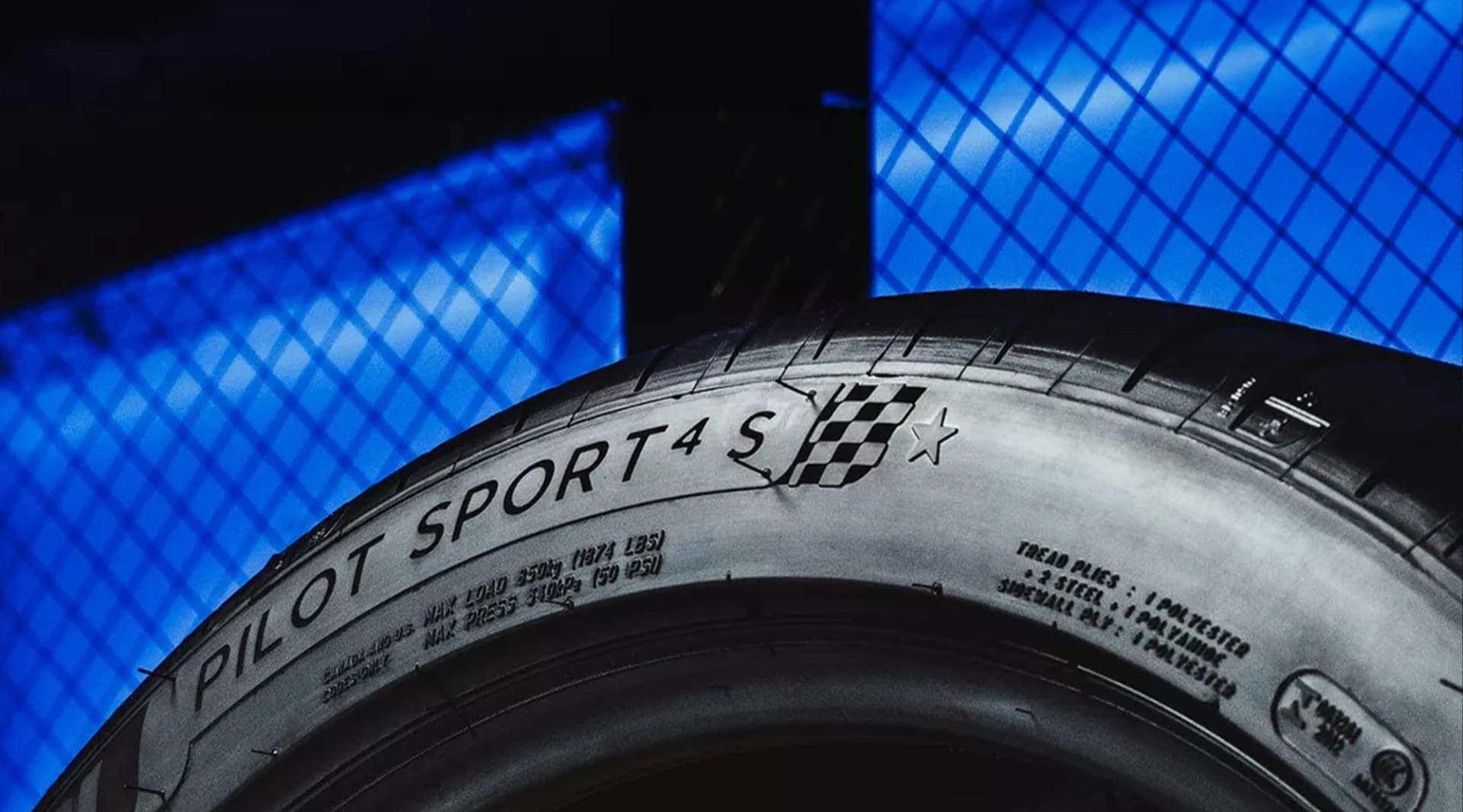
Almost every winter and all-season tyre sold in Europe carries two stamps on its sidewall, and drivers read them as the same claim written twice. They are nothing alike. M+S stands for mud and snow, and it describes tread geometry: wider grooves, more empty space between the blocks, more biting edges. No laboratory measures it, no authority signs it off, and nothing prevents a manufacturer moulding those three characters into a tyre that has never turned a wheel on snow. The three-peak mountain with a snowflake inside it, 3PMSF, is a fundamentally different kind of statement. To wear it, a passenger car tyre has to be run against a standard reference tyre on packed snow under UNECE Regulation 117 and beat it: a snow grip index of at least 1.07 on the braking test, or 1.10 on the acceleration test. One marking is an intention, the other is a result. On 1 October 2024, four European countries quietly stopped accepting the intention, and if your all-season tyres are more than a few years old there is a reasonable chance they only carry the one that means nothing.
Germany, Austria, France and Sweden want the snowflake. Italy still does not
Germany's winter tyre duty has never been a date on a calendar, which is the first thing visiting drivers get wrong. The StVO makes it situational: on black ice, packed snow, slush, ice or frost, the car needs winter-capable tyres, in April as much as in January, and on a mild December day it needs nothing special at all. What changed on 1 October 2024 is which tyres qualify. The transitional period for M+S-only tyres built before 2018 expired, and since then the snowflake is the only marking Germany recognises. Austria moved on precisely the same date, inside its 1 November to 15 April weather-dependent window, and adds a condition most drivers never hear about: a tyre only counts as a winter tyre there at 4mm of tread or more, 5mm for cross-ply, well above the 1.6mm that keeps it road legal. A perfectly legal 3PMSF tyre worn to 3mm therefore satisfies Germany and fails Austria on the same journey. France dropped M+S from its Loi Montagne on 1 November 2024, covering 34 mountain departments from 1 November to 31 March, and requires four identical tyres rather than a pair. Sweden followed on 1 December 2024 for its 1 December to 31 March period, with 3mm minimum. Italy is the country that did not move: where the roadside signs impose the obligation between 15 November and 15 April, an M+S tyre is still accepted, which produces the odd result that one set of tyres can be compliant heading south over the Brenner and illegal on the way back.
The fine is rarely the expensive part, and in France there is no fine at all
Germany charges the driver 60 euros and a point in Flensburg, rising to 120 euros where you obstruct traffic, and separately fines the owner who let the car out on the wrong rubber. Austria's exposure runs from a 35 euro on-the-spot payment to four figures where the vehicle is judged an actual danger. France is the genuinely surprising one. The 135 euro fixed penalty that every guide quotes has never once been issued, because the decree that would allow police to write the ticket was never published and the government has since confirmed it is not coming. Officers can stop you, inspect the tyres and explain the law, and that is the end of it. The obligation stands; the punishment does not exist. That gap matters far less than it sounds, because the ticket was never the real exposure in any of these countries. Your third-party liability cover pays the other driver whatever you were running on, since that is precisely what compulsory motor insurance is for and no insurer can walk away from it. Your own comprehensive claim is the vulnerable one, because driving on tyres the country you were in did not accept is exactly the kind of fact an insurer reaches for when it wants to argue gross negligence and reduce what it pays out for your car. In France, where nobody can hand you a ticket, that argument is the only consequence left standing, and it is comfortably the larger one. Anyone who has read what the payout for a written-off car really means will recognise how much room there is in that conversation.
3PMSF is a legal floor, not a recommendation
Here is what the snowflake does not tell you, and it is worth knowing before you spend money on the strength of it. The Regulation 117 test is one snow traction comparison against a reference tyre that is itself no longer a modern design, and clearing it by seven percent on the braking method is enough to pass. Nothing in that test measures braking on ice, wet grip at two degrees, aquaplaning in slush, or how the compound behaves in its fourth winter. That is why a cheap all-season tyre wearing a snowflake and a premium winter tyre wearing the same snowflake can stop several car lengths apart on the same slushy roundabout while both remain entirely legal from Lisbon to Helsinki. Read the marking as an entry ticket and then choose on independent test data above it, particularly if you live somewhere that gets cold rain rather than snow, since that is the condition the marking says least about. The familiar seven degree rule deserves the same scepticism. Summer compounds do stiffen as the temperature falls and winter compounds do turn greasy in the heat, but there is no cliff at seven degrees and never was: the figure is a tidy simplification of a gradual curve, invented to make the changeover decision easy to print on a poster. What should actually decide your date is the pattern of your mornings over a fortnight, not a single reading. And while the wheels are off, look at the four-digit code on the sidewall, because a winter set that spends half its life stacked in a garage collects years far faster than it collects kilometres and tyres have an expiry date that is not written as one.
The half of Europe that requires nothing, and why that is not the same as needing nothing
Belgium, the Netherlands, Luxembourg, Ireland, Denmark, Spain, Portugal and the United Kingdom impose no general winter tyre obligation whatsoever. The only tread rule is the European minimum of 1.6mm, and a Belgian or Dutch car on summer tyres in January is entirely legal at home. It stops being legal roughly an hour after it crosses into Germany, which is the single most common way ordinary families end up non-compliant: nobody sets out to break a tyre law, they set out for the Alps. Spain and Italy add a further wrinkle, since local authorities there can impose winter equipment by road sign at short notice, so the requirement can appear ahead of you on a gantry rather than in a guide you read in October. The flatland countries also illustrate why the legal question and the safety question are different. A summer tyre on a Belgian roundabout at three degrees in the rain is legal, and it is also the reason so many low-speed shunts happen in the first genuinely cold week of the year, when the road surface is cold, the tyres are cold and nobody has adjusted anything. The same trap catches drivers in the first rain after a long dry spell. If your winter is mostly wet and rarely white, a 3PMSF all-season is a sound answer. If it involves a mountain, an alpine holiday or a commute that starts below freezing, it is the minimum rather than the answer.
What to actually do
All of this is decided in the two minutes you spend crouched next to a wheel, before the fitters get busy and before anyone crosses a border.
Crouch down and read the sidewall now, not in November. You are looking for the small mountain with a snowflake in it. M+S on its own is, in the eyes of Germany, Austria, France and Sweden, a summer tyre.
Check tread depth against the strictest country on your route rather than your own: 4mm in Austria and Czechia, 3mm in Sweden, Finland and Slovenia, 1.6mm everywhere else.
Fit four, never two. France requires four identical tyres and Slovenia requires all four wheels, and a car with grip on one axle only is harder to catch than a car with mediocre grip on both.
If you run all-season tyres, confirm the snowflake specifically. Plenty of all-terrain and SUV patterns carry M+S alone and always have.
Read the four-digit DOT code while the wheels are off. A winter set stored half the year ages by the calendar, not by the odometer.
Do not lean on the French fine being unenforceable. The obligation stands, and it is your own comprehensive insurer, not a gendarme, who will bring it up.
Heading to Italy only, M+S still passes. If any part of the route runs through Austria, Germany or a French mountain department, it does not.
Book the changeover in the first half of October. Fitters across northern Europe run out of slots in the last week of the month, every single year.
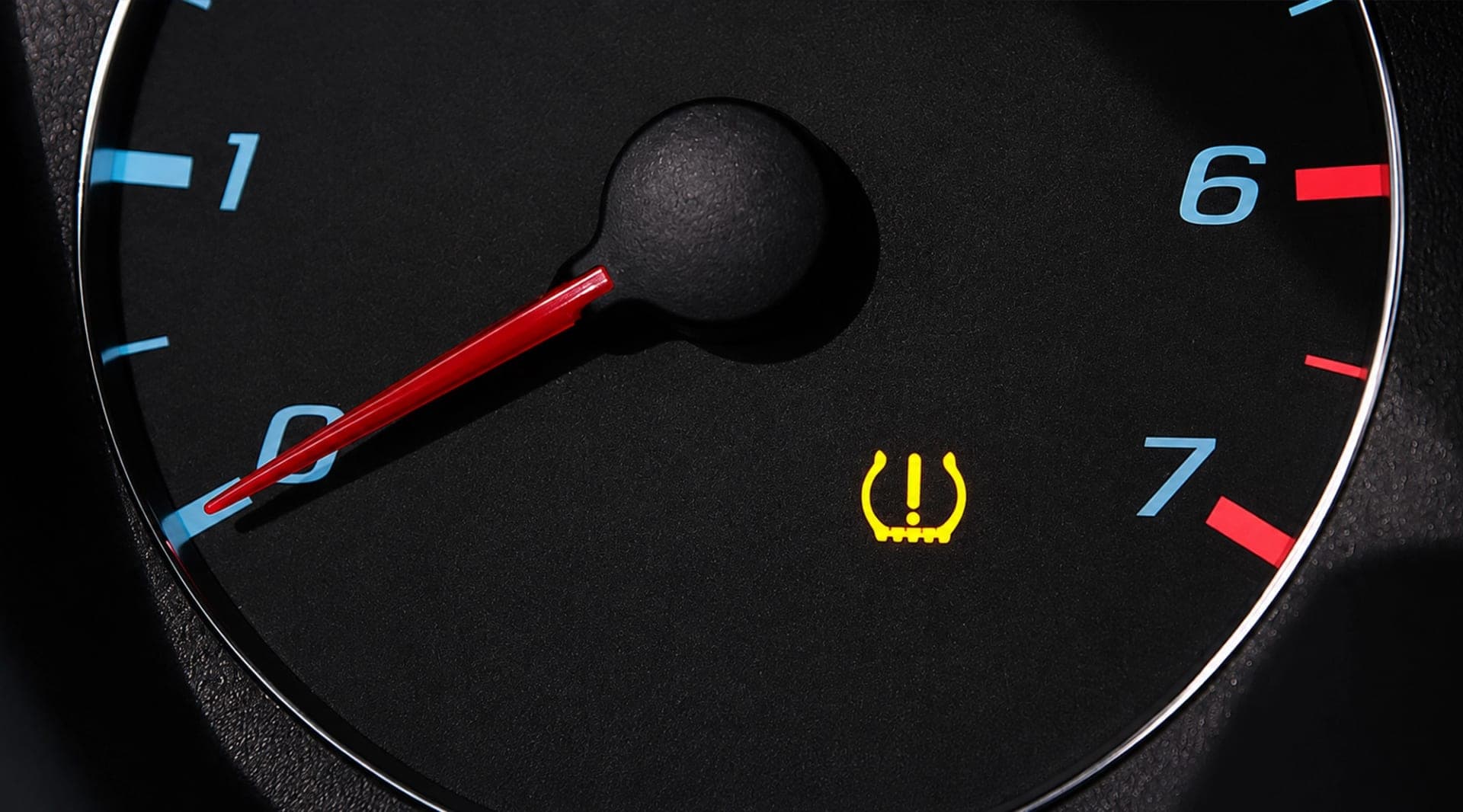
Reset and re-check pressures after the swap. A different tyre and colder air both move the number, and the warning light is not a gauge.
Store the summer set dry and out of sunlight, upright or stacked no more than four high, and mark which corner each came off.
Frequently asked questions
Are all-season tyres legal as winter tyres in Europe?
Yes, provided they carry the 3PMSF snowflake, and that is the whole condition. An all-season tyre with the snowflake is legally a winter tyre in every country that has a requirement, including Germany, Austria, France and Sweden. An all-season tyre with only M+S is not, in any of those four, however aggressive the tread looks. The legal status is decided entirely by the marking, never by the category name the retailer uses, so check the sidewall rather than the product page.
My tyres say M+S and nothing else. Are they suddenly illegal?
They are perfectly legal to own and to drive on in Belgium, the Netherlands and every other country with no winter requirement, all year round, down to the usual 1.6mm. What they can no longer do is satisfy a winter tyre obligation in Germany, Austria, France or Sweden. Nothing has to be thrown away: it is a question of where the car goes between roughly November and March, and whether it will meet winter conditions once it gets there.
Do I need winter tyres in Belgium or the Netherlands?
Not legally. Neither country has any winter tyre obligation, and the only tread requirement is the European 1.6mm minimum. The reason to fit them anyway is practical rather than legal: the flat, wet, three-degree winter that both countries specialise in is precisely where a cold summer compound performs worst, and it is also where the majority of low-speed winter damage happens. If the car regularly leaves for Germany, Austria or the Alps, the decision is made for you at the border instead.
How much tread does a winter tyre actually need?
Legally it depends on where you are, and the spread is wide: Austria and Czechia demand 4mm before a tyre counts as a winter tyre, Sweden, Finland and Slovenia 3mm, and the rest of Europe accepts the 1.6mm general minimum. Practically, a winter tyre does its work by packing snow into the grooves and gripping snow against snow, so the depth is the mechanism rather than a formality. Below roughly 4mm that mechanism stops working long before the tyre becomes illegal, which is why the strictest countries picked that number.
When should I swap over?
The old German saying is from O to O, October to Easter, and as a diary reminder it is hard to beat. Ignore the idea that seven degrees is a switch that flips: the compound change is gradual and the exact figure was chosen because it is memorable. Watch your own early mornings over a fortnight instead, and swap when they are consistently in low single figures rather than on the first cold day. Booking in early October also means you choose your date rather than queueing for whatever the fitter has left in November.