The safest thing you can do about a deer in the road is hit it
Braking hard in a straight line feels like giving up, and it is the only part of this you actually control.
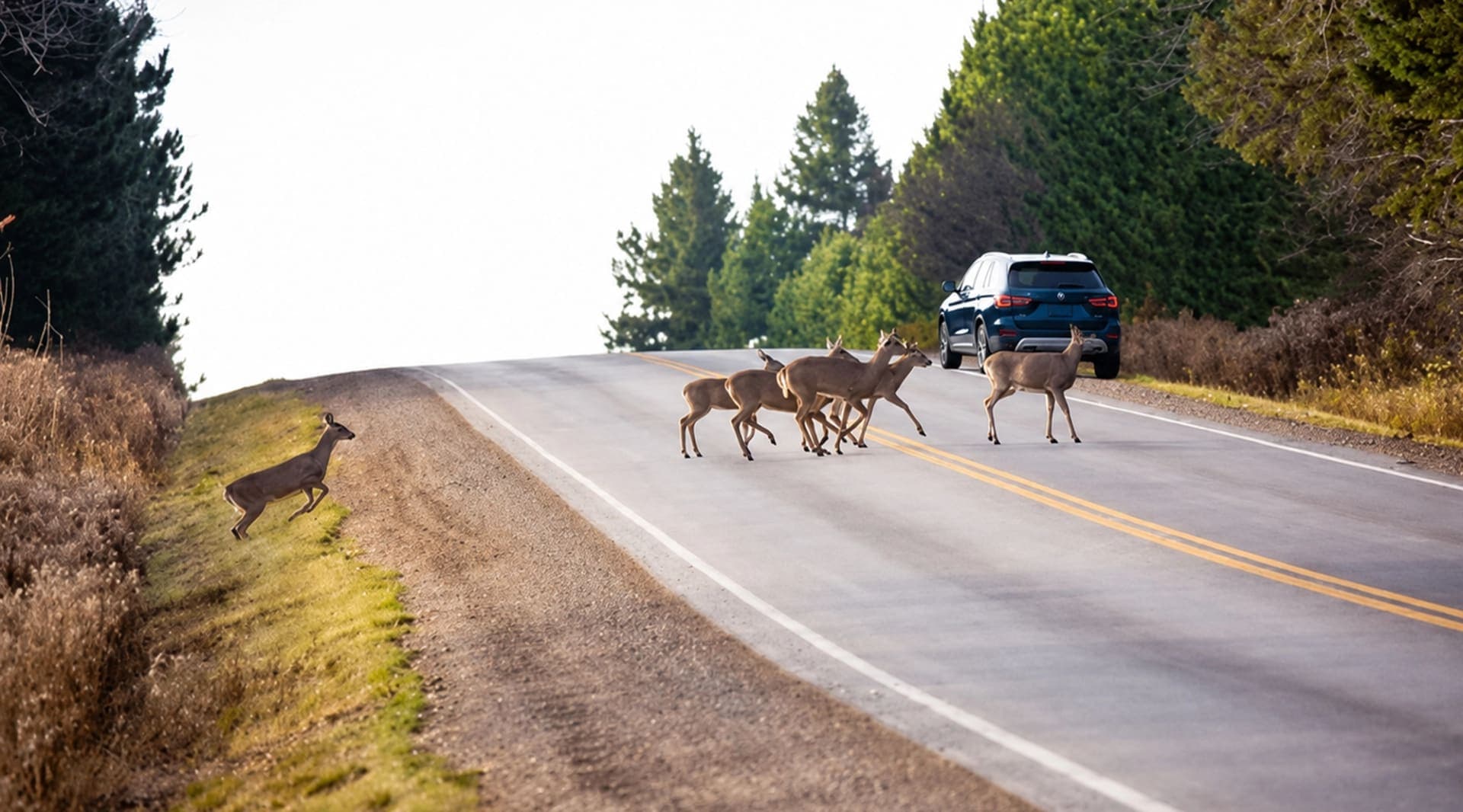
An animal stepping into your headlights is one of the few hazards on a European road where the correct response is the exact opposite of the instinctive one. Everything in you says steer around it, and the car will happily help: modern steering is light, the tyres have grip in reserve, and at the speeds where this usually happens there really is room to go left or right. That is the trap. A roe deer weighs twenty to thirty kilos and lands on a bonnet that was designed to fold around exactly that kind of impact. A tree weighs several tonnes and was designed to do nothing at all. Germany alone records around 276,000 wildlife collisions a year, statistically one every two minutes, and in the UK the estimate runs to 74,000 deer collisions carrying 400 to 700 human injuries and roughly twenty deaths with it. Almost none of those deaths are caused by the deer. They are caused by the ditch, the oncoming lane, the crash barrier and the oak, and every one of those is reached by swerving.
Autumn does not create the animals, it moves your commute into their hours
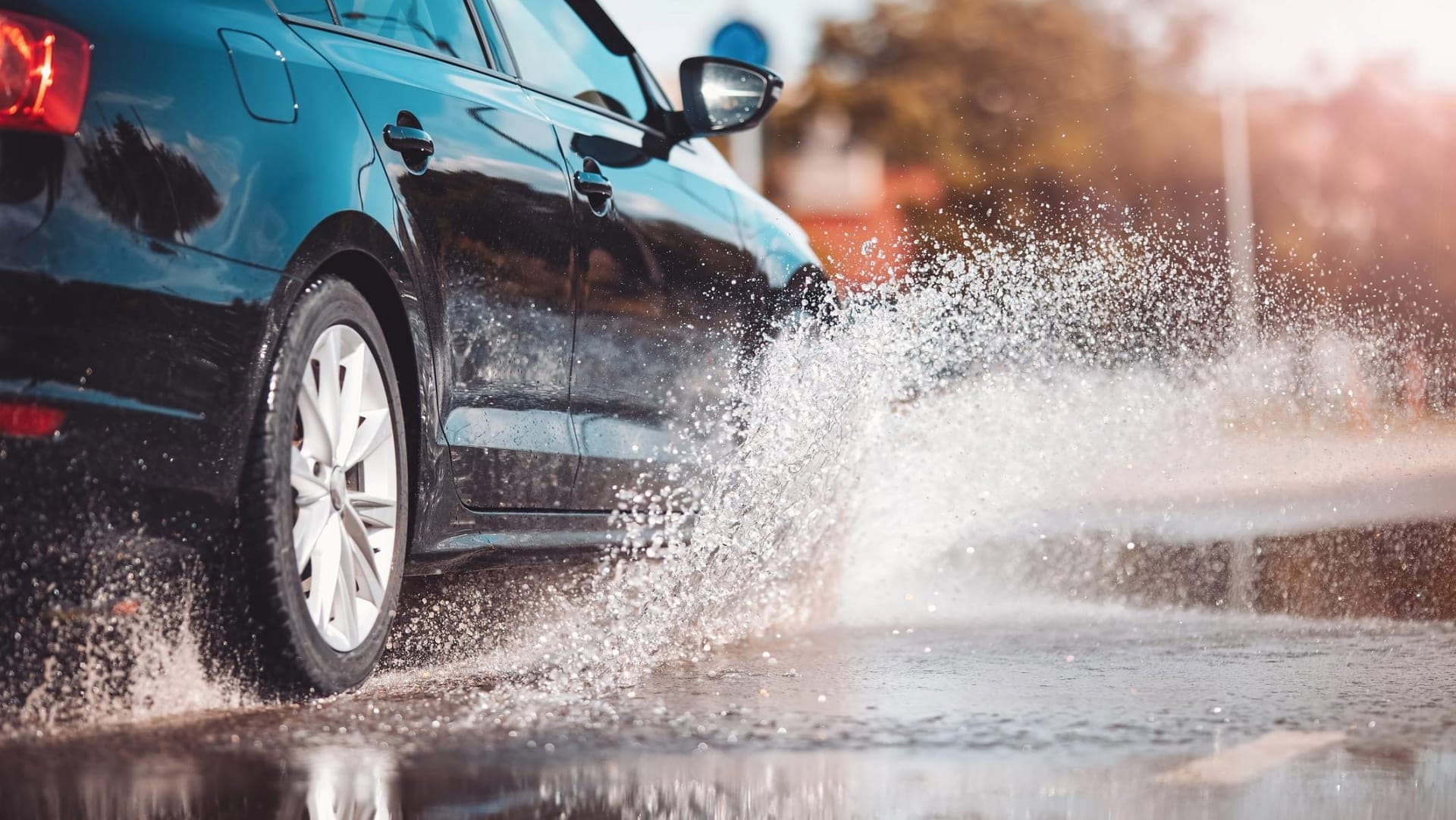
Deer are busiest around dawn and dusk all year round, which for most of the summer means they are moving while you are asleep or eating dinner. From late September that quietly changes. The rut runs through October and November for fallow, red and sika deer, so animals that normally keep to a small patch start crossing roads they would otherwise avoid, and there is a second smaller peak in spring when yearlings are pushed out to find their own ground. At the same time the harvest strips the cover off the fields, so the walk between woodland and feeding ground gets longer and more exposed. Then the clocks go back on the last Sunday in October and the evening rush hour lands squarely inside dusk. Nothing about the animals has changed. Your headlights are simply now pointing at them. The stretch to respect is the ordinary one: an unlit road with trees on one side and open field on the other, which is also where the first rain after a dry spell will quietly cost you a car length of braking distance at the worst possible moment.
The swerve is the injury
Every European motoring club that has looked at this arrives at the same instruction, and ADAC states it about as plainly as it can be stated: do not swerve, brake and hold your lane. In practice that means standing on the brake pedal as hard as the car will accept, keeping both hands on the wheel and gripping it properly, because an impact on one corner can wrench the wheel out of a casual one-handed hold. In a manual, push the clutch down as you brake so the engine keeps running and you keep your steering assistance and your brake servo. What makes this hard is that ABS was specifically designed to let you steer while braking at maximum, so the car will obediently follow the panic input you give it. A car that brakes in a straight line and hits an animal has a folding bonnet, a crumple zone, airbags and a fixed, survivable outcome. A car that leaves its lane at 80 km/h has none of that, and the object it finds is chosen at random.
Headlights down, horn on, and never believe there is only one
If you spot the animal at the verge with time to spare, there are three things to do and the order matters. Brake first, hard and early, because every km/h you shed is distance and choice you get back. Then dip your high beam. A dazzled animal does not run away from the light, it freezes in it, and a frozen animal is standing exactly where you are going. Then sound the horn, one long note rather than a flurry. And treat whatever you have seen as the first of several. Roe deer move in small groups outside the rut, wild boar in family parties of a dozen or more, and the one that crossed cleanly ahead of you is very often the one that draws the rest across behind it. The mistake almost everybody makes is accelerating the instant the road looks clear again. Stay slow for the next few hundred metres.
The gadgets sold for this do not work
Two products have been sold against this risk for decades and neither survives testing. The little whistles you clip to a bumper produce a sound deer can hear, but no clear effect on animal behaviour has been shown for any commercial car-mounted device used from a moving vehicle. The blue reflectors mounted on posts along wooded roads have fared no better: a randomised crossover study across real road sections found that none of the reflector models tested reduced collisions at all, and the researchers recommended against using them as a mitigation tool. What genuinely works is unglamorous and mostly not yours to install, namely proper wildlife fencing and green bridges, plus the one lever you do hold, which is speed. Thirty km/h off the clock on a dark forest road buys more safety than anything you can screw to the bodywork.
Only one kind of policy pays for this
Compulsory third-party liability, the cover every car in Europe must carry, pays for damage you do to other people. It has never paid for your own car, and a wild animal has no owner and no insurer to pursue, so with liability cover alone a wildlife collision is entirely your bill. The damage is repaired only if you hold partial comprehensive, sold as Teilkasko in Germany, omnium in Belgium, casco in the Netherlands and by a dozen other names, or full comprehensive above it. It is worth reading which animals your policy actually names, because the wording is not always as broad as you would assume. German partial cover has historically been written around Haarwild, furred game such as deer, boar, fox and hare, with birds and livestock either excluded or added only by a clause upgrading the cover to all animals. And there is an asymmetry here worth carrying with you into the moment of decision: hit the animal and you have a straightforward partial comprehensive claim, swerve and hit a tree and you have an own-damage collision claim that only full comprehensive covers, which plenty of older cars are not carrying at all. Once you know it is covered, the separate question is whether making the claim is worth it once the excess is deducted.
The report is not a formality, it is the claim
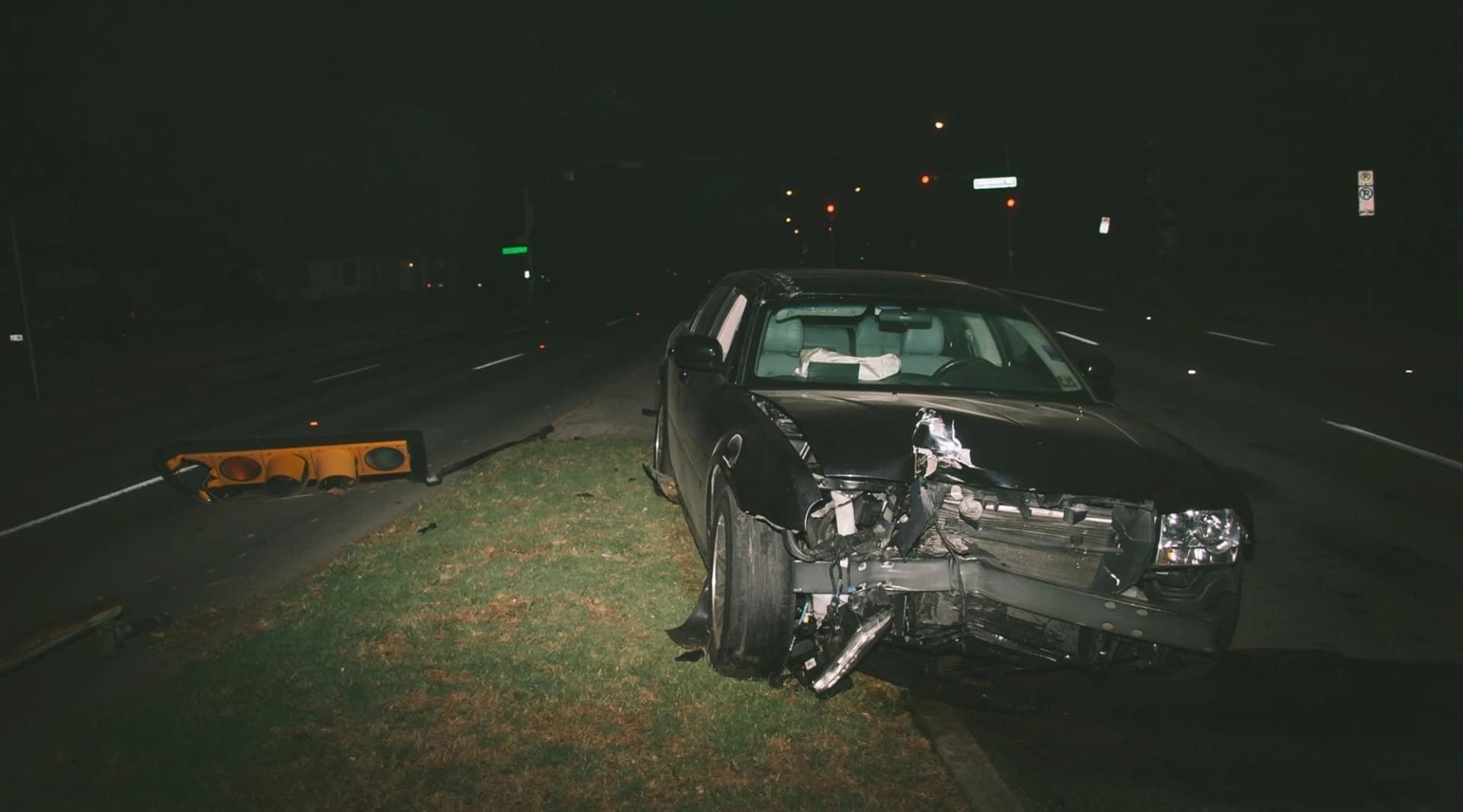
This is where most of the money is lost, and it is lost by people who felt fine, saw a dented bumper, and drove home. A wildlife claim rests on proving that a wild animal is what happened, and the proof is an official record made at the time. Across most of Europe the mechanism is the same even though the paperwork has different names. Call the police from the scene and ask them to attend and establish the facts; if they cannot come, report it at a station, and in Belgium that report needs to be made within 48 hours, after which you pass the case number to your insurer. In Germany the police notify the responsible hunter, who issues a Wildschadenbescheinigung, the wildlife damage certificate the insurer expects to see. Photograph the car, the road, the position of the animal and above all the hair, blood or hide left on the bodywork, because that is physical evidence that ages badly and will not survive a car wash or a rain shower on the way home. If another vehicle was involved as well, fill in a European accident statement alongside the police report rather than instead of it.
What to actually do
Two of these are decisions you make in about a second, and the rest are decisions you make standing at the roadside with your hazard lights on. Both halves are worth rehearsing before the season starts.
From September to December, take real speed off on unlit roads that run along woodland or field edges, particularly in the hour after sunrise and the two hours either side of dusk.
If an animal is suddenly in front of you: brake as hard as the car allows, both hands on the wheel, hold your lane. Do not steer around it.
If you saw it in time, dip the high beam so it can move, and give one long blast of the horn.
Assume there is a second animal behind the first, and stay slow for a few hundred metres rather than accelerating into the gap.
After a collision: hazard lights on, high-visibility vest on before you open the door, warning triangle out at a proper distance, and 112 if anybody is hurt.
Call the police even when nobody is injured and the car still drives. Ask for the incident or case number, or for the hunter to attend and issue a wildlife damage certificate where that is the local system. That number is the first thing your insurer will ask for.
Photograph the damage, the location and any hair or blood on the bodywork before you drive anywhere.
Never put the animal in your car. Taking game is a criminal offence across most of Europe, poaching in Germany and punishable in Belgium, and it will do more damage to your claim than to your evening.
Do not touch an injured animal, which is both dangerous and a job for the professionals being called out. Wear gloves if you drag a dead one clear of the carriageway, and only when it is genuinely safe to step into the road.
Before driving on, look at the coolant temperature, check both headlights still work, and listen for anything rubbing on a tyre. A bumper that looks cosmetic can be sitting on a radiator, a headlight washer line or a radar sensor.
Check the policy now rather than then. Find out whether you hold partial or full comprehensive, and whether the animal clause names all animals or only furred game.
Frequently asked questions
The animal ran off and my car looks fine. Do I still need to report it?
Yes, on two separate grounds. An animal that walks away from an impact is very often badly injured, and the report is what sends somebody out to find it, which in many countries is a legal duty rather than a courtesy. Practically, damage from these collisions has a habit of appearing three days later as a coolant warning, a misaligned headlight or a driver assistance system that has quietly stopped working, and a claim opened after the fact with no contemporaneous report is a claim you will spend weeks arguing about. The report costs you twenty minutes on the night.
What if it was a dog, a horse or livestock rather than wild game?
That is a completely different legal question, and usually a better one for you. A domestic animal has a keeper, and across most of Europe the keeper is liable for the damage their animal causes, so your route is a claim against their liability insurance rather than your own comprehensive cover. That only works if the animal is identified, which makes the police report and the details of anybody who comes to collect it far more valuable than they look at the time. If the owner is never traced you are back to your own policy, and the same partial comprehensive wording applies, which is exactly where an all animals clause earns its money.
Will a wildlife claim cost me my no-claims discount?
In most European markets, no. The no-claims or bonus-malus scale exists to price your liability cover according to fault, and nobody is at fault in a collision with a wild animal, so a claim made under partial comprehensive normally sits outside that scale. Normally is not always, though, and the detail varies by country and by insurer, so it is worth a direct question to yours before you need the answer. What is far more consistent is the claim you would make after swerving, which is your own fault, on your own cover, and treated accordingly.
I swerved, missed the animal and hit a barrier. Am I covered?
Only if you hold full comprehensive. There was no contact with an animal, so there is no wildlife claim to make, and partial comprehensive does not cover a single-vehicle crash. This is the practical reason the advice not to swerve keeps being repeated by people who see the claims: the manoeuvre that feels like the responsible one converts a covered, survivable, straightforward incident into an uncovered one, and in the worst cases into an injury. Where the barrier is the road authority's, expect a bill for it too.
The deer wrote my car off. How is the payout decided?
Large animals total cars more easily than people expect, because the impact lands on the bonnet, the windscreen and the airbag sensors all at once and repair costs climb past the value of an ordinary family car quickly. When that happens, the figure your insurer names is an assessment rather than a fact, and you are allowed to disagree with it with evidence of what your car was genuinely worth.