Alfa Romeo's Nuvola never went on sale, and still shaped the 156
A blue coupé from 1996 sets the bar for Alfa Romeo's next Paris concept
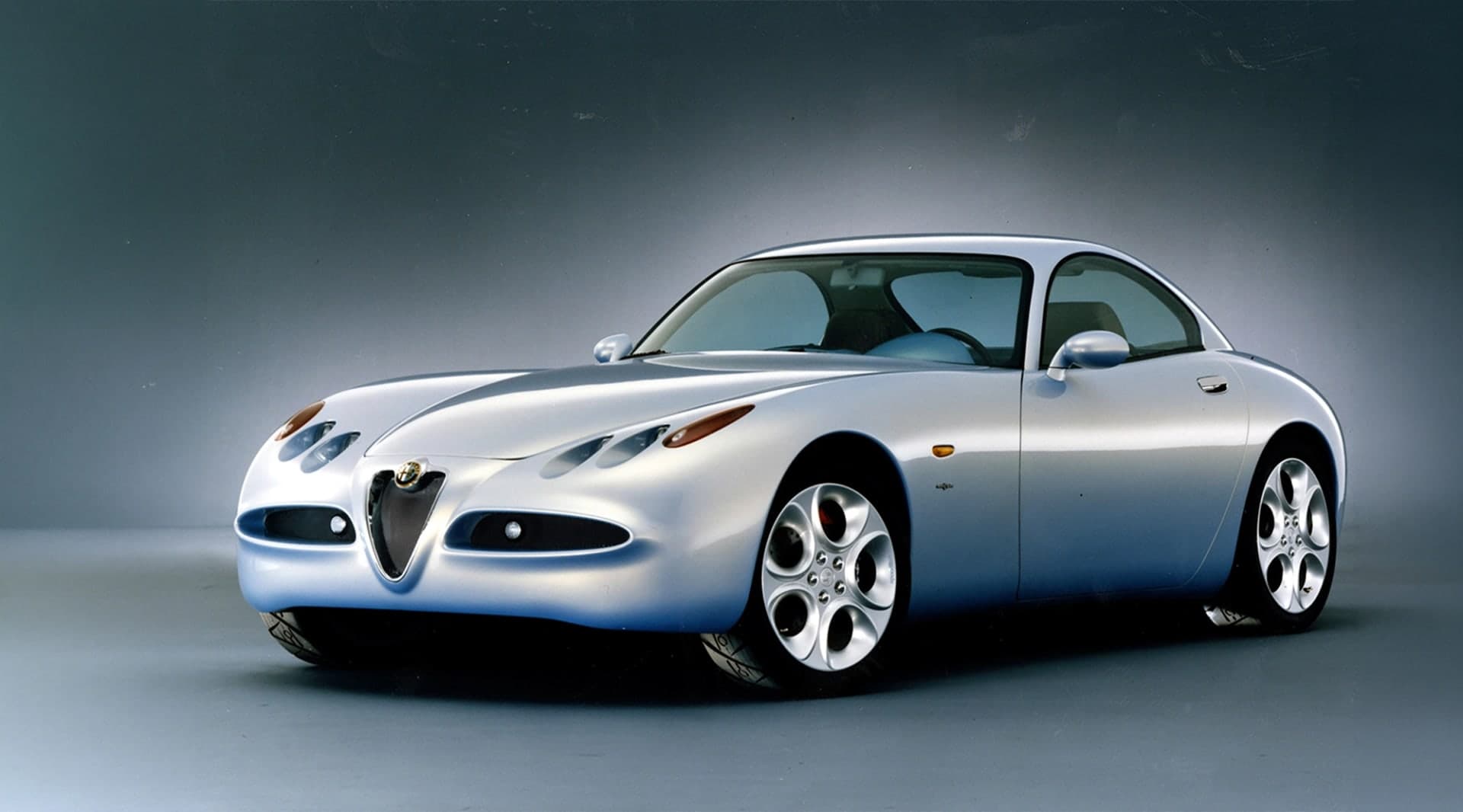
Alfa Romeo showed the Nuvola at the Paris Motor Show in October 1996, 30 years before it returns to the same show with a new concept on 12 October. The two-seater never went on sale. Within four years, though, its design language had reached the 156, the 166 and the 147, and two of those cars were voted European Car of the Year.
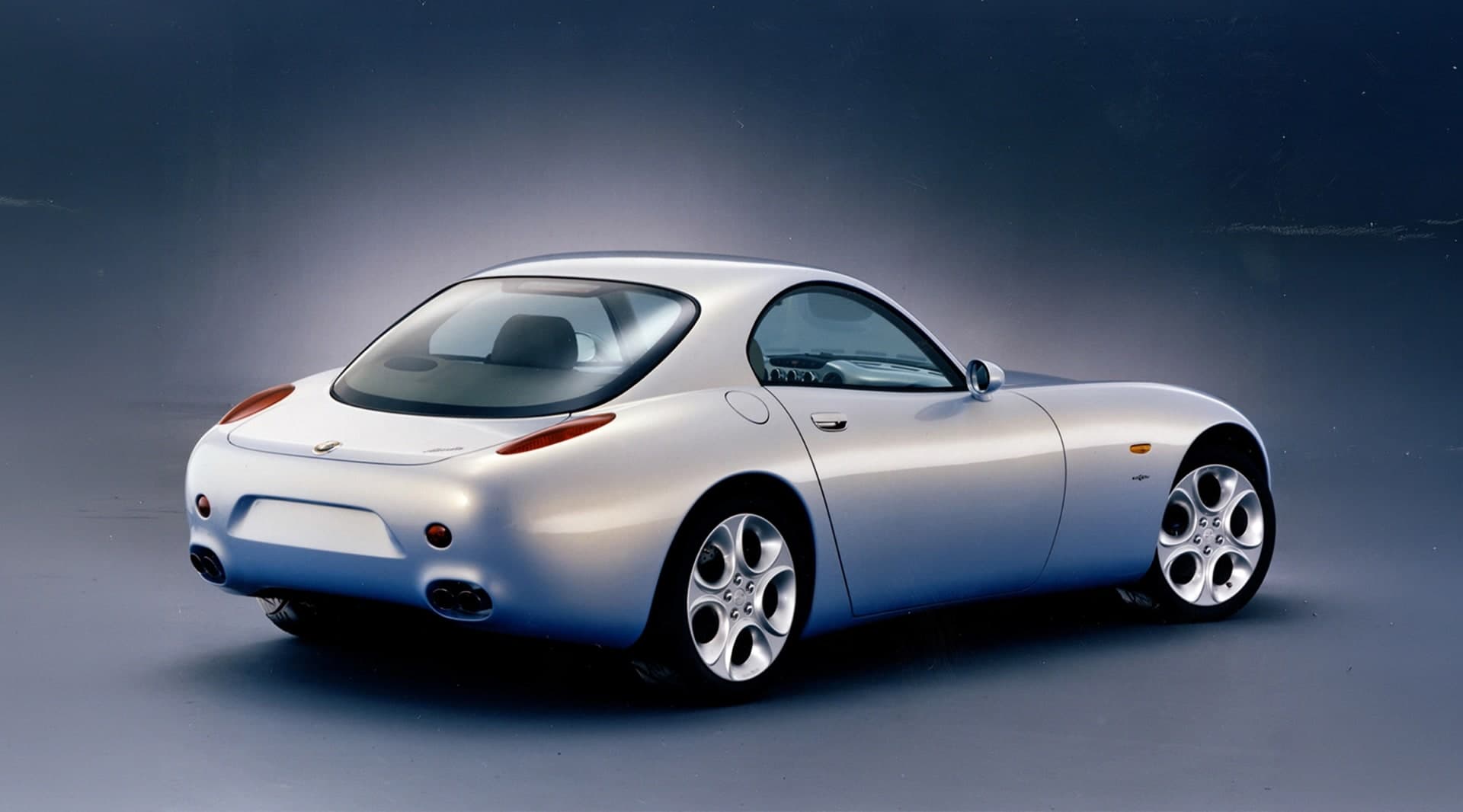
Alfa Romeo Nuvola: a 300 hp twin-turbo V6 on a modular spaceframe
The Nuvola used a 2.5-litre version of Alfa Romeo's Busso V6 with two turbochargers, good for 300 hp and 386 Nm, through a six-speed manual gearbox and four-wheel drive. Alfa quoted a top speed of 280 km/h. The bolder idea sat underneath: a welded tubular steel spaceframe carrying a polyester body, designed so the same base could take a coupé, a roadster or a shooting brake. It was a modern take on pre-war coachbuilding, with Alfa supplying the rolling chassis and independent coachbuilders adding the bodies.
Walter de Silva's Centro Stile drew the Nuvola from the 8C 2900 B
The Nuvola came out of Centro Stile Alfa Romeo, then led by Walter de Silva, with Wolfgang Egger and Filippo Perini among its exterior designers. Its references were the brand's grand tourers of the 1930s and 1940s, above all the 8C 2900 B and the 6C 2500 Villa d'Este: a long bonnet, a cabin set far back and a tapering tail. Under those lines it was compact, at 4,286 mm long on a 2,600 mm wheelbase. The name nods to Tazio Nuvolari, Alfa's great racing driver of the 1930s, and means cloud in Italian.
Fiat chief Paolo Cantarella turned the Nuvola from Alfa red to blue
The Nuvola was meant to be red. In de Silva's own account, Fiat Auto chief executive Paolo Cantarella saw the red styling model, asked why every Alfa Romeo had to be red, and sent the designers back to the brand's history for another colour. They returned with a pale blue, Azzurro Nuvola, and the car has worn it ever since. Thirty years on the brief has turned around: Alfa Romeo's teaser for its 2026 Paris concept names the colour red as one of its three ingredients, alongside Italy and sportiness.
The Alfa Romeo 156 and 147 won European Car of the Year in 1998 and 2001
The Alfa Romeo 156 is the Nuvola's real legacy. Shown at Frankfurt in 1997, a year after the concept, it carried the Nuvola's front end and clean surfaces into a family saloon, won European Car of the Year in 1998 and reached 673,435 cars by 2007. The larger 166 followed in 1998. The 147 hatchback, drawn by de Silva and Egger, won the same award in 2001 and went on to 651,823 cars over ten years of production.
Wolfgang Egger took the Nuvola's lessons to the 8C Competizione and BYD
Wolfgang Egger, Alfa Romeo's chief designer under de Silva at the time of the Nuvola, later led the 8C Competizione concept shown at Frankfurt in 2003, which became an 829-car run of V8 coupés and spiders. He succeeded de Silva as head of Audi Group design in 2007, and since 2017 he has been design director at BYD, also responsible for Denza, Fangchengbao and Yangwang. De Silva left Alfa for SEAT in 1999, then ran design at Audi and across the Volkswagen Group until 2015.
AutoNext Take
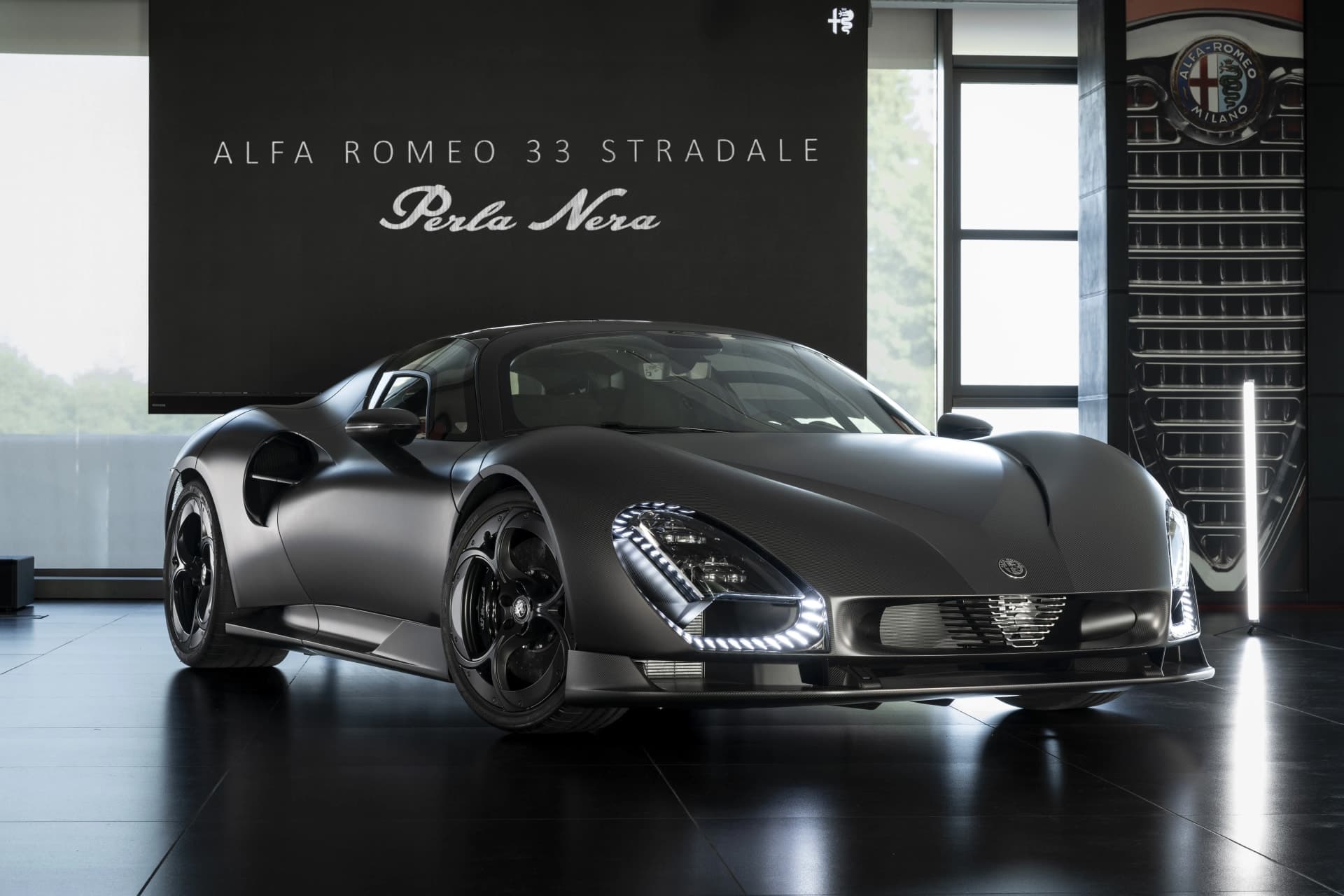
The Nuvola is the best kind of concept car, one that never needed a showroom to do its job. It told buyers in 1996 what an Alfa Romeo would look like for the next decade, and the 156 and 147 then sold more than 1.3 million cars between them on that promise. Even its coachbuilding idea lives on in spirit: the 33 Stradale is a modern Alfa built in tiny numbers on another car's mechanical base.
That sets the standard for 12 October. Alfa Romeo's new Paris concept will have done its job if, like the Nuvola, its face turns up on the production C-SUV due to premiere at the end of 2027. If no road car follows it, it will be remembered as a fine show car rather than a manifesto.