Aston Martin's most powerful V12 ever comes with no rear window
Aston Martin has built its most powerful front-engined car ever, and given it no rear window.
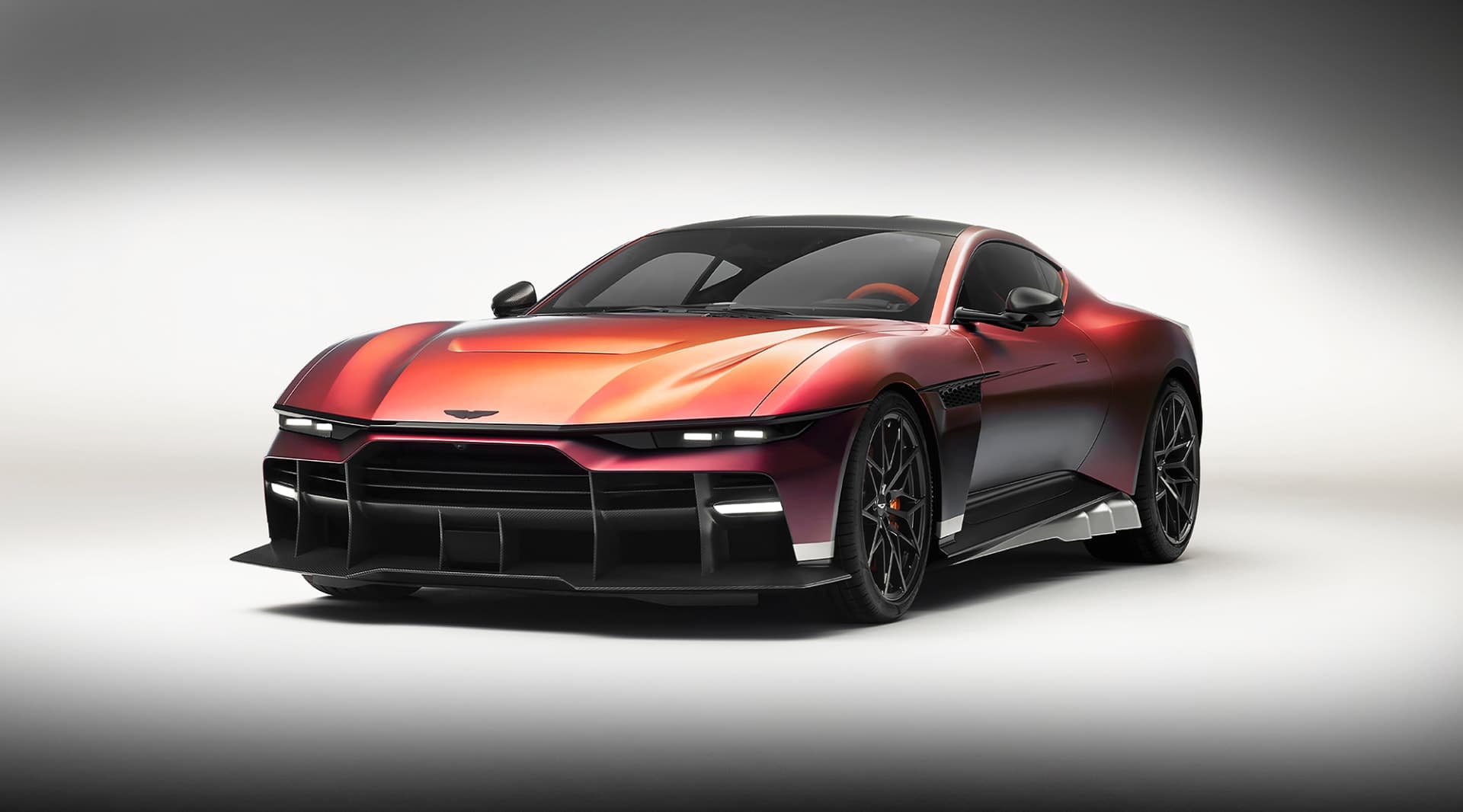
Aston Martin unveiled the Valen, a 5.2-litre twin-turbo V12 supercar it calls the most powerful front-engined car the brand has ever built. The non-hybrid engine produces 850 hp and 1,000 Nm of torque from 2,500 rpm, sent through an 8-speed ZF transmission to the rear wheels via an electronic limited-slip differential. Aston is building just 150 examples, with first deliveries due in the second quarter of 2027.
The numbers behind the claim
Aston quotes a 0-60 mph time (roughly 97 km/h) of 3.0 seconds and an electronically limited top speed of 344 km/h (214 mph). Those figures come partly from weight: the Valen is up to 110 kg lighter than Aston's core V12 platform, with full carbon-fibre body panels alone accounting for 25 kg of that saving. New springs and dampers, along with carbon-ceramic brakes, round out the mechanical changes.
A tailgate instead of a rear window
The most unusual design decision on the Valen is at the back. Instead of a conventional trunk lid and rear window, Aston has fitted a solid carbon-fibre tailgate, a detail that says as much about the car's priorities as any spec figure. The rest of the body leans just as hard into function: deeply recessed slimline headlamps, a single-vent bonnet, elongated side strakes that double as functional vents, and a stepped sill that pulls the waistline in tight.
A cabin built around weight and materials, not screens
Inside, the Valen pairs a slim, sloping centre console with 3D-printed components and a choice of new Sports Plus seats or lightweight carbon-fibre performance seats. Buyers can specify Semi-Aniline leather and Alcantara across five different material-split combinations, alongside custom paint finishes including the satin Andromeda Red shown at launch and exposed carbon fibre in various tints.
150 cars, no price yet
Aston Martin is capping production at 150 units worldwide, with first deliveries scheduled for the second quarter of 2027. Pricing has not been announced. CEO Adrian Hallmark summed up the pitch simply: “The dramatic design is backed up by equally dramatic performance.”
AutoNext Take
The rear window is the detail worth sitting with. Cutting it entirely for a solid tailgate is not a cost-saving measure on a car this expensive, it is a statement that this is a car built to be driven hard, not to be practical, and Aston is confident enough in that identity to make the compromise visible rather than hide it.
850 hp on a non-hybrid V12 is also worth noting on its own terms. While most of the industry is bolting electric motors onto combustion engines to keep power climbing, Aston has gone the other way here, chasing the number through weight and displacement instead. That is a harder, more expensive way to get there, and choosing it anyway says something about who this car is actually for.
150 cars is small enough that Aston does not need this to move volume, it needs it to prove the brand can still build a genuinely extreme front-engined V12 without leaning on electrification to get the numbers up. That is a different kind of flex than most halo cars attempt right now.