The Veyron is now a collector's classic, and Bugatti just restored one to prove it
The car that once felt impossibly modern is now old enough to be a classic
It feels strange to write, but the Bugatti Veyron is 20 years old. The car that rewrote the rules for what a road car could do, the first to chase and pass 400 km/h from the factory, has quietly crossed from cutting-edge into collectible. Bugatti is marking the moment in the most fitting way possible: not with a new limited edition, but by restoring one, and showing that the Veyron now deserves the same reverence as the pre-war machines that built the marque's name.
What La Maison Pur Sang is
The work was carried out by La Maison Pur Sang, Bugatti's in-house heritage and restoration division, launched in 2020. Its job is to preserve, restore and carefully reimagine existing Bugattis for their owners, always with historical sensitivity, so a car can be refreshed and personalised without losing what made it special in the first place. This one-of-one Veyron, revealed at Pebble Beach during Monterey Car Week, is its calling card, a demonstration of just how far a factory restoration can go.
The details make the car
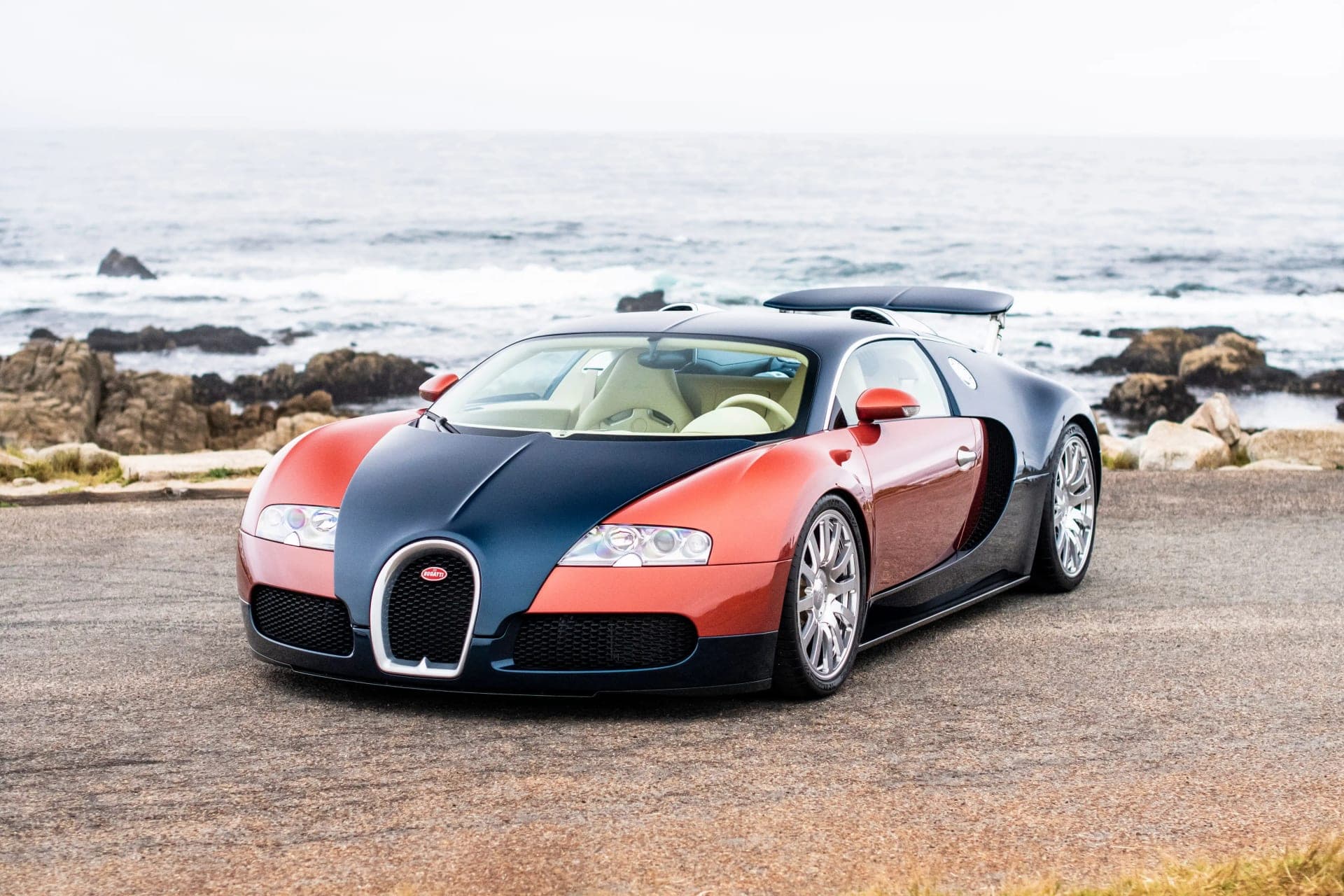
The changes are subtle but deep. The car wears a new two-tone finish in a freshly developed Rouge Rembrandt over Petrol Blue, with a Magnolia leather cabin. It rides on a reinterpreted version of the classic Machiavelli wheel design, now sized to take modern Chiron-spec tyres, 20 inches at the front and 21 at the rear. Inside there is a Cote de Geneve finish borrowed from watchmaking on the centre console and bespoke Mocassin stitching on the wheel and gear selector, while the air intakes gain new three-dimensional mesh detailing. Between the seats sits a special emblem marking 20 years of the Veyron.
And now, a Veyron configurator
The most telling move is what Bugatti launched alongside the car: a dedicated Veyron configurator. That turns this one-off from a showpiece into an invitation, letting existing owners commission their own personalised restoration in the same spirit. Design director Frank Heyl framed the philosophy neatly, saying any adjustment must begin with respect for the original, while aftersales chief Alexis Ploix noted that the power here is in the small details, from the wheels and tyres to the interior and the technical maintenance underneath.
AutoNext Take
This is a genuinely lovely piece of thinking, and a shrewd one. The Veyron was always going to become a blue-chip collector car, and by building a heritage division around it Bugatti is making sure that when these 8.0-litre quad-turbo W16 machines need care, the best place to have it done is Molsheim itself. That protects the cars, protects their value and keeps a lucrative relationship with wealthy owners alive for decades after the sale. It is the same logic the great watch houses have used forever, and it fits Bugatti perfectly.
What makes it more than a business move is the restraint. It would have been easy to slather a 20-year-old hypercar in carbon and wings and call it modernised; instead the changes are quiet, considered and reversible in spirit, honouring the original rather than shouting over it. That the Veyron is now old enough to be treated this way is a small milestone in itself. Two decades on, the car that made the modern Bugatti has earned its place among the classics, and it is rather nice to see the company treat it that way.