CUPRA Raval 2026: The rebellious electric city car finally revealed
The CUPRA Raval has been officially unveiled.
And with it, CUPRA launches what might be one of the most important small electric cars in Europe’s next EV wave. Because the Raval is more than just another compact electric hatchback. It represents the first production model built on the new MEB+ platform, the architecture that will underpin an entire generation of affordable electric cars from the Volkswagen Group.
A concept that took four years to reach reality
The road to the Raval has been unusually long. Back in 2021, CUPRA introduced the extreme CUPRA UrbanRebel Concept, a radical concept that looked more like a touring car racer than a future production model. Sharp edges, exaggerated aerodynamics and a dramatic stance hinted at the brand’s intention to bring genuine excitement to the small EV segment.
Since then, the brand has slowly revealed pieces of the puzzle. Prototypes appeared at events across Europe, including the EV Experience at Circuit Zandvoort, while camouflaged development cars quietly circulated on public roads.
Now, four years later, the final production car is here. And remarkably, it stays quite close to the spirit of that original concept.
Compact dimensions, unmistakable CUPRA attitude
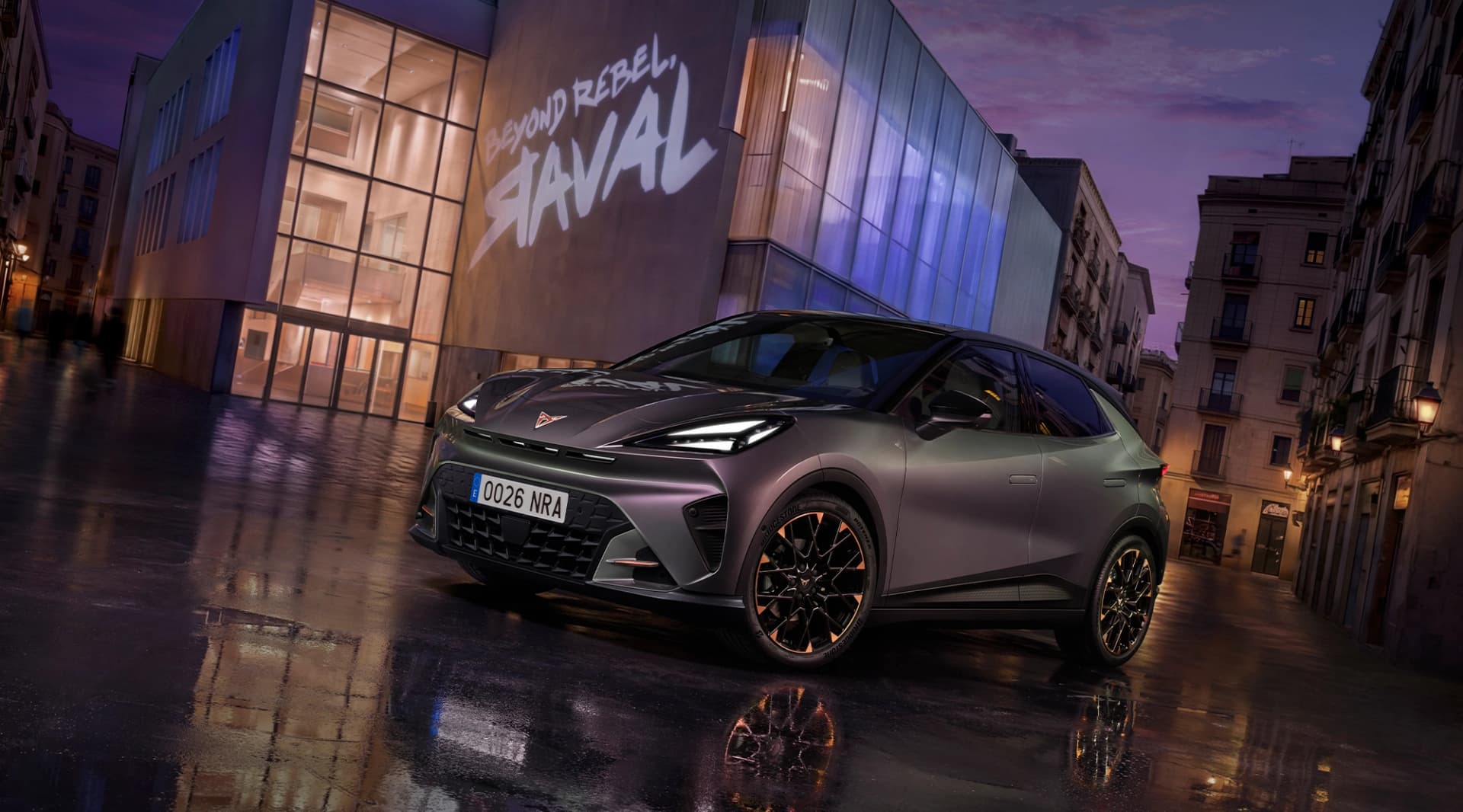
At 4.05 metres long, the Raval sits firmly in Europe’s B-segment, placing it close to models like the SEAT Ibiza and the upcoming generation of compact electric hatchbacks. But visually, the Raval feels more muscular than its modest footprint suggests.
With a width close to the larger CUPRA Born, a relatively low stance and sharply sculpted bodywork, the car adopts the aggressive design language that has become a signature of CUPRA.
The front features the brand’s characteristic triangular LED lighting elements, while the rear is dominated by a full-width light signature and illuminated badge. In other words, the Raval looks exactly like what CUPRA promised: a small EV with a big personality.

The interior finally revealed
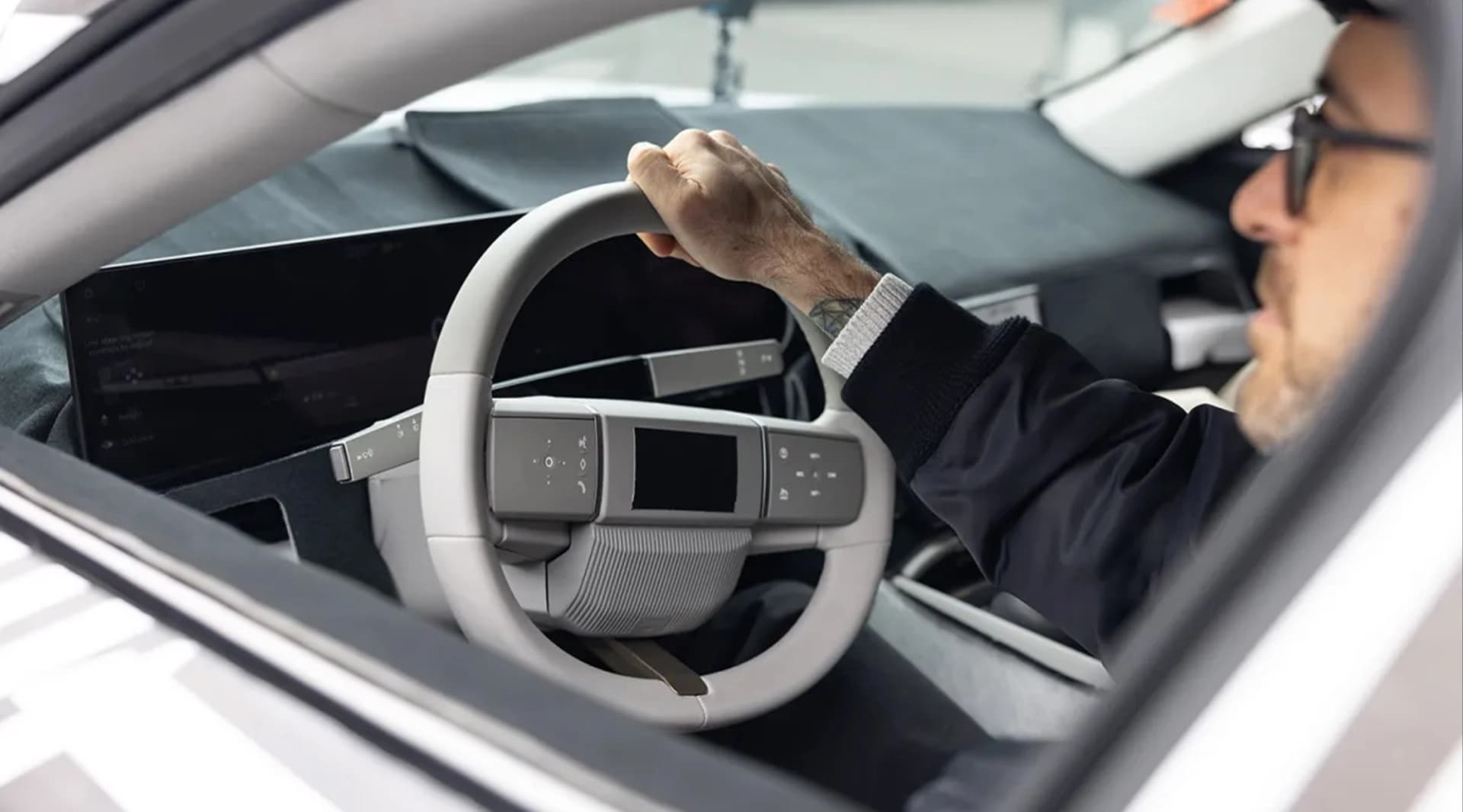
Until now, CUPRA had been extremely careful to hide the interior of the Raval. Every prototype seen during testing had the dashboard covered with camouflage. With the official unveiling, the interior finally comes into view and it feels instantly familiar to anyone who has driven a recent CUPRA.
A large 12.9-inch central touchscreen dominates the dashboard, accompanied by a compact digital instrument display and a steering wheel with CUPRA’s signature shortcut buttons for driving modes. Ambient lighting integrated into perforated interior materials creates a sporty atmosphere, while sculpted bucket seats emphasise the car’s performance-oriented character.
Space in the front seats appears generous for a car of this size. Rear passengers, however, will likely notice that the Raval remains very much a compact city car, with limited legroom typical of the segment.
Two batteries and four power levels
Technically, the Raval marks the debut of the MEB+ platform, a heavily revised version of the architecture already used by many electric models within the Volkswagen Group. Buyers will be able to choose between two battery options.
The entry-level model uses a 37 kWh LFP battery, paired with electric motors producing 115 hp or 135 hp. This version delivers an estimated range of around 300 kilometres. Higher versions receive a 52 kWh NMC battery, which can be combined with outputs of 211 hp or up to 226 hp in the top VZ Rebel variant.
That is a remarkable figure for a car barely four metres long. Maximum range climbs to around 444 kilometres, depending on the configuration. Charging performance is respectable rather than groundbreaking. The smaller battery supports up to 88 kW DC charging, while the larger pack peaks at 105 kW. In both cases, a 10–80% charge takes roughly 24 minutes, which is perfectly acceptable for a compact EV.

The beginning of Volkswagen Group’s small EV offensive
Perhaps the most interesting aspect of the Raval is not the car itself. It is what comes next. The Raval is the first model of a broader B-segment electric offensive from the Volkswagen Group. Several related models are already on the horizon, including the Skoda Epiq, the upcoming Volkswagen ID. Polo, and a future small electric model from Audi that may revive the spirit of the legendary Audi A2.
All of them will share variations of the same MEB+ architecture. And all of them aim to make electric mobility more accessible in Europe. With a starting price expected to be around €26,000, the CUPRA Raval could become one of the most affordable electric cars developed by the Volkswagen Group so far.
AutoNext Take
The CUPRA Raval is an interesting car but also a strategic one. For years, European manufacturers have struggled to deliver affordable electric cars in the B-segment, while Chinese brands have moved aggressively into the EV space.
For CUPRA, the Raval needs to deliver more than just affordability. The brand has built its identity around emotion, sportiness and distinctive design. If the Raval ends up feeling like just another electric city car, the rebellious image that CUPRA carefully cultivated could quickly fade.
Still, if the driving experience matches the promise of its design, the Raval might become something rare in today’s EV market: A small electric car that people actually desire, not just one they rationally accept. And that could make all the difference.