Subaru Getaway, the 7-seat electric SUV with 420 hp but Europe won’t get it
For now, the Getaway is reserved exclusively for the United States.
The electric transformation of the automotive industry continues to reshape even the most traditional brands. Few companies illustrate that shift better than Subaru. Long associated with rugged all-wheel-drive wagons, rally heritage and practical crossovers, the Japanese manufacturer is now expanding its electric lineup at an accelerating pace.
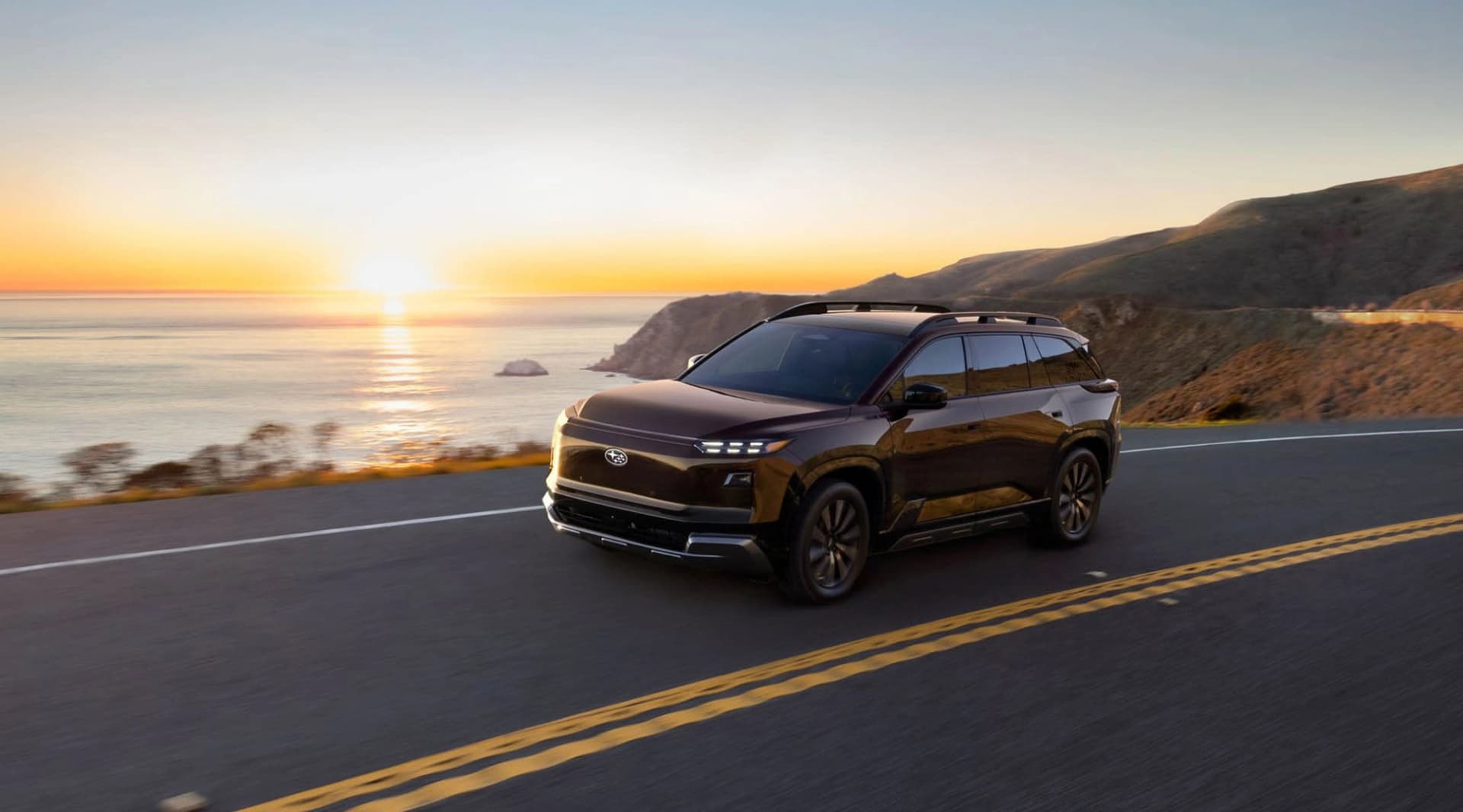
The latest addition is the Subaru Getaway, a large three-row electric SUV capable of carrying seven passengers, delivering up to 420 horsepower and offering a driving range of more than 500 kilometres.
Subaru’s electric expansion is accelerating
Subaru’s electric lineup is expanding far more quickly than many observers expected just a few years ago. The Getaway becomes the fourth fully electric model in the brand’s growing portfolio, following vehicles such as the Subaru Solterra and other upcoming EV derivatives currently under development.
But the rapid growth of Subaru’s EV range does not come entirely from internal development. Instead, it is largely the result of Subaru’s increasingly close technological collaboration with Toyota.
The two brands have already proven how effective this partnership can be. Sports cars like the Toyota GR86 and Subaru BRZ were developed together, and the same philosophy is now being applied to electric vehicles.
Essentially a Subaru version of the Toyota Highlander EV
The Getaway is, in essence, Subaru’s interpretation of the recently unveiled Toyota Highlander EV. The SUV stretches beyond five metres in length, placing it firmly in the large family SUV category. Beneath the bodywork sits Toyota’s TNGA-K platform, also used by vehicles such as the Toyota RAV4. Subaru has given the Getaway its own identity primarily through design.
The front fascia receives a unique Subaru treatment, including a distinctive lighting signature and revised body panels. At the rear, the brand replaces Toyota’s continuous light bar with illuminated Subaru lettering, reinforcing the visual separation between the two models. Still, underneath the styling differences, the technical foundation remains closely related.
Two powertrains, up to 420 horsepower
Like its Toyota sibling, the Subaru Getaway will be available with two electric powertrain options. The most powerful configuration delivers up to 420 horsepower, allowing this large SUV to accelerate from 0 to 100 km/h in roughly 4.5 seconds, an impressive figure for a vehicle designed primarily for family transport.
All versions come equipped with dual electric motors and Subaru’s signature all-wheel-drive system, ensuring traction and stability across different driving conditions. Subaru will also offer two battery packs.
The entry version receives a 77 kWh battery, while the Long Range variant is equipped with a 95.8 kWh pack. Subaru claims the larger battery delivers over 500 kilometres of range under ideal conditions. Fast charging is supported at 150 kW, placing the Getaway within the competitive range of large electric SUVs currently entering the market.

The electric 7-seat SUV segment is expanding rapidly
Until recently, large electric SUVs with three rows of seating were relatively rare. That is now changing quickly. Vehicles like the Tesla Model X and the Kia EV9 have already demonstrated that there is strong demand for spacious electric family vehicles.
The Subaru Getaway follows exactly the same philosophy: combining the practicality of a traditional seven-seat SUV with the efficiency and performance of an electric drivetrain. In theory, this would make the Getaway an interesting proposition for European buyers as well. But that scenario currently appears unlikely.
Why Europe will probably never see the Getaway
Despite the growing popularity of large SUVs worldwide, the market realities in Europe remain very different from those in North America. Vehicles exceeding five metres in length face significant challenges in European cities, where parking space, taxation policies and urban infrastructure favour more compact vehicles.
As a result, Subaru has decided to focus the Getaway primarily on the North American market, where large three-row SUVs remain extremely popular. This mirrors Subaru’s strategy with the Subaru Ascent, a combustion-powered seven-seat SUV also sold mainly in the United States.
AutoNext Take
At first glance, the Subaru Getaway may look like just another rebadged collaboration between Toyota and Subaru. And to a certain extent, that criticism is fair. But the broader strategy deserves closer attention.
Developing an entirely new electric architecture independently would require enormous investment. By leveraging Toyota’s technology, Subaru can expand its EV portfolio faster while maintaining its brand identity through design and all-wheel-drive expertise.
For Europe, however, the story is slightly frustrating. Because on paper, the Subaru Getaway could have been one of the more interesting alternatives to models like the Tesla Model X or Kia EV9. Instead, it remains another reminder that many electric vehicles are still developed primarily with the American market in mind.