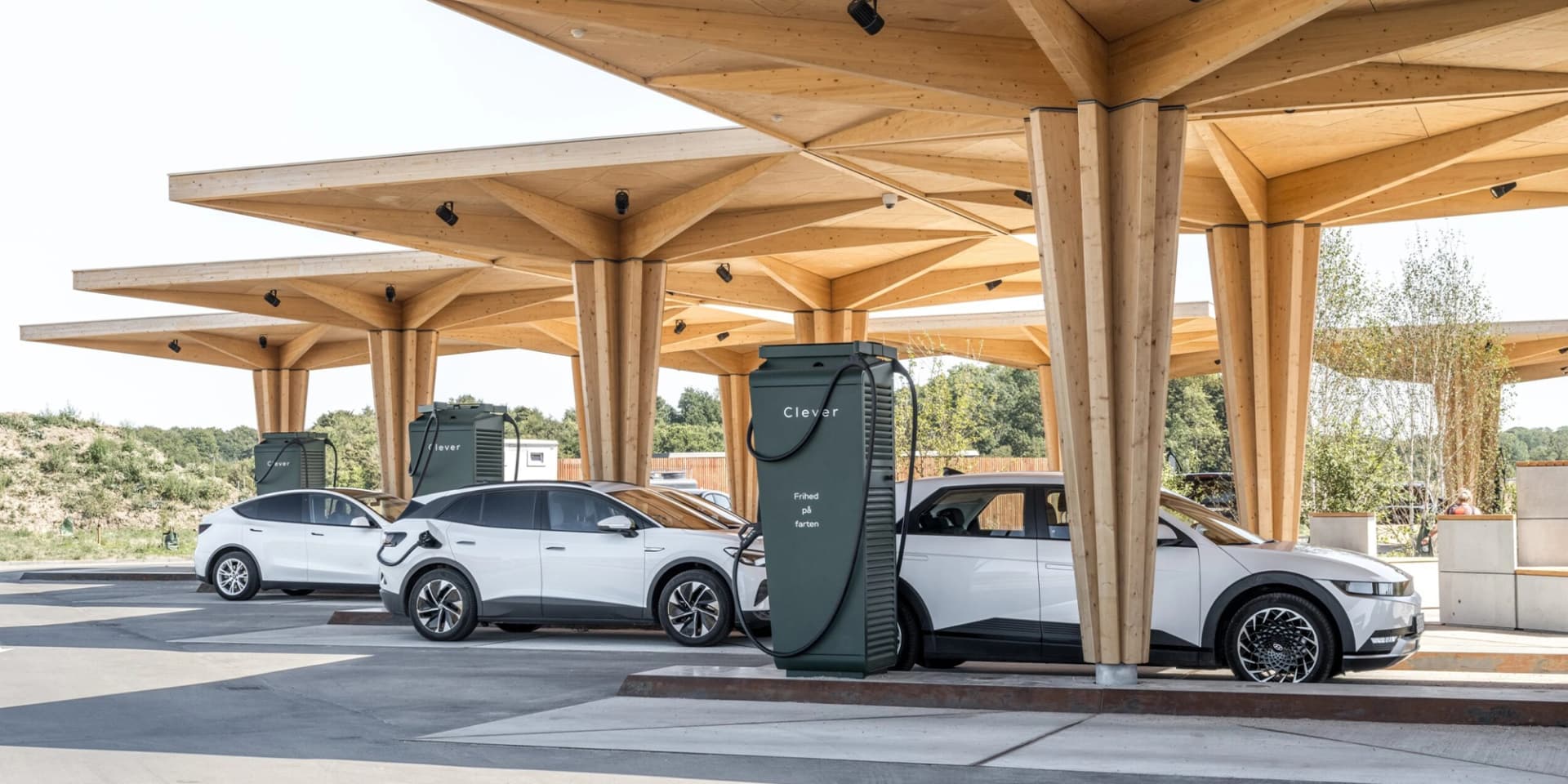
Denmark’s EV Revolution: Over 94% of Private Car Buyers Now Choose Electric
In February 2026, more than 94 percent of private car buyers in Denmark chose a fully electric vehicle.
According to figures from the Danish industry association Mobility Denmark, battery-electric vehicles represented 94.4% of private registrations. Across the entire market, including fleets and corporate buyers, the numbers are almost as striking. Of the 11,933 new passenger cars registered in February, 9,736 were fully electric, pushing the overall BEV share to 81.6 percent.
For a country that until recently sat somewhere in the European middle ground, Denmark is now rapidly emerging as one of the continent’s EV frontrunners, chasing the long-standing benchmark set by Norway.
From niche product to the new normal
Electric cars have effectively transitioned from a niche technology to the mainstream choice for everyday drivers. Just a few years ago that would have seemed ambitious. In 2025, battery-electric vehicles already accounted for 68.5 percent of new passenger car registrations in Denmark.
Now, that share has surged even further. The country’s total EV fleet also passed a symbolic milestone, surpassing 500,000 electric vehicles on Danish roads.
The real driver: Denmark’s tax system
Behind the rapid adoption lies one of the most powerful policy levers in the automotive world: taxation. Denmark has historically imposed one of the highest vehicle registration taxes globally. For a traditional gasoline or diesel car priced around €40,000 before tax, the registration tax alone can exceed €34,000, before even adding the country’s 25% VAT.
The result is a final price approaching €93,000 for what would otherwise be a mid-range vehicle.
Electric cars, however, benefit from a radically different fiscal structure. Buyers currently pay only 40 percent of the standard registration tax rate, and additional deductions effectively eliminate the tax for vehicles in many common price brackets. In practice, this means that an EV with a similar base price might cost around €50,000 including VAT, creating an enormous financial incentive.
The difference becomes clear when comparing models within the same brand family. In Denmark, a Volkswagen Tiguan can cost over €70,000, while the fully electric Volkswagen ID.4 may sell for just over €40,000. The message to consumers is unmistakable. Choosing electric isn’t just environmentally appealing, it’s financially logical.
Unexpected models dominate the rankings
Perhaps the most surprising aspect of Denmark’s EV boom is which models are leading the market. Instead of the usual Tesla dominance seen elsewhere in Europe, the sales charts are currently topped by the Toyota bZ4X.
Behind it follow several models built on the Volkswagen Group’s MEB platform:
Skoda Elroq
Volkswagen ID.4
Skoda Enyaq
Audi Q4 e-tron
Other popular models include the Tesla Model Y, XPENG G6, and BMW iX1.
Interestingly, SUVs dominate the rankings almost entirely. The only non-SUVs appearing in the top ten are the Renault 5 E-Tech Electric and Citroën ë-C3.
AutoNext Take
Denmark’s numbers reveal something many policymakers across Europe are reluctant to acknowledge. The EV transition is not primarily driven by technology or infrastructure. It is driven by price signals.
When electric cars are significantly cheaper than combustion vehicles, adoption accelerates almost instantly. Denmark proves that the tipping point for electrification is not cultural or technological, it is economic.
The real question now is whether larger European markets can replicate this model. Countries such as Germany, France and Italy still rely on complex incentive systems rather than structural taxation reforms. As a result, EV adoption remains far more uneven.
Denmark’s strategy demonstrates that if governments truly want to accelerate electrification, the most powerful tool remains fiscal policy. And judging by the numbers, it works.