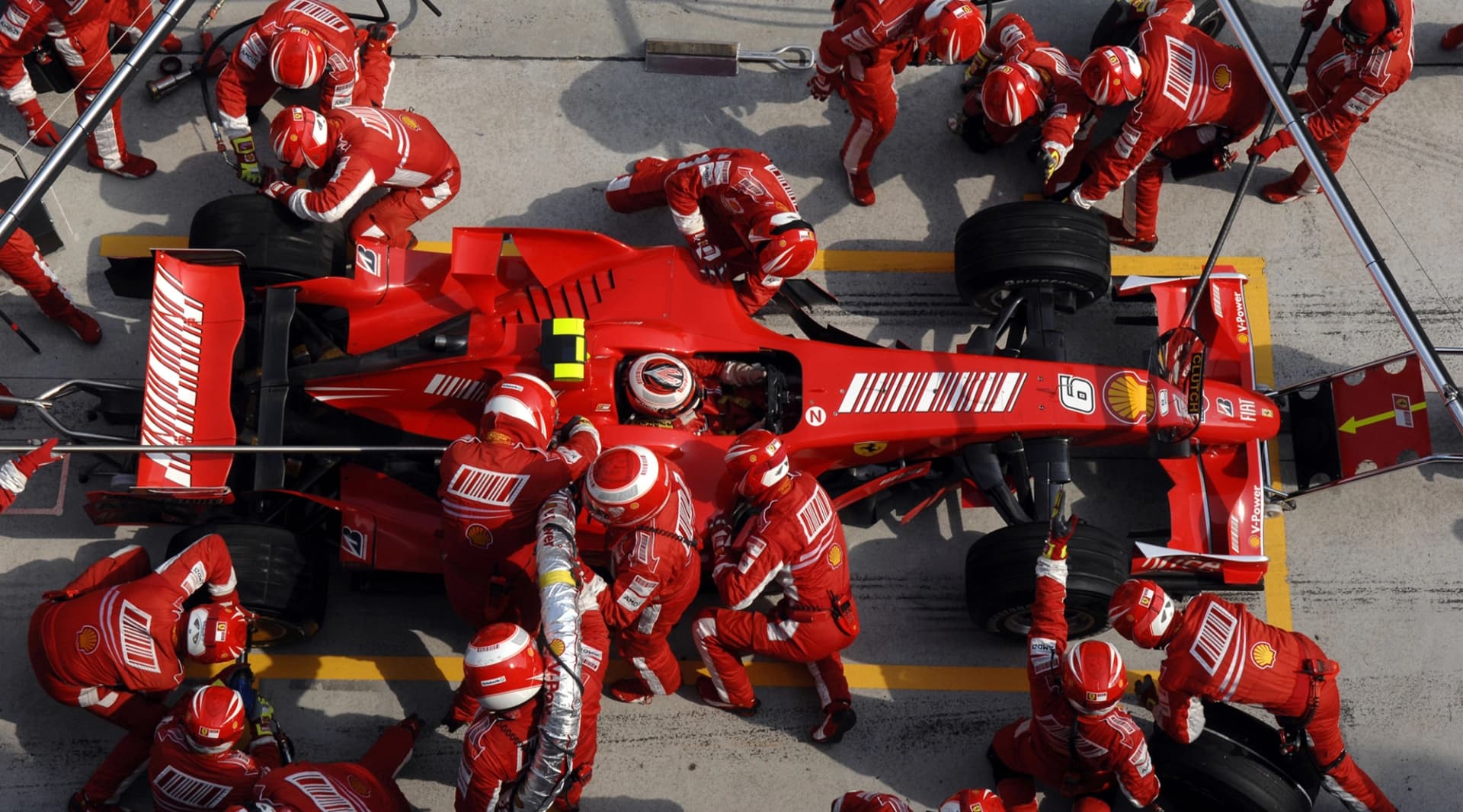
Did you know? How Formula 1 pit stops helped save thousands of babies
This is where automotive and motorsport in particular, becomes far bigger than cars.
There are plenty of reasons why people love Formula 1 (speed, precision, engineering brilliance) but here’s one you probably didn’t expect: it has quietly helped save thousands of lives far away from the racetrack.
Not through technology. Not through safety cars or carbon fibre. But through something much simple: process, discipline, and teamwork under pressure.
When medicine hit a wall
Back in 2001, doctors at London’s Great Ormond Street Hospital were facing a brutal and frustrating reality. Complex surgeries on newborn babies were often successful… but the danger came after.
During the transfer from the operating room to intensive care, things fell apart. Too many people, too many moving parts, too much noise and not enough structure. In a moment where every second mattered, chaos was killing patients. And then, almost by accident, they found the answer, not in medicine, but on TV.
A pit stop changed everything
Watching a Formula 1 race, the doctors saw something striking: a Ferrari pit crew executing a flawless stop in just a few seconds. No confusion. No overlap. No wasted movement.
Just pure, rehearsed precision. It wasn’t about speed. It was about control under pressure. So they did something bold. They called Ferrari.
From Maranello to the ICU
Soon after, the medical team visited Ferrari’s headquarters in Maranello, where pit crew members studied footage of hospital procedures and identified the core problem instantly:
No clear leadership
No defined roles
Poor spatial organisation
Too much verbal noise
In other words, the exact opposite of a pit stop. Together, they redesigned the entire process. Every team member got a fixed position. Every action was choreographed. Communication was simplified, often reduced to signals instead of words. Checklists and rehearsals became standard. The result? A structured, almost silent operation, just like in Formula 1.
The impact: fewer errors, more lives saved
When the new system was implemented, the results were immediate and measurable. Critical errors during patient transfers dropped by more than 65%. And that was just the beginning.
The same principles quickly spread to hospitals worldwide, influencing everything from neonatal care to emergency response procedures.
Later, teams like Williams F1 went even further, helping hospitals redesign entire emergency environments (from equipment layout to movement patterns) using the exact same logic they apply to a pit lane.
Why this matters more than ever
In a world obsessed with speed and performance, it’s easy to forget what Formula 1 is really about at its core: precision, repetition, and eliminating failure under extreme pressure.
And that’s exactly why it works outside motorsport. Because whether you’re changing tyres at 300 km/h… or transferring a newborn fighting for its life… the margin for error is the same: zero.
AutoNext Take
This is where automotive (and motorsport in particular) becomes far bigger than cars. We often talk about innovation in terms of horsepower, range, or design. But the real impact of this industry lies in something much deeper: systems thinking.
What Ferrari perfected in the pit lane wasn’t speed, it was a framework for human performance. And that framework turned out to be just as valuable in a hospital as it is on a racetrack.