The FIA admits ADUO has weaknesses, and the timing could not be worse
F1's power unit catch-up system just handed development tokens to the championship leader.
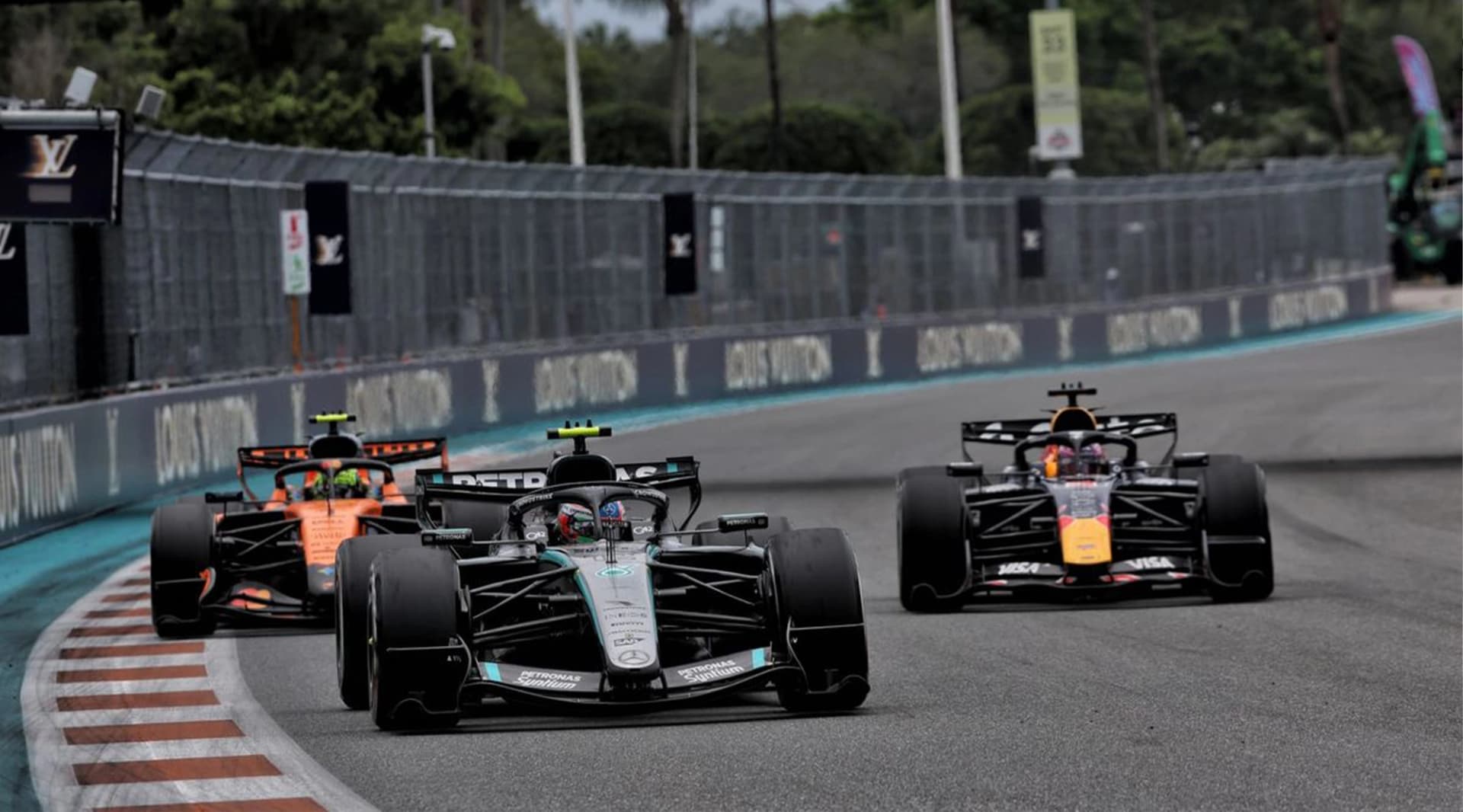
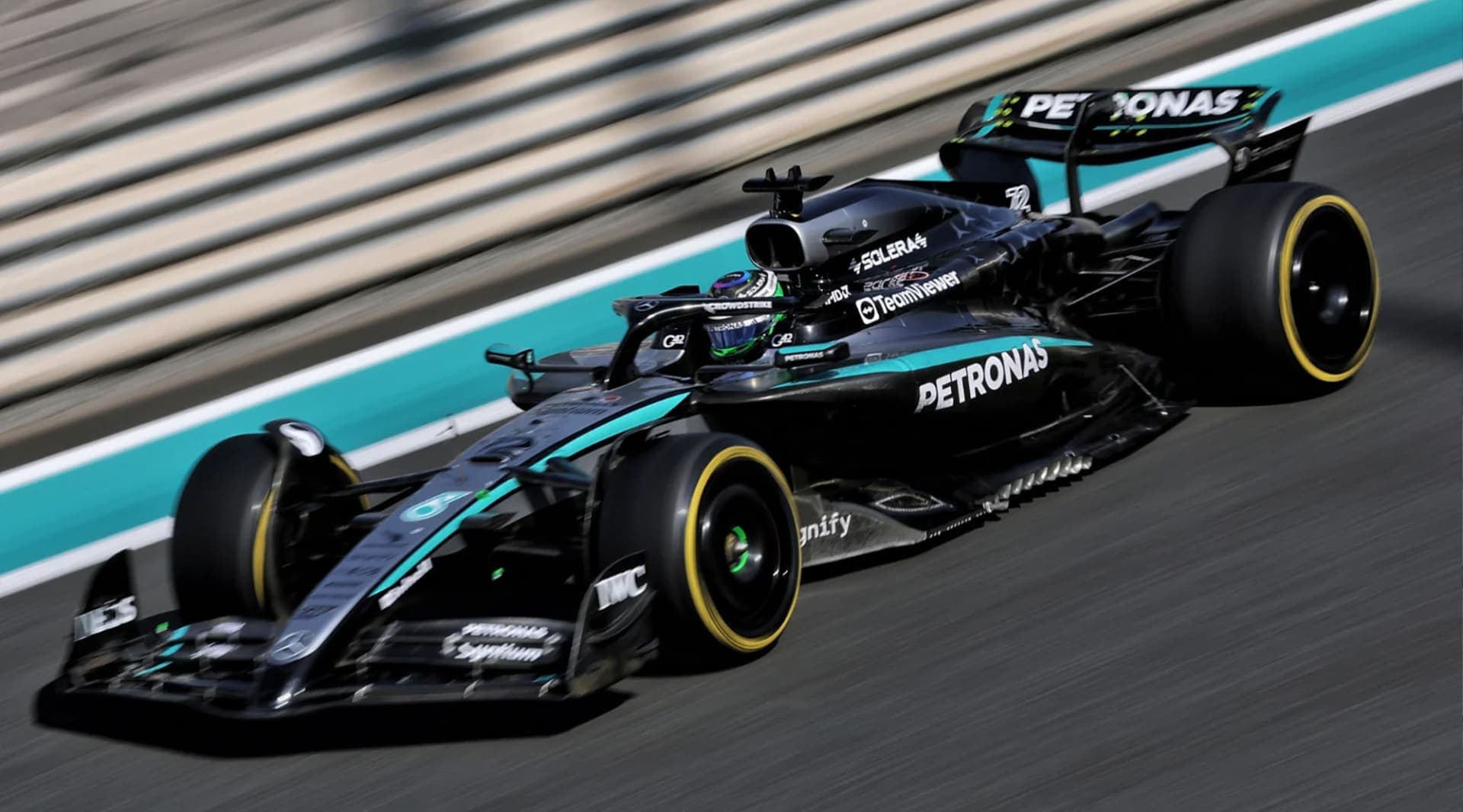
The FIA's ADUO mechanism ranked Red Bull's engine as the benchmark, meaning it gets no help, while Mercedes, the dominant team this season, qualified for extra development. FIA single-seater director Nikolas Tombazis has admitted the system has weaknesses that need addressing.
What ADUO is actually supposed to do
ADUO, short for Additional Development and Upgrade Opportunities, is a cost cap relief mechanism introduced for the 2026 to 2030 power unit era, not a performance balancing tool, as Tombazis himself has stressed: “It is, in fact, a cost cap relief mechanism.” The FIA monitors each manufacturer's internal combustion engine across three windows per season, producing an ICE Performance Index built from engine speed, input shaft torque, MGU-K power and lap-time sensitivity weighting. A manufacturer measured 2 to 4 percent behind qualifies for one extra upgrade in the current season and one the following year, plus €2.8 million in cost cap relief. A deficit of 4 percent or more doubles the upgrades and can unlock up to €10.3 million for a manufacturer measured 10 percent or further behind. Eligible upgrades can touch the ICE itself, the exhaust, turbochargers, electrical components, the ERS, MGU-K, control electronics, hydraulics, fluids and ballast.
The first verdict handed the championship leader a bonus
Red Bull Ford Powertrains topped the first ranking, meaning its engine was designated the benchmark and receives no extra development at all. Mercedes, the team actually dominating the championship this season, qualified for one upgrade a year through 2027. Ferrari, Audi and Honda each qualified for two. A mechanism built to help struggling manufacturers catch up ended up handing the sport's strongest team more room to develop, which is the part sources close to the paddock have called simply bizarre.
Red Bull says the numbers do not match reality
The ranking sits awkwardly next to Red Bull's own public position. Team principal Laurent Mekies had recently argued that Mercedes was “a long way ahead of most of us,” putting the gap at around three tenths of a second, a claim hard to square with an engine ranking that shows no deficit at all. Mekies avoided engaging with the verdict directly over race weekend in Monaco, calling the FIA's notification “provisional,” even though it is binding. His frustration was clear: Red Bull's hands are now tied on further engine development while its rivals gain ground.
The FIA agrees something is not working
Tombazis has not defended the outcome so much as the process behind it. “I think the system is working as it was designed, but I do think there are some weaknesses that we need to address in the future,” he said, insisting the measurements themselves are accurate while conceding the wider mechanism needs to become “less time-consuming and less controversial.” Part of the problem traces back to a choice manufacturers made themselves: the FIA had originally proposed a more complex measuring approach, one that would have accounted for more than raw ICE output, and car makers rejected it in favour of the simpler system now under fire. Tombazis has said he would be “personally quite open to the idea of complicating the parameters a bit” to fix that.
There is also a gaming risk built in
Because the rankings are based on measured performance rather than declared intent, there is a theoretical incentive for a manufacturer to hold back rather than show its true pace early, staying just behind Red Bull's benchmark to preserve eligibility for future development windows. Ferrari and Mercedes have both been named in that context, though nothing has been proven, and the FIA has not accused either manufacturer of doing this deliberately.
Honda wants it to stay, just fairer
Not every manufacturer wants ADUO scrapped. Honda's Shintaro Orihara backed the mechanism in principle while flagging the same fairness concern from a different angle: “we need to keep monitoring how that works for all manufacturers. It should be fair.” That split, broad support for the idea alongside real doubt about the execution, is a fair summary of where the paddock currently stands.
AutoNext Take
The most telling detail here is not the Red Bull result itself, it is that the FIA had a better measuring system on the table and the manufacturers turned it down. Simplicity was the industry's own choice, and now that the simple version has produced an outcome nobody actually wanted, complaining about it rings a little hollow.
None of this is really about Red Bull versus Mercedes. It is about what happens when a sport spends five years redesigning its engine rules and still cannot agree on how to measure whether they are working. That question will not stay contained to ADUO, not with a fuel-flow rule fight already brewing for Barcelona.