Ford's Le Mans Hypercar has finally turned its first laps
Six weeks after its first heartbeat, Ford's Hypercar finally moves
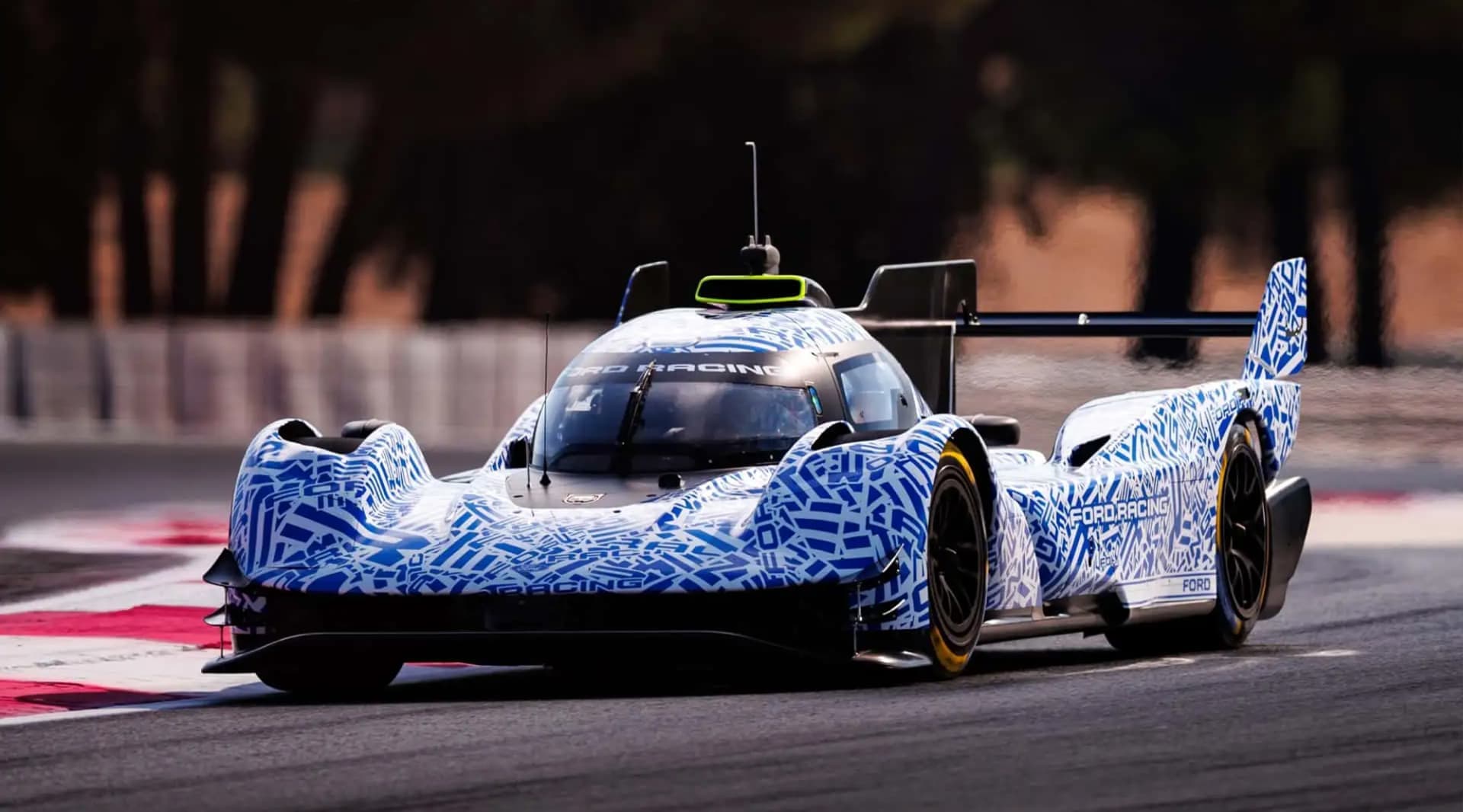
Ford's new Le Mans Hypercar has left the workshop for the first time. The ORECA-built prototype completed its maiden track test at Circuit Paul Ricard this week, with Porsche factory driver Matt Campbell and Ford's own Logan Sargeant sharing driving duties. It is the first real proof that the programme announced back in July is actually moving, and it puts Ford firmly on course for its 2027 return to the FIA World Endurance Championship.
From a running engine to a running car
The timeline has moved quickly. Ford fired up the car's naturally aspirated V8 for the first time on 4 July, and running-in checks began on 5 August. Twelve days later, the prototype turned its first proper laps at Paul Ricard, a circuit picked largely because it sits a short drive from ORECA's factory, which built the chassis. Ford Racing says the team has “methodically followed a comprehensive programme to activate and verify every control system”, and that all of them are now fully operational. Blomqvist and Rockenfeller are due to take over later in the test week, with Nick Yelloly and Sebastian Priaulx also part of the wider driver roster.
A V8 that refuses to downsize
The engine is the most distinctive part of the story. While most of the current Hypercar grid has gone turbocharged, Ford is racing a 5.4-litre naturally aspirated V8 derived from the unit already used in the Mustang Dark Horse R, GT4 and GT3 programmes. It still runs the hybrid system every LMDh car must carry under the class's shared technical rules, but the base engine is pure Ford, developed at the brand's Dearborn facility rather than bought in. It is a deliberate choice, not a compromise. Ford is betting that a proven, characterful V8 will do more for the brand than a smaller, quieter unit built purely around a lap time.
A shape still hiding its final answer
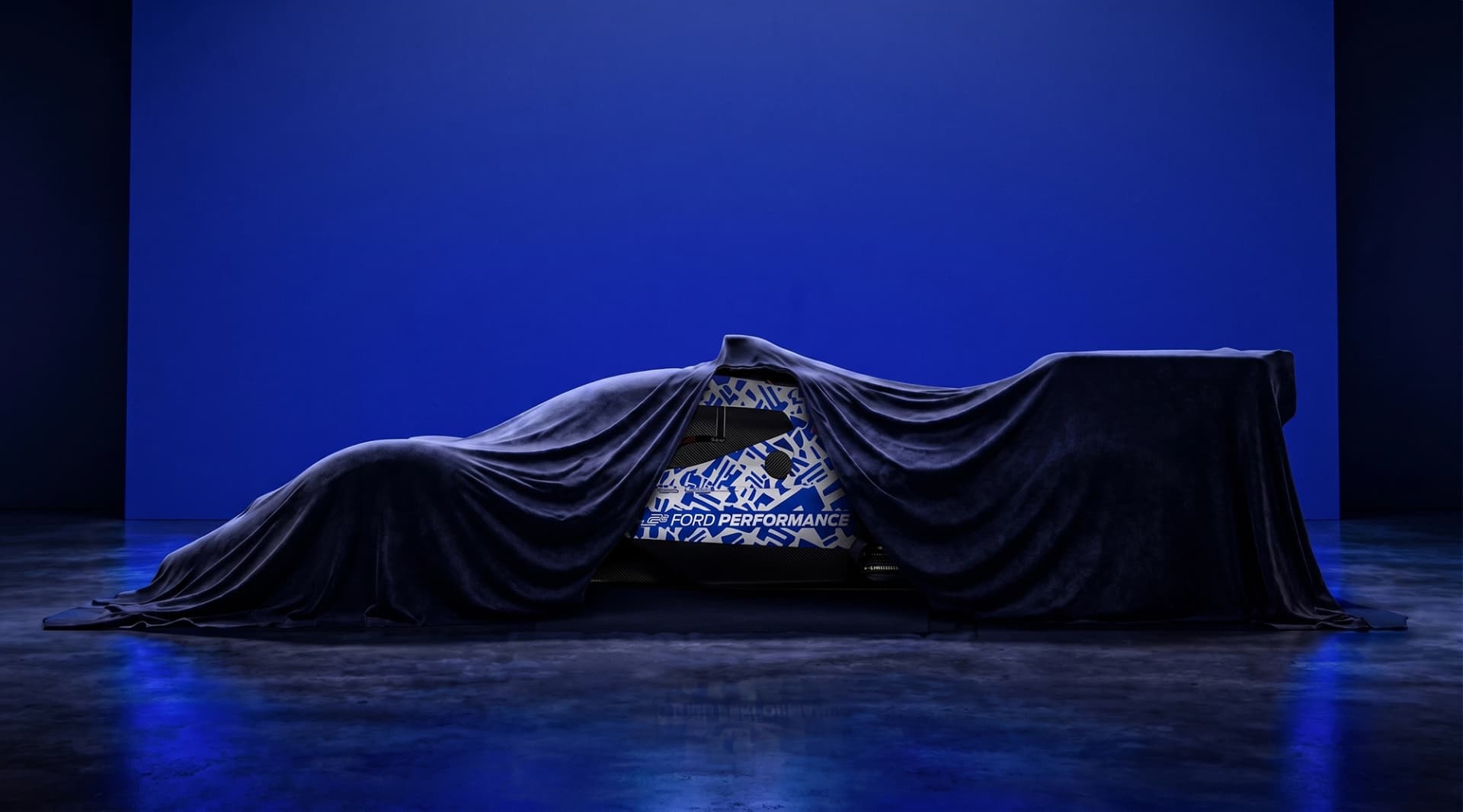
Visually, the car is still wearing the blue-and-white camouflage it has worn since its unveiling, with “Ford Racing” lettering across the bodywork. The nose sits low, in a style not unlike Ferrari's 499P, with a raised front splitter and aerodynamic flicks along the sides. Unlike other ORECA-built cars on the grid, this one is running without the small front fin usually fitted to the marque's chassis, a detail that suggests Ford and ORECA are exploring their own aerodynamic path rather than simply copying the customer template. Nothing about the final specification is confirmed, and Ford has not released a power figure, weight, or the car's eventual name.
Joining a grid that has never been this strong
Ford is stepping into arguably the toughest era the top class of endurance racing has ever seen. Porsche, Ferrari, Toyota, Cadillac, BMW, Peugeot, Aston Martin and McLaren already build or race Hypercars, and Genesis is circling the category too, on the back of a Hypercar era strong enough that Toyota's latest 24 Hours of Le Mans win barely made a dent in how competitive the field has become. Starting later than a rival such as McLaren is not being treated as a problem internally. Ford's programme management has said publicly that it is not concerned about the timeline, and 2027 remains the target for a full FIA WEC campaign built around a real assault on the 24 Hours of Le Mans.
AutoNext Take
Ford choosing a naturally aspirated V8 for a 2027 Hypercar is not a nostalgia play. It is a brand decision. Every rival on this grid has already accepted some form of turbocharging or hybrid-heavy downsizing to chase efficiency numbers; Ford is betting that sound, character and a direct line back to its road-going Mustang programme matter just as much to the people who will actually watch this car race.
That said, running without a front fin while everyone else on the ORECA customer platform keeps theirs is the kind of detail that either ages very well or gets quietly reversed within a season. We would not read too much into it yet. What matters more right now is that the programme is hitting its own dates: engine fired in July, running-in in August, laps on track before the month is out. For a manufacturer that has not fought for outright Le Mans victory since the GT40 era, simply being on schedule is itself the story.