Hennessey Blackbird is the anti-Venom hypercar, built for driving over records
Hennessey could have chased 3,000 hp and 644 km/h next. Its own design director says that would have made the F5 irrelevant
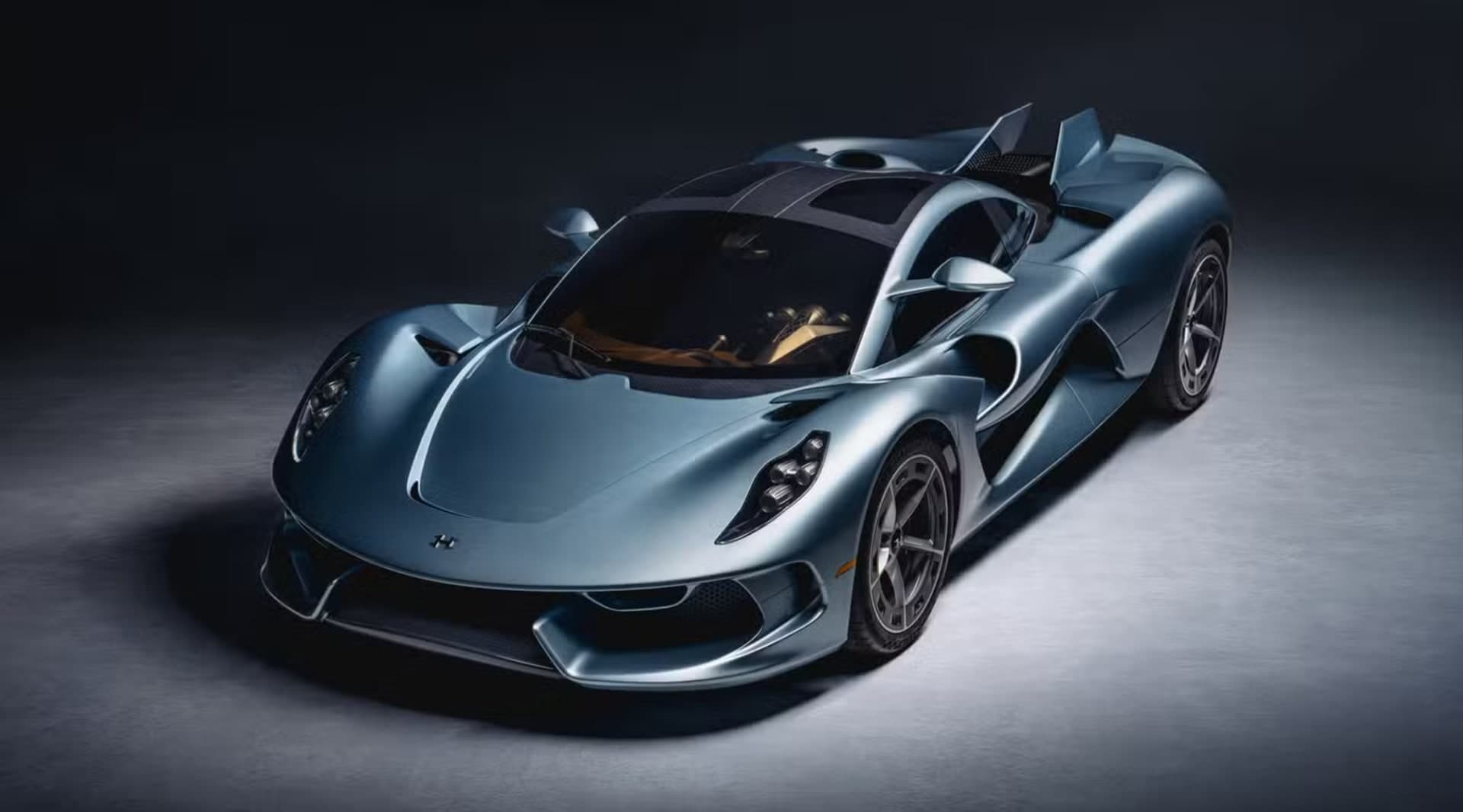
Hennessey has revealed the Blackbird, its second clean-sheet hypercar after the Venom F5, and it deliberately walks away from everything that made that car famous. No turbos, no hybrid assistance, no all-wheel drive, and a naturally aspirated V8 producing 800 to 850 hp, a fraction of the F5's claimed 2,031 hp. It debuts publicly at The Quail during Monterey Car Week on August 14, priced from 2.5 million dollars before tax, with more than two-thirds of the 71-car run already spoken for.
The engine that skips every shortcut
The Blackbird is powered by a 6.2-liter naturally aspirated V8 co-developed with Ilmor Engineering, revving past 9,000 rpm with no turbochargers, no electric motors, and no artificial throttle response layered on top. Hennessey calls it the highest-revving, most powerful naturally aspirated V8 ever fitted to a road car, ahead of the 670 hp 5.5-liter V8 in the Corvette Z06. Power goes to the rear wheels alone through a genuine six-speed gated manual gearbox, not a simulated one, on Michelin Pilot Sport Cup 2 tires.
Numbers that read almost modest for a hypercar
A full carbon fiber tub and bodywork help Hennessey target a curb weight under 1,360 kg, enough for 0 to 97 km/h in 2.5 seconds and a top speed of 354 km/h. Those are proper hypercar figures, they are just not the record-chasing numbers Hennessey usually leads with.
Why Hennessey chose less power, not more
Hennessey Director of Design Nathan Malinick said the obvious follow-up to the F5 would have been "3,000-plus horsepower and 400 miles an hour," but that path was rejected early because it "would sort of make the F5 irrelevant and do a disservice to our customers." Buyers with only two garage spots needed a reason for both cars to make sense. Malinick pointed to a broader shift instead: "There's such a movement and a desire for a return to a true material connection with the car, and having just a real honesty about the man and machine relationship."
An SR-71 hidden in the details
The name comes from the Lockheed SR-71 Blackbird, and the references run deep. Active vertical rear stabilizers automatically deploy at 71 mph (114 km/h), angled at 71 degrees, both numbers a deliberate nod to the plane. The diamond-shaped quad exhaust borrows from Chuck Yeager's Bell X-1 rocket plane, while Formula 1 inspired the side pods and rising front splitter, and Le Mans prototypes inspired the high-mounted wing mirrors, with more than a little Porsche 917K in the overall silhouette. There is a physical key to turn, and the whole car opens via gullwing doors that Malinick defends without apology: "Performance is cheap nowadays. People are more interested in how it makes you feel, or even how you're perceived, and that's part of the whole experience."
No screens, on purpose
Inside, leather dominates over exposed carbon fiber, and Hennessey is calling the Blackbird as close to a grand tourer as it will ever build. There is no touchscreen anywhere, the only camera-based mirror exists purely for global homologation, and everything else runs through physical controls and a large central tachometer, with an optional analog clock referencing the SR-71's cockpit compass. Practicality gets real attention too, with a frunk for two carry-on suitcases and rear-fender storage for duffel bags.
Price, production, and how soon
The Blackbird will not enter production until 2029 or 2030, after the Venom F5's own run of 99 cars wraps up. Of the planned 71 units at 2.5 million dollars before tax, more than two-thirds are already reserved, and Hennessey says the car will be homologated for key global markets rather than staying a US-only special.
AutoNext Take
A tuner best known for chasing 483 km/h builds its second hypercar around a naturally aspirated V8, a real gated manual, and zero screens, and explains the decision by saying more power would have insulted its own customers. That is a genuinely interesting pivot, and the aviation-inspired detailing feels earned rather than pasted on.
The gap between now and a 2029 delivery date is long enough that plenty could still change, and "authentic" is a word every manufacturer reaches for lately when marketing a manual gearbox. Hennessey has earned enough goodwill with the F5 to get the benefit of the doubt here, but the real test only starts once someone gets to row that gated shifter themselves.