Jaguar finally showed the Type 01 interior, and its boldest idea is hiding the screens
After a year as the industry's punchline, Jaguar just showed it had a plan
Jaguar has spent the past year being mocked. The pink concept, the Copy Nothing campaign, the ad with no car in it, all of it made the brand an internet punchline and left one question hanging: was there actually a car under all the noise? This week Jaguar answered part of it by revealing the interior of the Type 01, its production electric GT, and the surprise is that it looks genuinely, coherently good. The boldest idea in it, tellingly, is the one you cannot see: it hides the screens.
What the Type 01's cabin actually is
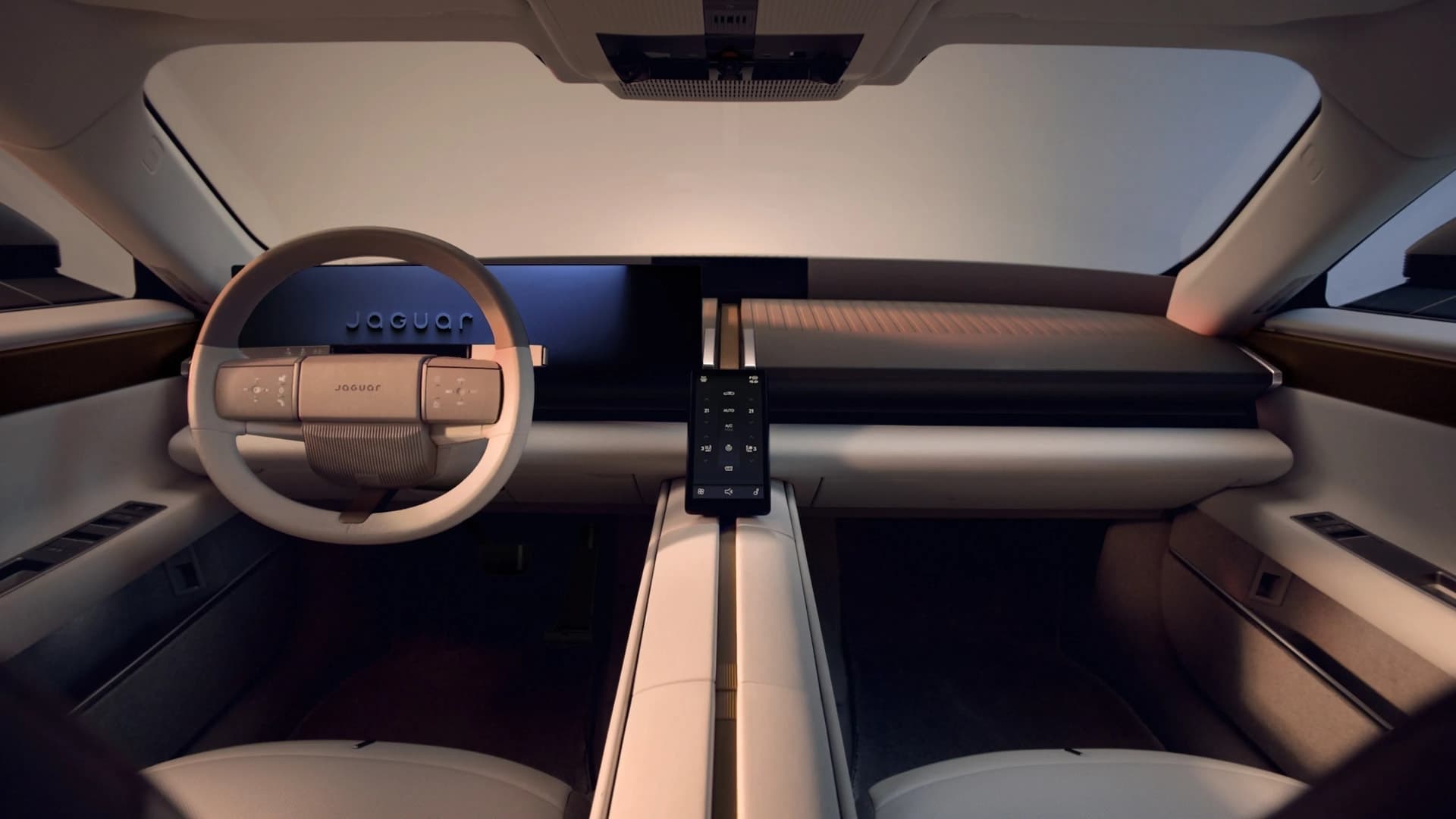
The centrepiece is a dramatic longitudinal spine that runs the full length of the cabin, finished in brass along with the door tops, and it splits the interior into four individual seats rather than the usual two rows. The palette is drawn from travertine stone, warm and tonal, wrapped in artisan textiles, with a low, cosseting GT driving position and a slim dashboard that appears to merge into the bonnet in what Jaguar calls a strikethrough. Chief interior designer Thomas Holden describes the spine as an architectural statement creating four individual spaces, and managing director Rawdon Glover promises an interior like no other. The Type 01 is built in the UK on Jaguar's new electric architecture, with the production car set for a full reveal in New York on 6 October.
The boldest thing here is what is missing
Look at what Jaguar did not do. There is no vast central touchscreen dominating the dashboard, no wall of glass. Instead the brand talks about hidden-until-needed technology, concealed compartments and infotainment integrated for instinctive control, with a slim dash and the tech tucked away until you want it. In a market that has spent a decade cramming ever-bigger screens into cabins, that is close to radical, and the timing is uncanny. It arrives just as Mercedes' own CEO admits the industry is at peak low button, not peak screen, as software and screen faults drive a wave of recalls, and as buyers tire of dashboards being turned into billboards. Jaguar, of all brands, may have read the room correctly.
Four seats is a real idea, not a spec-sheet flex
The four-individual-seats layout matters too, because it is a genuine idea rather than a number chasing attention. Splitting the cabin into four cocooned spaces is a proper grand-touring, even chauffeur-adjacent notion, one that treats a journey as an occasion rather than a commute. It is the same shift we are seeing across the top of the market, where the interior, not the drivetrain, is becoming the product, whether that is Bentley building an entire emotion system into the cabin of its first EV or coachbuilders selling atmosphere over horsepower. On a shared electric future, how a car makes you feel inside is fast becoming the whole game, and Jaguar has clearly understood that.
We still have not seen the actual car
A note of realism is only fair, because Jaguar keeps showing us beautiful fragments and withholding the fundamentals. There is still no price, no power figure, no range and no sign of the car actually driving; the interior joins the concept as another gorgeously shot piece of a puzzle Jaguar has yet to complete. And the hardest part remains: convincing buyers to pay what will surely be six figures for a Jaguar EV, from a brand that deliberately torched its old identity to get here. It is launching into a luxury EV market that is visibly cooling, where even Porsche is hedging. A stunning cabin is necessary. It is not, on its own, sufficient.
AutoNext Take
We have been sceptics about the Jaguar reinvention, and the memes were not entirely unearned; a rebrand that shows everything except a car invites exactly that. But credit where it is due, because this interior is the first strong evidence that there was a real, brave idea underneath the controversy. A screen-light, material-led, architecturally confident cabin that splits into four individual spaces is not a focus-group compromise. It is a genuine point of view, and a more radical rejection of the touchscreen than almost anything the establishment has dared.
The catch is that a point of view is still not a finished car. Jaguar has now shown the concept and the cabin, and still owes us the drive, the price and the range, the parts that decide whether this becomes a triumph or the best-decorated cautionary tale in the business. If the rest of the Type 01 lives up to what is inside it, the doubters will owe Jaguar an apology. On this evidence, for the first time, that no longer feels impossible. Show us the whole car.