Jaguar Type 01 is built for buyers who never owned a Jaguar
Jaguar's first new car since 2018 is aimed past its old customers
Jaguar's Type 01 is the car the brand's 2021 reset was built around: a 5.2-metre, four-door electric GT with 1,030 hp, 1,365 Nm and 0-100 km/h in 3.2 seconds. JLR unveiled it in New York on 6 October and opens orders in early 2027, from £130,000. It will be built at Solihull, the plant where the last petrol F-Pace was finished in December 2025.
80% of the 50,000 on the Jaguar Type 01 interest list never owned a Jaguar
JLR says 80 percent of the 50,000 people who registered interest in the Type 01 have never owned a Jaguar, the audience Gerry McGovern defended the rebrand for. Clinics with 2,500 people across six continents show the size of the gamble: the car scored more nines and tens than any Jaguar measured before, and more ones and twos. Prices start at £130,000, a well-equipped car should land around £150,000 and bespoke cars pass £200,000, which puts it between a Porsche Taycan and a Bentley Flying Spur. Euro prices have not been announced yet.
Solihull builds the Type 01 from 2027 with Wolverhampton batteries
JLR will build the Type 01 at Solihull from 2027 on its own Jaguar Electric Architecture, with motors and battery packs from Wolverhampton and body panels pressed at Halewood. Nearly 9,000 Solihull workers have been retrained to build electric cars. The project has produced more than 360 patent applications, a record for a single Jaguar. It arrives at a company that set its break-even at 300,000 cars after cutting 4,000 jobs, and JLR names North America as its priority growth market, which explains why the car was unveiled in New York rather than London. At the premiere, Jaguar also named actor Florence Pugh as its first brand ambassador.
Jaguar Type 01 makes 1,030 hp from three motors, 430 hp more than Project 8
The Type 01 uses three electric motors, one on the front axle and two at the rear, for 1,030 hp and 1,365 Nm. That is 430 hp more than the 600 hp XE SV Project 8, the most powerful Jaguar road car until now. The two rear motors share a housing but work independently, so they can vector torque between the wheels. On a steady motorway cruise only the front motor drives the car, while Dynamic mode sends up to 87 percent of the power rearward. Rear-wheel steering of up to 6 degrees cuts the turning circle to about 11.5 metres.
A 118 kWh battery gives the Type 01 about 720 km on WLTP and 321 km in 13 minutes
The Type 01 runs on an 850-volt system with a 118 kWh usable battery, good for about 720 km on the WLTP cycle and up to 644 km on the stricter American EPA test. Jaguar also quotes a figure most brands avoid: up to 515 km at a constant 120 km/h. At 350 kW, 13 minutes on a fast charger adds 321 km. The cells sit in front and rear sections so passengers can sit low, because a flat skateboard pack would have made the car about 20 cm taller. A drag coefficient of 0.23 makes it the most aerodynamic Jaguar yet.
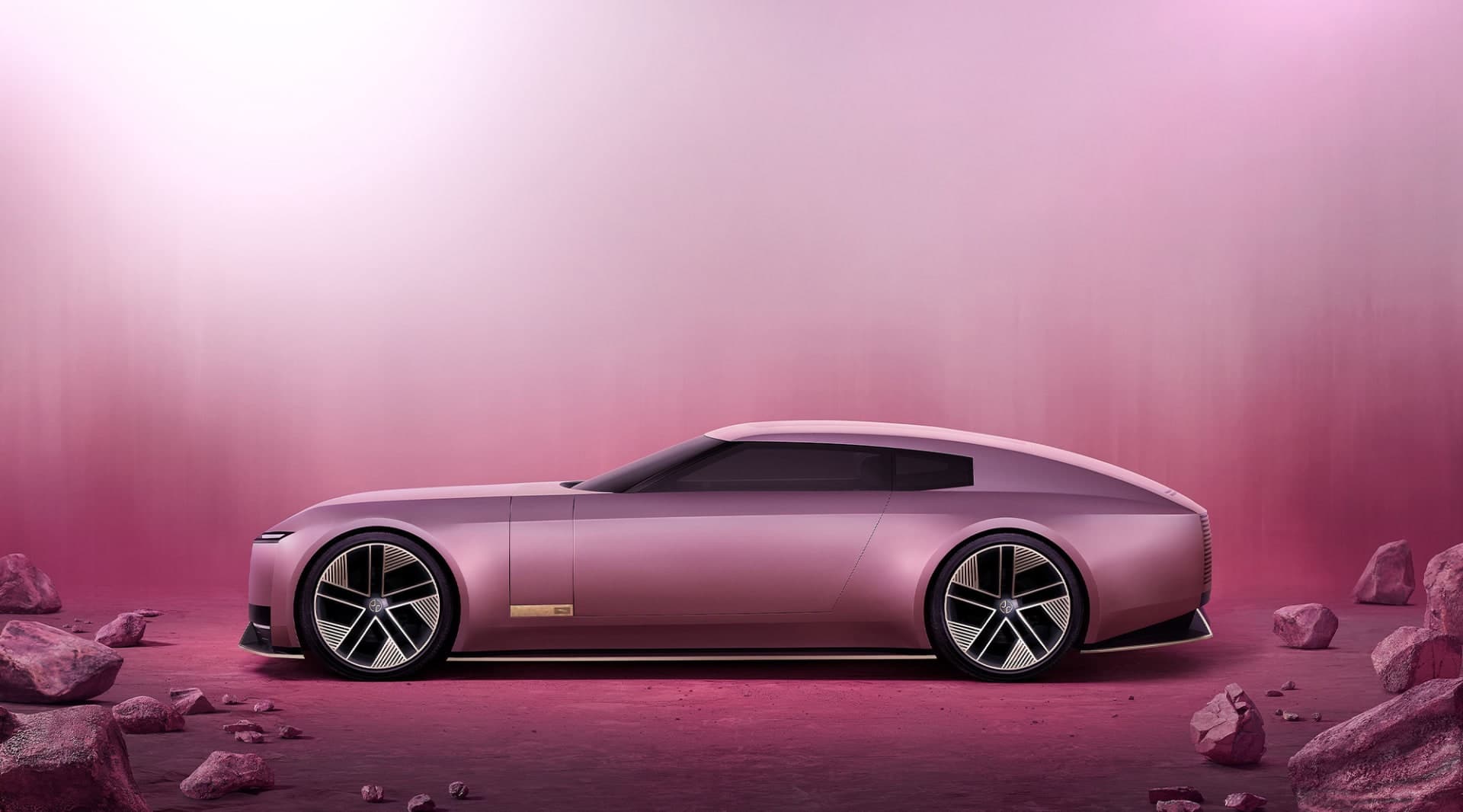
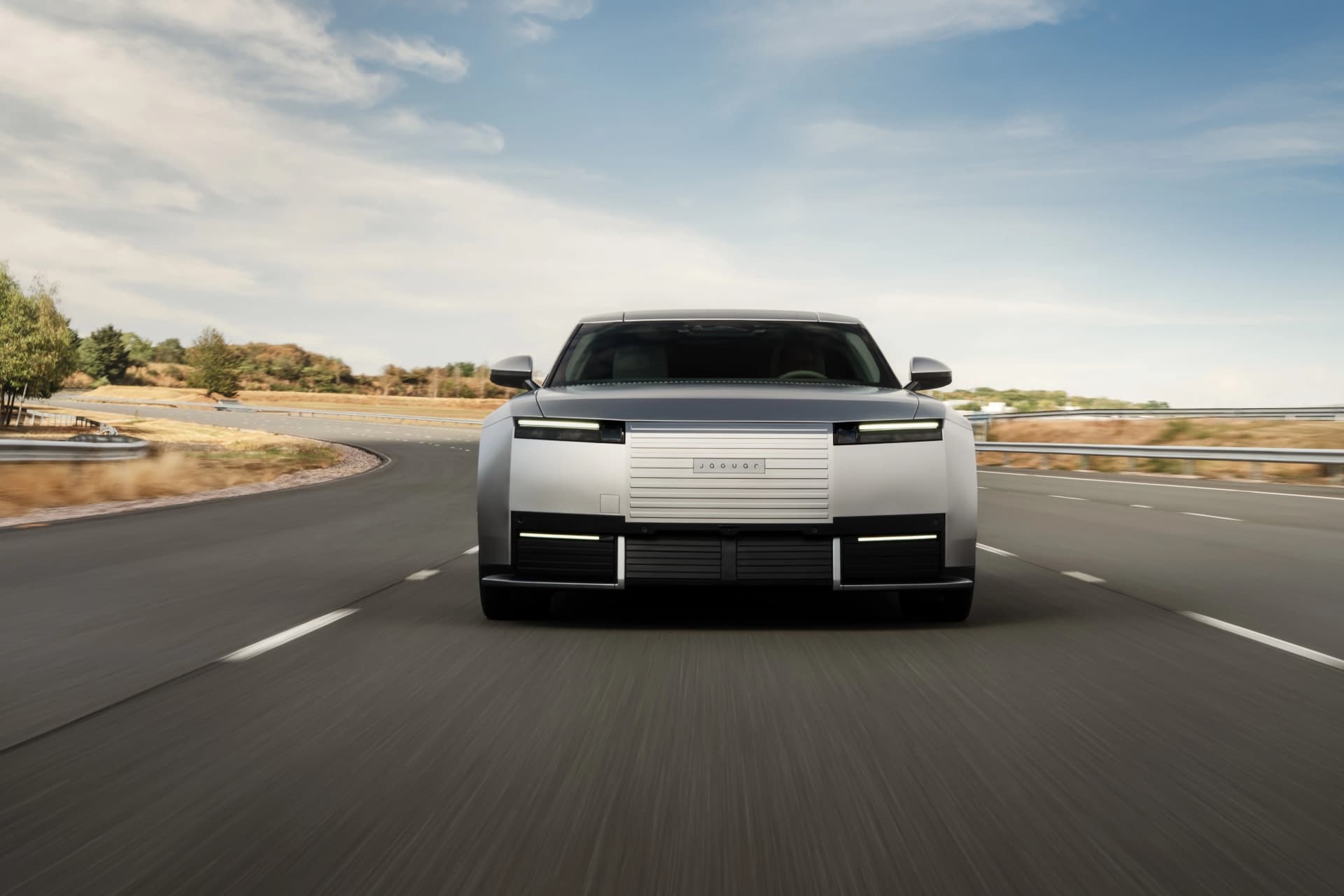
Jaguar Type 01 is 5.2 metres long, 1.4 metres tall and has no rear window
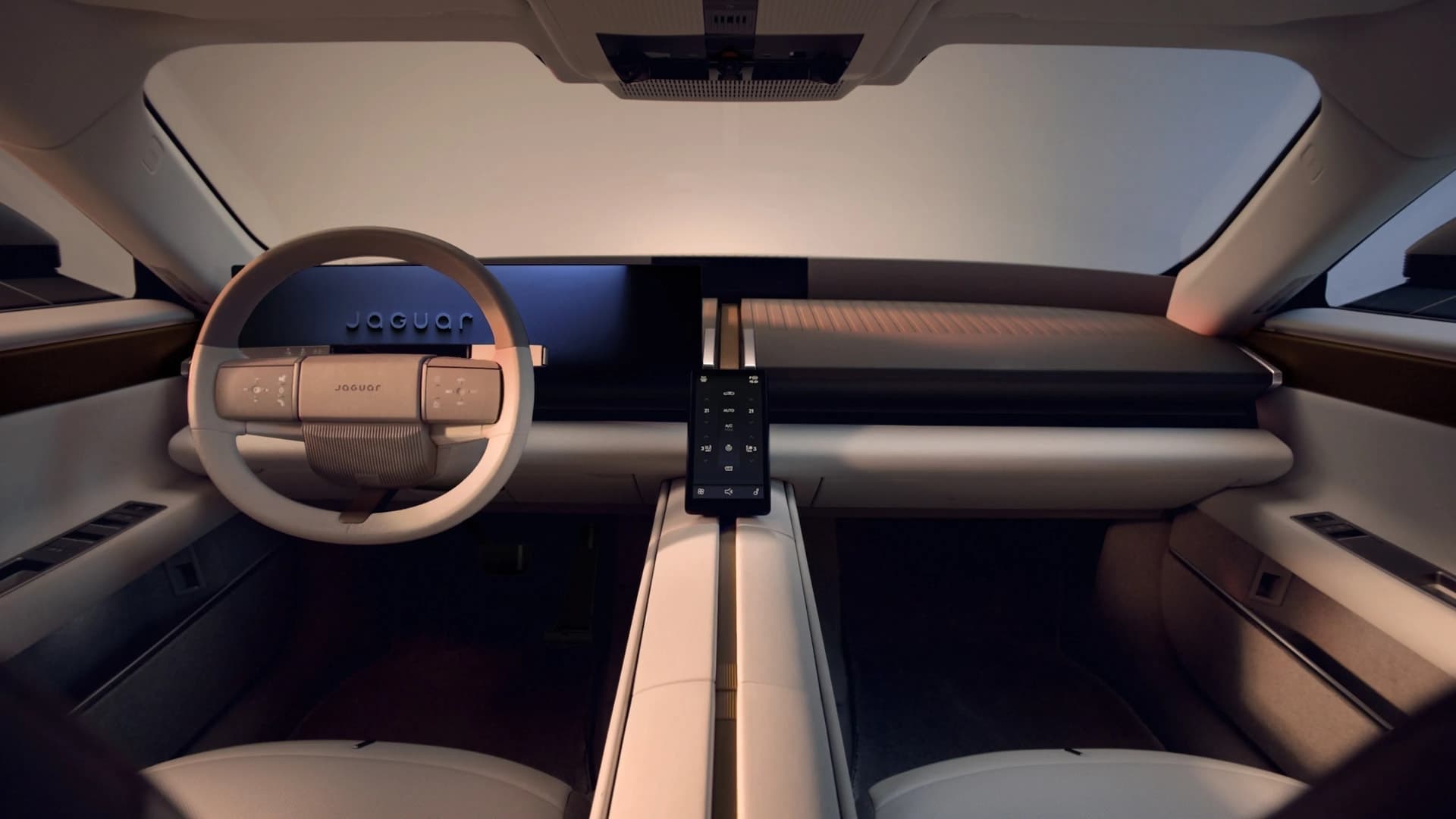
The Type 01 measures about 5.2 metres long and 1.4 metres tall on standard 23-inch wheels, with 21-inch wheels offered for markets that need snow chains. There is no rear window: a roof camera feeds a display set into the soundbar at the base of the windscreen. Inside, a 24-inch OLED screen faces the driver above a 7-inch touchscreen, as Jaguar showed in August. The low roof has a cost, because rear headroom is tight for a car this long. The shape itself was frozen in 2021, before the Type 00 concept that previewed it.
AutoNext Take
The Type 01 is better engineered than two years of arguments about the rebrand suggested. A brand with no car in production for most of 2026 could have dressed up a borrowed platform; instead it engineered a 1.4-metre saloon around a split battery, brought drag down to 0.23 and made a 13-minute stop worth 321 km. Those figures stand up next to anything in the class, whatever anyone thinks of the face.
The design will keep dividing opinion, and Jaguar has priced that in. Its future rests on conversion: if one in ten of those 50,000 names becomes an order by the first deliveries in the second half of 2027, that is 5,000 cars at around £150,000, roughly £750 million, and a Jaguar that pays its way at a fraction of its old volume.