Jeep's new Cherokee just launched, and its replacement is already confirmed
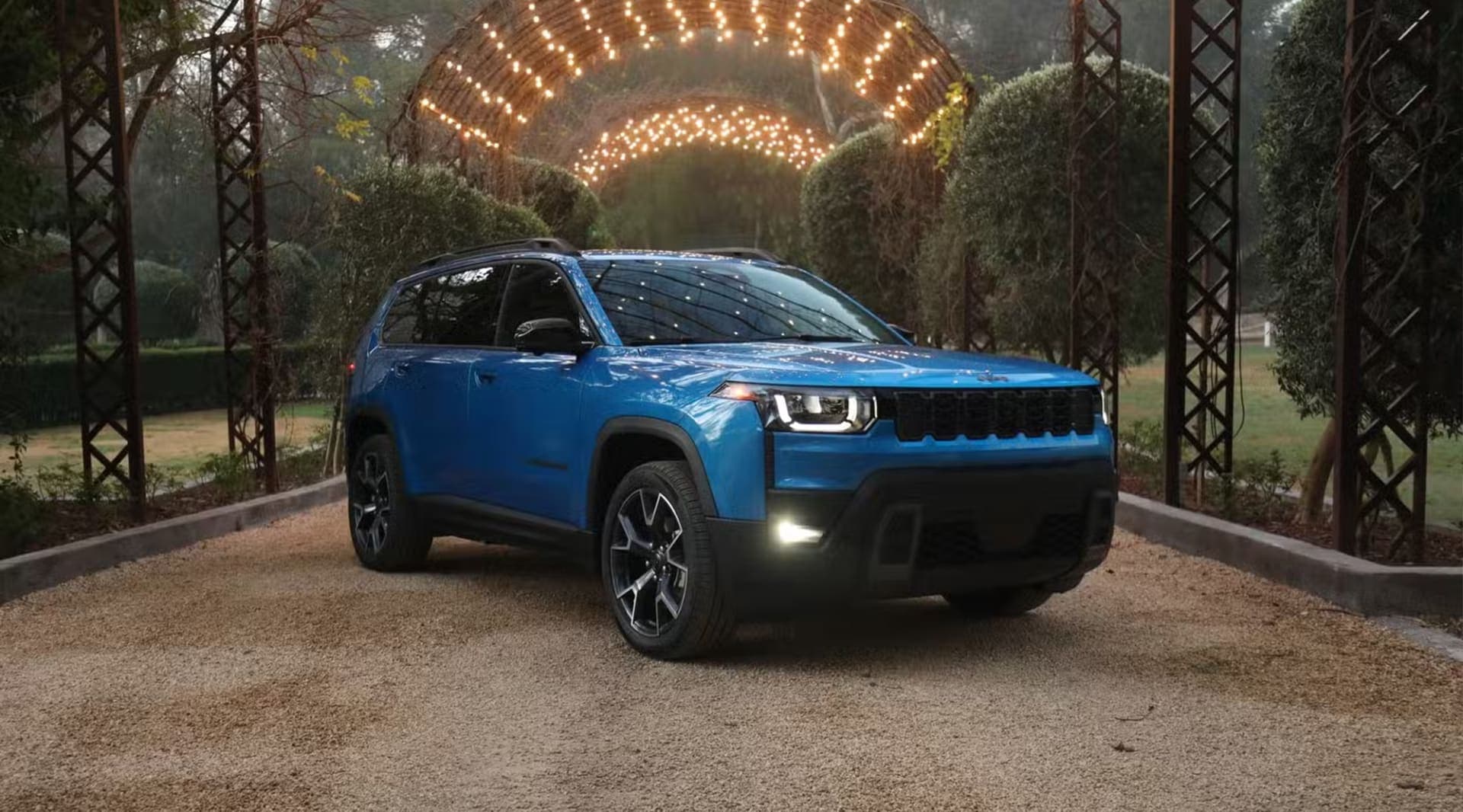
Jeep did not get a full model year out of the current Cherokee before confirming its replacement.
Stellantis has confirmed a next-generation Cherokee for 2029, less than a year after the current model reached showrooms. The new car moves to STLA One, the group's next global platform, and will be built in Illinois rather than Mexico.
This is one of the shortest model cycles Jeep has ever planned
The current Cherokee only returned to Jeep's range for the 2026 model year, after the nameplate had been dropped in North America a few years earlier. It is internally known as the KM generation, sits on the STLA Large platform, and starts at roughly 35,000 dollars, built in Mexico. Its replacement is already targeted for the second half of 2029, expected to land as a 2030 model, putting barely four years between a revival and a full redesign.
STLA One is the real story, not the badge on the boot
STLA One is Stellantis's new flexible global architecture, introduced in May as the backbone of the group's FaSTLAne 2030 strategy. It folds five previous platforms into one and is built to carry combustion, hybrid and fully electric powertrains on the same basic structure. Stellantis plans more than 30 vehicles on STLA One through 2035, with the first European cars arriving in 2027, so the Cherokee is not a special case. It is simply first in line for the United States.
Belvidere is the actual bet
Production lands at Belvidere Assembly in Illinois, the same plant that became a flashpoint in Stellantis's dispute with the United Auto Workers after production paused there in 2023. Stellantis now plans to invest more than 800 million euro at the site, up from the 600 million euro pledged in October 2025, with over 60 million euro already spent through July on stamping, body, paint and general assembly upgrades. Pilot production starts in the first half of 2028, ahead of full retail production in the second half of 2029. For a plant that spent years sitting idle, that is a genuine second chance.
Why now
Building in the United States, on a platform shared with dozens of future models, is not only about capacity. It should also shield the Cherokee from US import tariffs and spread STLA One's development costs across a far larger family of cars, which Stellantis suggests could make the next Cherokee sharper to price than the current model's 35,000 dollar starting point. The timing also lines up with Stellantis's half-year results, which showed North America carrying almost the entire group recovery. Nothing about power, trim levels or an actual price has been confirmed yet.
What Jeep has not said yet
Stellantis has not released a single design detail, powertrain split, or price point for the next Cherokee, only the platform, the factory and the date. Whether it keeps a naturally aspirated engine option, leans further into hybrids, or eventually goes electric-only is entirely open, since STLA One is built to support all three from the same underlying structure. Jeep has not said whether the Cherokee name even survives the transition, though nothing so far suggests a change.
AutoNext Take
Confirming a car's replacement before the current one has done a full model year usually signals a company under pressure, and in Stellantis's case that is not an unfair reading. The group swung back to profit in the first half of 2026 almost entirely on North American strength, a rebound we already flagged in Stellantis's second-quarter deliveries, while Europe stayed in the red. A Cherokee built on home soil, protected from tariffs, is exactly the kind of project that recovery needs to keep producing.
None of that makes the Cherokee plan a bad one. One platform instead of five is a real efficiency gain, and Belvidere finally being useful again matters beyond the balance sheet, for the workers who depend on it as much as for Stellantis. The catch is that a four-year model cycle asks a lot of buyers who chose the current Cherokee in good faith, and Stellantis is betting they will not mind having bought an interim generation, as long as the next one actually turns up on time.