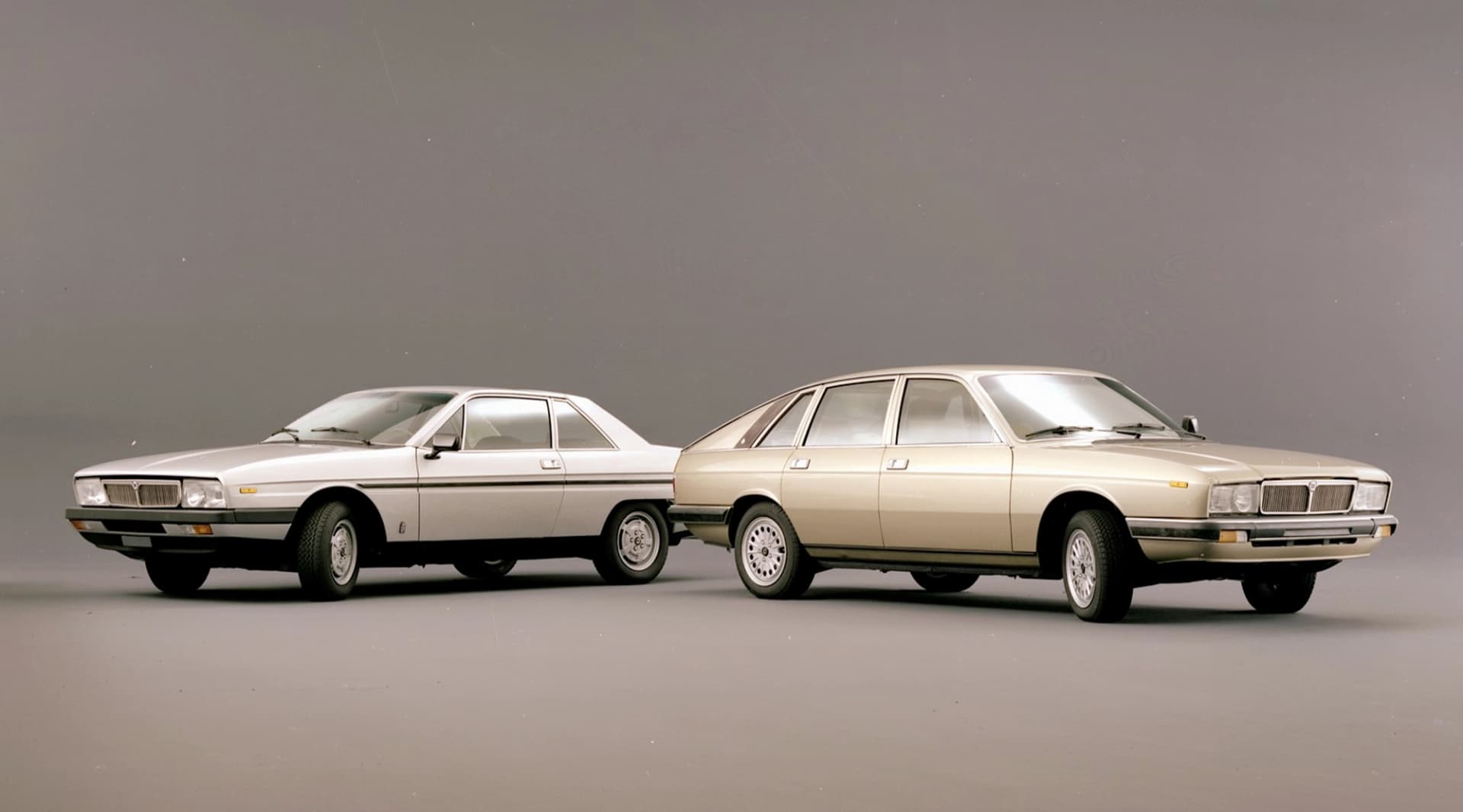
Lancia Gamma at 50: the forgotten Italian flagship that still feels surprisingly modern
Half a century after its debut, the Lancia Gamma remains one of the most unusual executive cars ever to come out of Turin.
Unveiled at the Geneva Motor Show in March 1976, the Gamma marked Lancia’s return to the flagship segment after the Flaminia era, and it did so in a way only Lancia really could: with bold engineering, unconventional design, and a level of interior refinement that felt distinctly Italian.
A flagship created during a turning point for Lancia The Gamma was born during a period of major transition for Lancia following its integration into the FIAT Group. After the Beta launched in 1972, one of the brand’s key goals was to return to the upper end of the market. The Gamma became that car: Lancia’s new top model, built around familiar brand values such as front-wheel drive, sophisticated engineering, and distinctive design. Production eventually ended in 1984, with roughly 22,000 units built before the Gamma handed over to the Lancia Thema.
That production number matters, because it helps explain why the Gamma remains relatively obscure compared with some of Lancia’s more famous nameplates. It was never a mass-market success. But scarcity, especially when paired with design originality, tends to age very well.
The boxer-engined flagship nobody else would have built
Perhaps the most Lancia detail of all was under the bonnet. Instead of going down the predictable route, Lancia developed a new 2.5-litre four-cylinder boxer engine producing 140 hp, built with extensive use of aluminium. A 1,999 cc version with 120 hp was also created to work around Italian tax rules on engines above two litres.
Even today, that specification sounds unusual for a flagship. And that is exactly why the Gamma is interesting. It did not chase prestige through cylinder count alone. It tried to deliver refinement and technical sophistication through packaging, efficiency, and originality. That approach feels surprisingly relevant in 2026, when brands once again have to rethink what a flagship should be.
The saloon was brave, the coupé was beautiful
The Gamma saloon stood out with its unusual two-box hatchback silhouette, truncated rear, and strong attention to aerodynamics, cabin brightness and comfort. Lancia quoted a drag coefficient of 0.37, while the large glazed surfaces gave the interior an airy feel that many rivals lacked at the time.
The Gamma Coupé, by contrast, leaned more heavily into Italian GT elegance. Pininfarina shortened the wheelbase and created a sleeker, lower three-box shape with particularly balanced proportions. Contemporary descriptions of the interior referred to it as a “travelling lounge,” which feels exactly right. This was not a stripped-back sports coupé. It was a long-distance machine built around comfort, atmosphere, and style.

Updated in the 1980s, rediscovered in the 2020s
Lancia updated the Gamma in 1980 with a second series that brought Bosch L-Jetronic electronic injection, styling revisions, and reworked interior materials. The Gamma platform also inspired several concept cars from Pininfarina and Italdesign, including the Gamma 3V by Giorgetto Giugiaro, which today is preserved at the Heritage Hub in Turin.
That broader design legacy is one of the strongest arguments for the Gamma’s importance. This was not just a single model. It was a platform that invited experimentation from some of Italy’s greatest design houses.
Why the Gamma matters again now
This anniversary is more than just a historical footnote. Stellantis Heritage explicitly says the Gamma still serves as an inspiration point for future Lancia models, and the Gamma name has now been chosen again for one of the key cars in Lancia’s new era, to be produced in Melfi, Italy.
That gives the old Gamma fresh relevance. We are not only looking back at a quirky 1970s flagship. We are looking at a car whose ideas are now being reinterpreted for Lancia’s future.
AutoNext Take
The Lancia Gamma is exactly the kind of car the modern market struggles to produce: elegant without trying too hard, technically unusual without being gimmicky, and premium without copying everyone else. It never became a mainstream benchmark in the way German executive cars did, but perhaps that is why it has aged so well.
The Gamma may not have dominated its segment when new, but today it feels like one of the most authentic expressions of what Lancia used to be: inventive, stylish, and brave enough to do things differently.
