Land Rover's new army Defender is up against Ford, Toyota and Ineos
Land Rover is now one of five bidders for a fleet it used to own outright
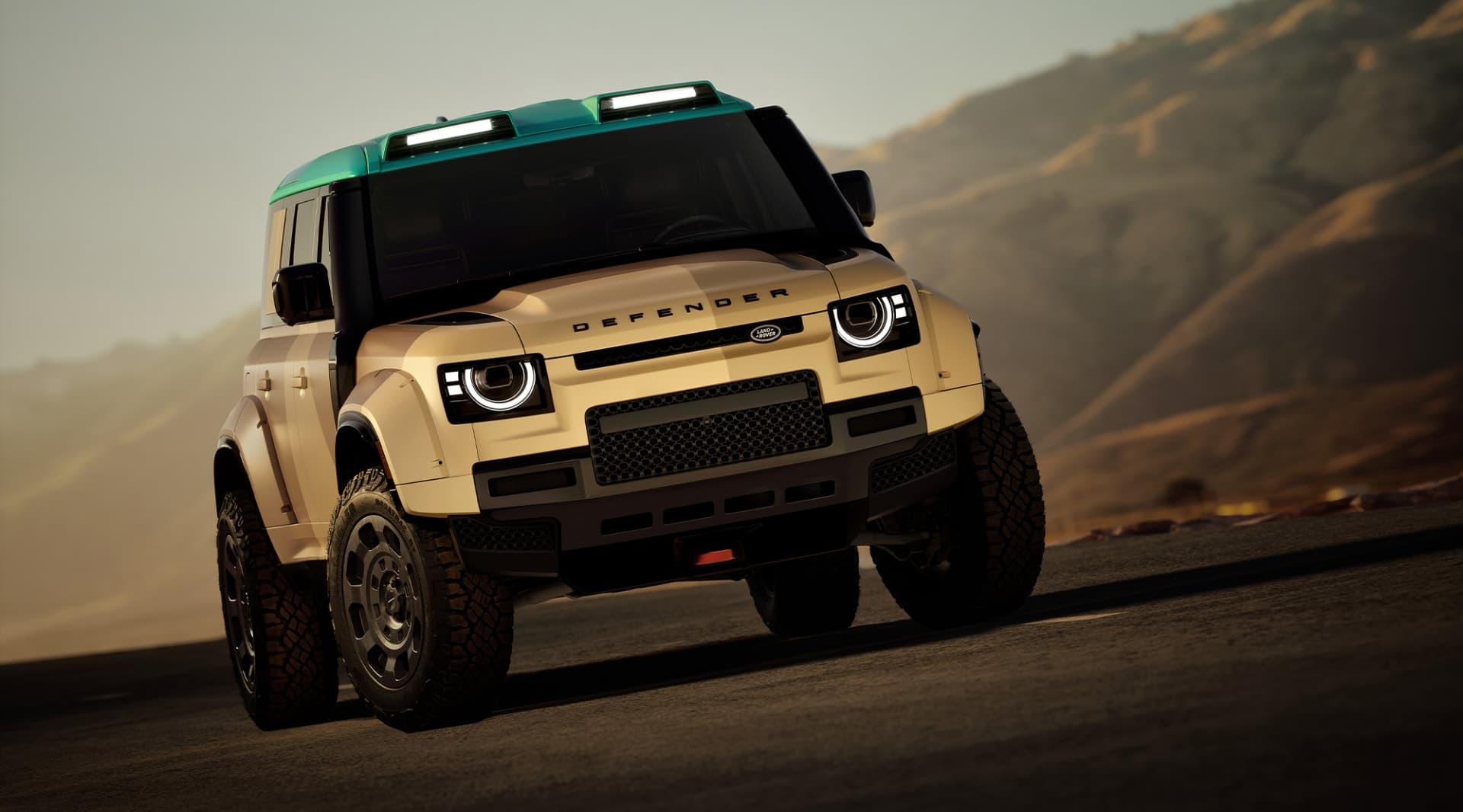
Jaguar Land Rover revealed the Defender Wolf Series II on Friday and confirmed it is bidding for the British Ministry of Defence's Light Mobility Vehicle contract, the programme replacing the Land Rovers and Pinzgauers the Army has spent this year retiring. Land Rover defined that category for Britain and held it for seven decades. It now has to win it back from Ford, Toyota and Ineos.
The Wolf Series II is a D7x monocoque, and the Wolf name is barely 30 years old
The Wolf Series II drops the ladder frame the original used and sits on the current Defender's D7x monocoque, which JLR says buys a stiffer structure and more payload. The company ran it through more than 62,000 engineering sign-off tests and its own Extreme Event Test procedure, and says it was the only vehicle to clear every obstacle at the MoD's independent testing ground. Defender boss Patrick McGillycuddy described the original Wolf as having served the British Armed Forces for over 70 years, which is Land Rover's record in uniform rather than the Wolf's: the XD-chassis Wolf was introduced in 1994 and entered service in 1998. The D7x architecture is the same one under the road-legal Defender Dakar, the credential JLR keeps pointing at.
JLR names a Wolverhampton engine, and does not name an assembly plant
The British content in the announcement is precise and worth reading twice: designed and engineered in the UK, with the engine built in Wolverhampton. Assembly goes unmentioned. Every current Defender is assembled at JLR's plant in Nitra, Slovakia, which is part of why talks about building Defenders in North America carried the weight they did. A Wolf Series II ordered by the British Army would, on current arrangements, arrive from central Europe with a Midlands engine in it.
Ford's Ranger bid answers with a Dagenham V6 and a conversion line in South Wales
Ford got its bid out two days before JLR's, with General Dynamics Land Systems UK as prime contractor and Ricardo as engineering partner. The platform is the Ranger and Ranger Super Duty, running Ford's 3.0-litre V6 built at Dagenham, with militarised conversion handled at GDLS facilities in South Wales. Ford quotes a 1-tonne payload and 3.5-tonne towing on the standard truck, rising to an 8-tonne gross train mass on the Super Duty, and puts 7,000 UK employees, 171 dealers and 405 authorised repair sites behind the support case. It is a British-content pitch aimed at exactly the same politics as JLR's.
Babcock chose a Toyota Land Cruiser 70, and Ineos builds the Grenadier in France
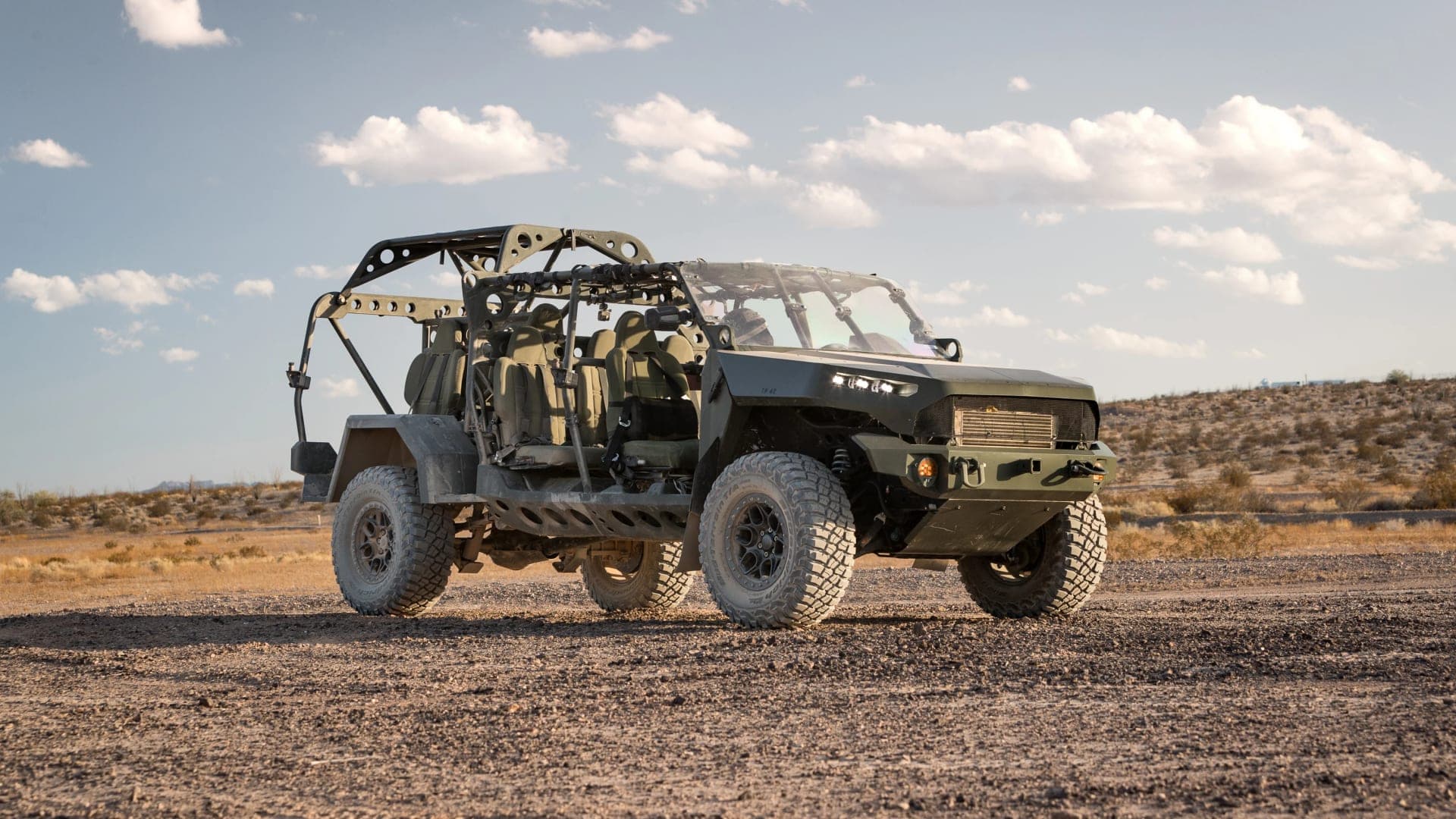
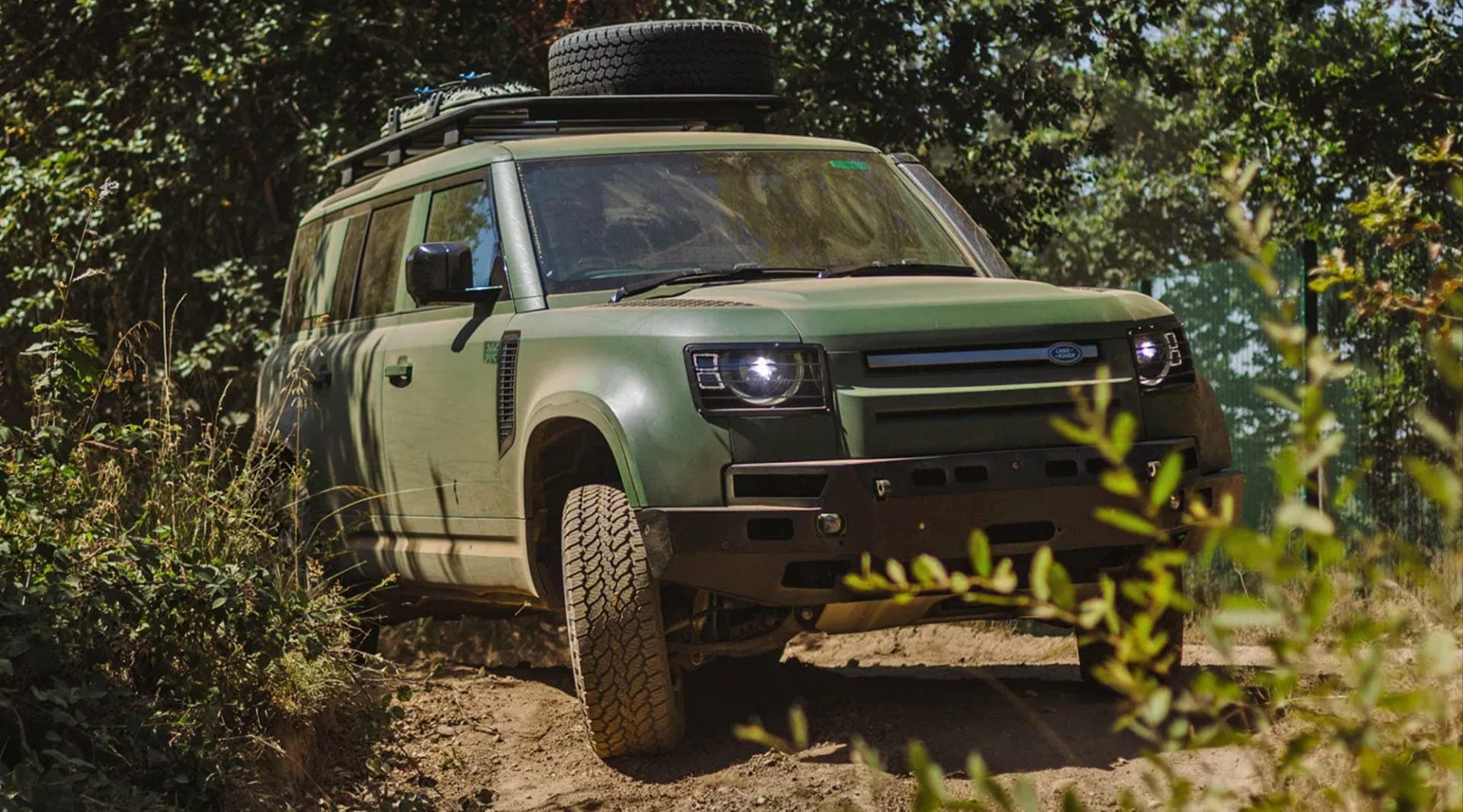
Babcock, a FTSE 100 defence group, signed an agreement with Devon's Supacat in July and is offering a General Logistics Vehicle based on the Toyota Land Cruiser LC70, a truck built in Toyota City. Ineos leads Team Grenadier alongside SMT Defence and NMS UK, and the Grenadier comes out of Hambach in France, the plant Mercedes built for the Smart. Rheinmetall is in with a bespoke design called Shadow Wolf, and the Chevrolet Colorado sits on the contender list too, the same platform GM Defense already builds by the thousand for the US Army. GM Defence opened a British arm this month.
The minister asked for 3,000 vehicles off the shelf, in service by 2030
The Army wants up to nine variants sharing a common base: general purpose, ambulance, tactical mobility, utility, enhanced protection, command and control, equipment support, troop carrying and mission systems. The Minister for Defence Readiness and Industry has put the first tranche at 3,000 vehicles inside a 3,500 kg weight limit, and said he wants this to be, as much as possible, an off-the-shelf purchase. More than 5,000 Land Rovers were still in British military service a year ago, and the fleet leaves entirely by 2030.
AutoNext Take
The monocoque is this bid's biggest problem, not its headline. A ladder frame is what lets a defence integrator cut the back off a truck and bolt on nine different bodies without re-engineering the vehicle each time, and a stressed-skin monocoque does not offer that. It is not a coincidence that JLR is taking four variants to Millbrook rather than nine. When a minister says off-the-shelf, he means he would like to buy a proven truck and pay somebody else to convert it, which is precisely the shape of the Ford, Babcock and Ineos consortiums and precisely not the shape of a bespoke JLR programme.
So here is the falsifiable version: JLR will not take all nine variants. The programme has already signalled it may pick different makes for different roles, and the Wolf Series II is the only bid in the field riding on a passenger-car monocoque. The four variants JLR has confirmed for the British Army's DVD event at Millbrook on 16 and 17 September are the ambulance, utility, general mobility and tactical trucks, which is the soft-skin half of the requirement. The enhanced protection vehicle, the role that fell to the armoured Snatch Land Rover after Iraq, is not among them. Win that one and the monocoque argument collapses.