Mazda deleted the 6e battery that charged at just 90 kW
For a year, the Mazda 6e you paid most for was the one that charged slowest
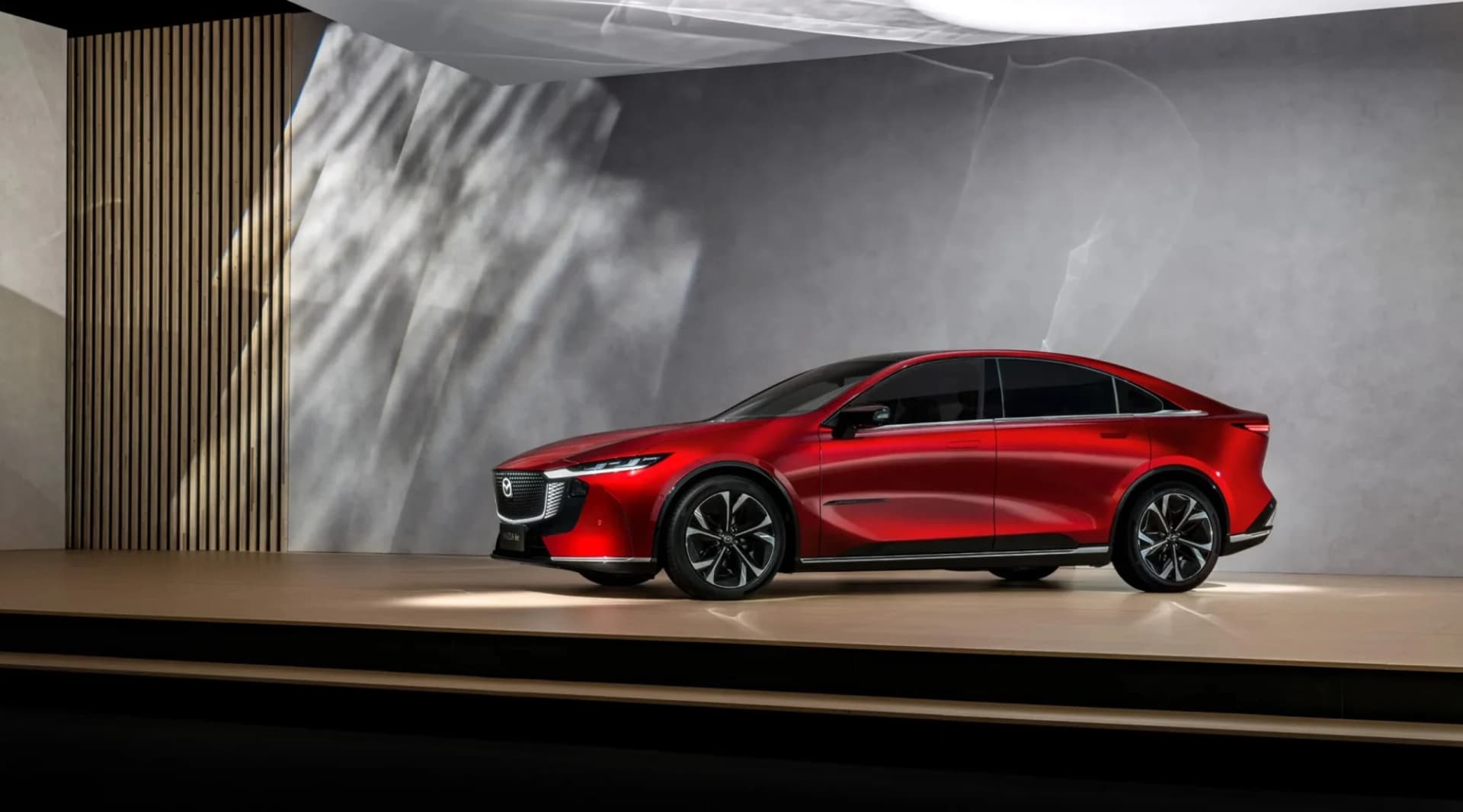
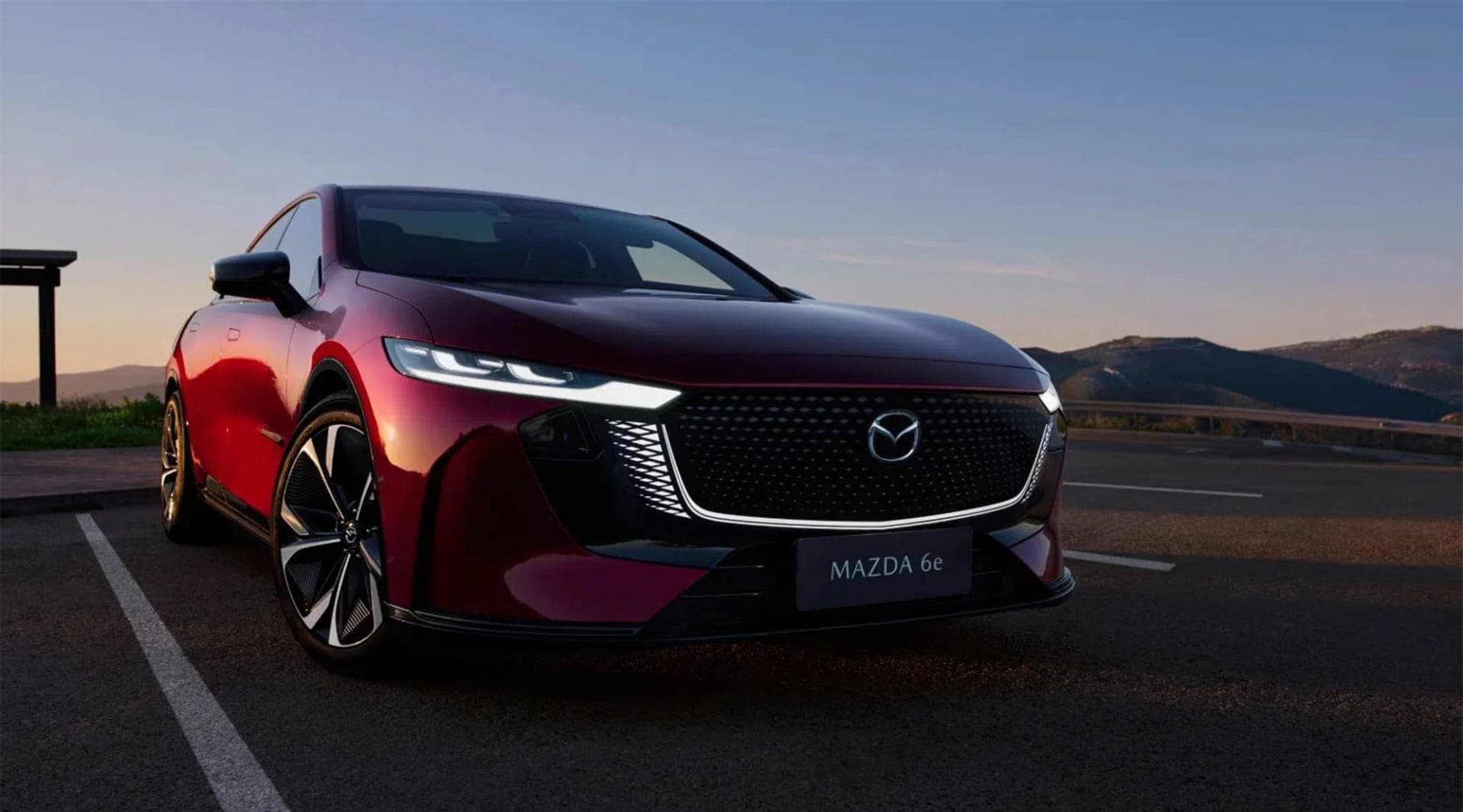
Mazda has replaced both of the 6e's batteries with a single 78 kWh lithium iron phosphate pack, and the model-year 2027 saloon now covers 560 km on the WLTP cycle and takes DC power at up to 200 kW. The 80 kWh nickel battery it deletes was capped at 90 kW. Prices open at €40,990 in the Netherlands and €43,890 in Belgium, orders are open now and the first cars land in showrooms in November.
One 78 kWh LFP pack replaces both Mazda 6e batteries
The 2027 6e is sold with a single battery, a 78 kWh LFP unit feeding a 258 hp motor on the rear axle. Mazda quotes 560 km WLTP, 16.1 to 16.6 kWh per 100 km depending on specification, and a 200 kW DC peak that covers 10 to 80 percent in 24 minutes, or adds 392 km in that same window. Acceleration and regenerative braking are both stronger than before, and the suspension has been retuned for stability.
The old 80 kWh Long Range charged at 90 kW and made 245 hp
This is what made the 6e so hard to recommend. The entry car launched with a 68.8 kWh LFP pack, 258 hp and a 165 kW charging peak, good for 10 to 80 percent in 24 minutes. Paying more bought the Long Range: an 80 kWh nickel-manganese-cobalt pack with 552 km of range, 245 hp, and a 90 kW ceiling that stretched the same top-up out to roughly 47 minutes. The flagship was the slower car in every sense that mattered.
The fix came out of the CX-6e, built alongside it in Nanjing
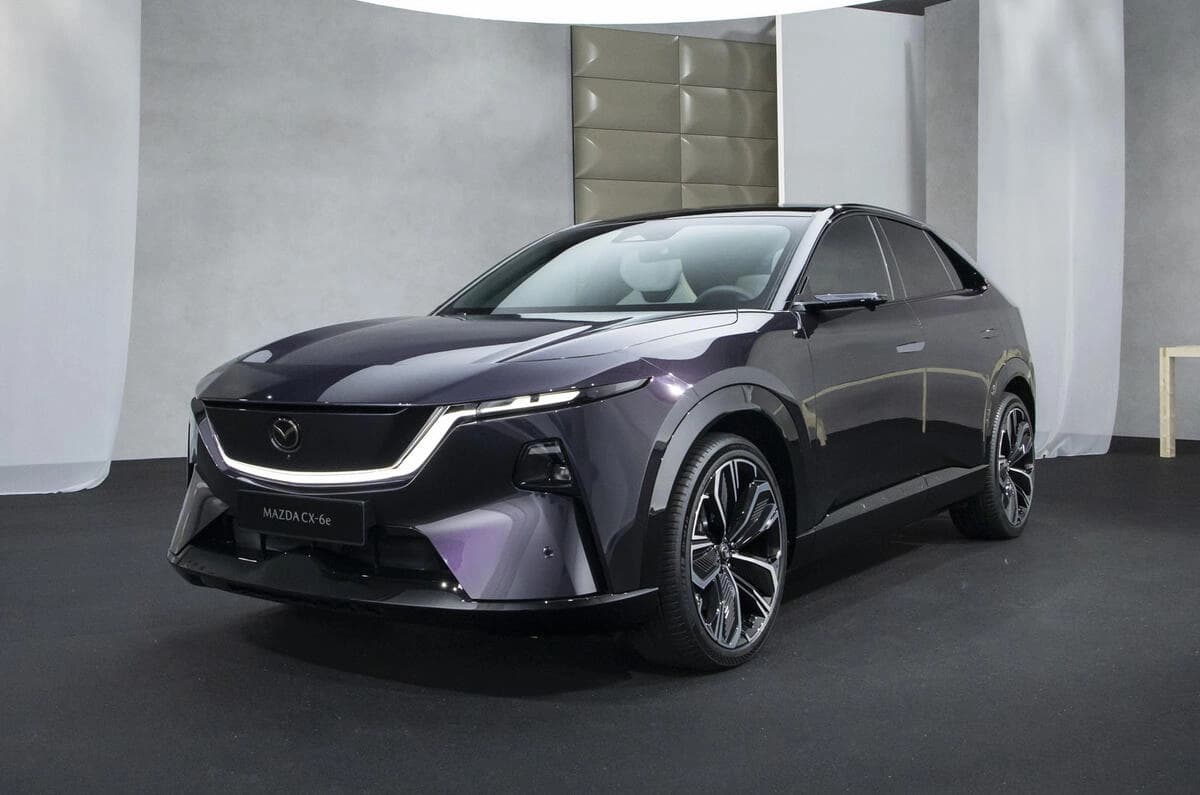
None of this is new engineering. The 78 kWh LFP pack, the motor and the thermal management are the hardware Mazda had already given the CX-6e, and both cars sit on the EPA1 platform of Changan and come out of the Changan Mazda plant in Nanjing. The CX-6e is itself closely based on the Deepal S07. Mazda spent a year selling a flagship battery that its own joint venture had already beaten.
The 2027 6e is €40,990 in the Netherlands and €43,890 in Belgium
There is no single European price, and the gap between markets is wider than the upgrade. In the Netherlands the 2027 car opens at €40,990, against €44,990 for the launch 68.8 kWh version and €46,590 for the Long Range it replaces, so a Dutch buyer gains 8 km of range and more than double the charging speed for €5,600 less. Cross one border into Belgium and the same three-grade line-up starts at €43,890 and tops out at €45,840. Britain has had the LFP car since February, from under £40,000. On an identical car, the Dutch and Belgian entry prices are close to €3,000 apart.
World Car Design of the Year, and a head-up display you can finally read
The 6e took World Car Design of the Year in April, an award handed to a car whose most expensive version could not charge faster than 90 kW. For 2027 Mazda has reworked the i-Activesense sensors so the assistance systems intervene more smoothly, sped up the infotainment and made the head-up display legible in direct sunlight. The styling was never the problem.
AutoNext Take
The price cut is the real admission. Mazda has not simply improved a battery, it has deleted the one it charged most for and replaced it with a cheaper chemistry that goes further and fills more than twice as fast. That is not a mid-life upgrade, it is the correction of a specification decision that never made sense on a car sold against the Tesla Model 3 and the Hyundai Ioniq 6. The parts to do it properly were coming off the same production line the whole time.
The people who pay for that are the ones who trusted the badge first. Anyone who bought an 80 kWh Long Range at €46,590 in the Netherlands now owns the slow version of a car that costs €5,600 less and charges in half the time, and the used market will price that in long before the warranty runs out. The number worth watching is whether the 68.8 kWh entry car survives at all. If Mazda settles on one 78 kWh pack across the 6e and the CX-6e, it will finally be selling the electric range this platform was designed to support, about two years later than it should have.