Mercedes-AMG's cheapest four-door GT still makes 544 hp and fakes a six-cylinder engine
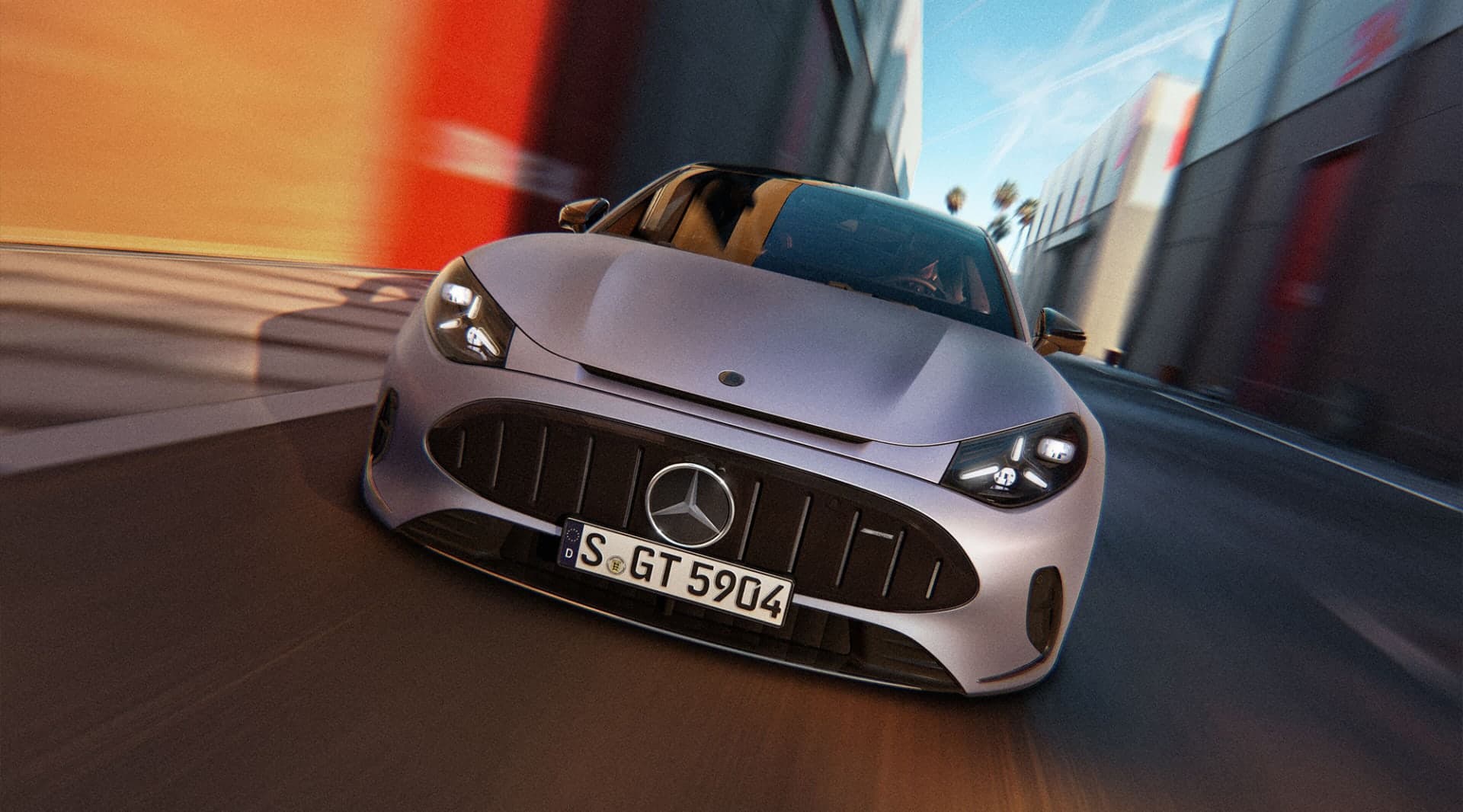
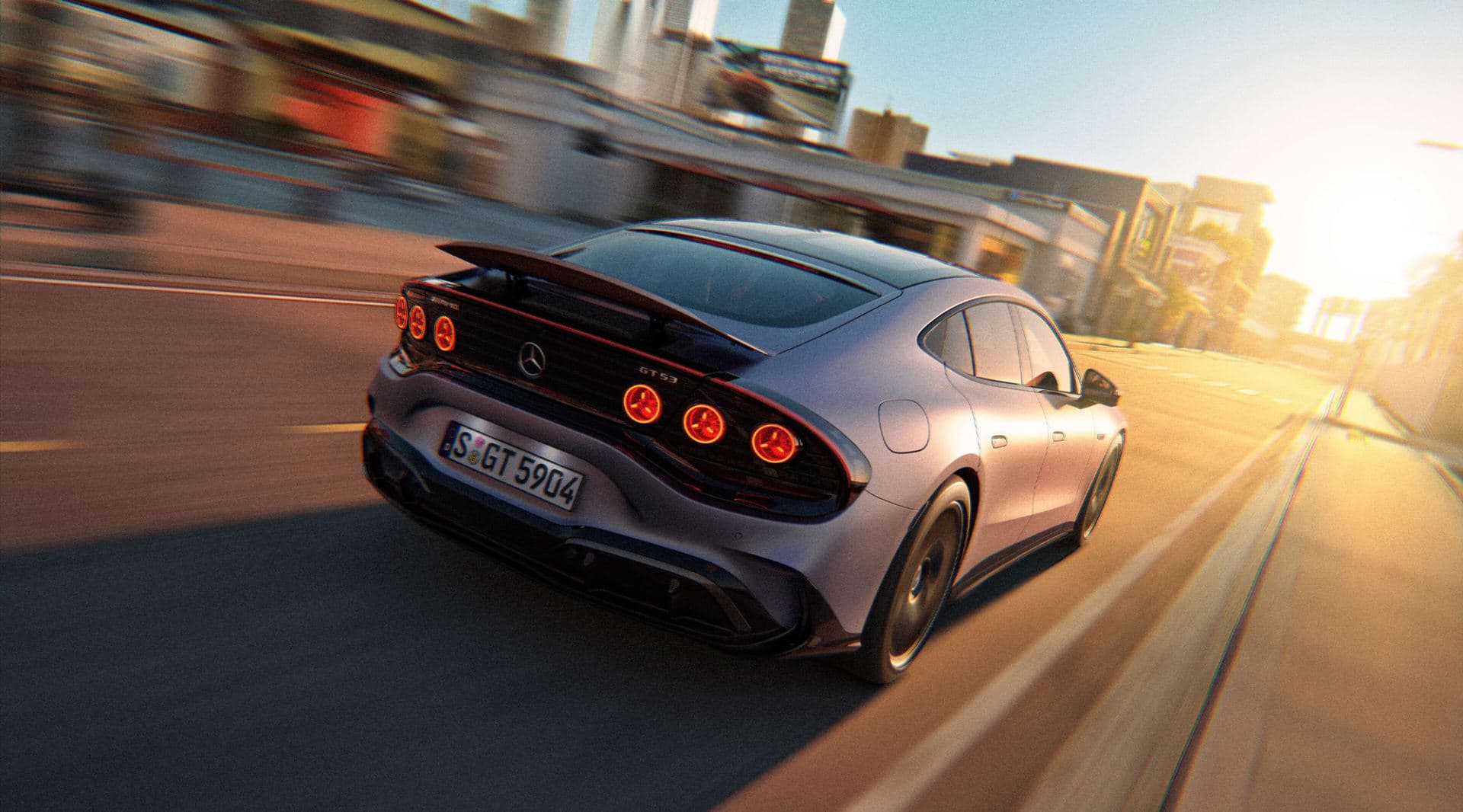
Mercedes-AMG calls the new GT 53 4-Door Coupé its entry point into the GT range. It has 544 hp, all-wheel drive, and a fully electric powertrain built to sound like the six-cylinder it replaces
Mercedes-AMG has revealed the GT 53 4-Door Coupé, the new base model in its GT 4-Door Coupé lineup below the GT 55 and GT 63, arriving in German showrooms on 13 August 2026 priced from €115,430. Two electric motors produce up to 400 kW (544 hp) combined, enough for 0 to 100 km/h in 3.5 seconds with the standard 1-foot rollout measurement, or 3.9 seconds from a true standstill. An 800-volt battery with 106 kWh of usable capacity and cylindrical cells with direct oil cooling gives a preliminary WLTP range of up to 809 km, with 600 kW DC charging capable of adding 534 km of range in ten minutes.
An electric powertrain with a mechanical trick built in
The rear-mounted electric motor runs permanently, while a second motor on the front axle acts purely as a boost unit, engaged through a Disconnect Unit only when the car needs extra traction or power, and disengaged entirely under light load to save energy. An unusual two-speed transmission backs both motors, with an 11:1 first gear tuned for strong launches and efficient town driving, and a 5:1 second gear built for motorway efficiency and sustained high-speed power. Combined, the two motors produce a peak 400 kW (544 hp) and 800 Nm of torque, though continuous output settles at 270 kW (367 hp). Top speed is limited to 230 km/h as standard, rising to 250 km/h with the optional AMG Driver's Package.
A battery built for range and repeated hard use
The 800-volt battery uses cylindrical cells, 105mm tall and 26mm in diameter, wrapped in laser-welded aluminium housings and cooled directly by an electrically non-conductive oil that flows around every individual cell. A total of 2,660 cells sit across 18 modules, using an NCMA cathode and silicon-containing anode chemistry that Mercedes-AMG says delivers over 298 Wh/kg of energy density. A Central Coolant Hub manages where that cooling capacity goes in real time, shifting it toward the drive units when the battery itself does not need it. DC charging peaks at 600 kW, enough for a 10 to 80 percent top-up in 11 minutes, though AC charging tops out at a comparatively modest 11 kW for anyone relying on a home wallbox overnight.
An entirely fake engine sound, built from real recordings
The AMGFORCE Sport+ driving programme simulates gear changes, complete with noticeable interruptions in torque delivery, and reproduces the sound of a combustion engine that no longer exists under the bonnet. Mercedes-AMG's acoustics team used the 3.0-litre inline six-cylinder engine from the former Mercedes-AMG E 53 Coupé as its reference, recording it at 16 microphone positions inside and outside the car and running more than 100 measurements on a rolling road, both static and dynamic. Drivers can still work the steering wheel paddles for manual gear changes while the mode is active, paired with a dedicated instrument display styled around a central rev counter. A separate Sound Slider lets owners tune the character further, choosing between Powerful, Balanced, and Minimal profiles across a scale running from Classic to Futuristic.
AutoNext covered this same AMGFORCE Sport+ trick on the electric Mercedes-AMG CLA 45, where it does the same job for a smaller, four-cylinder-flavoured car.
Chassis and aero doing the quieter, more serious work
AMG RIDE CONTROL air suspension handles the everyday spread between comfort and precision, with three damping stages and independent valve control at each wheel. The AMG Performance 4MATIC+ all-wheel drive system keeps its front and rear motors fully decoupled, allowing torque to move between axles as needed, while torque vectoring at the rear axle handles side-to-side distribution for cornering stability. At the back, an active AEROKINETICS spoiler stays retracted below 150 km/h to preserve the coupé silhouette, then extends through several angles as speed and driving style demand, up to a steepest setting for maximum downforce that can also be triggered manually from the steering wheel. An optional AEROKINETICS diffuser is tuned specifically for motorway efficiency rather than outright downforce. The result is a body that sits 4 cm lower than its predecessor despite the battery packed into the floor, with a drag coefficient of 0.21.
Priced as an entry car, built like anything but
At €115,430, the GT 53 undercuts its GT 55 and GT 63 siblings, but the specification sheet reads like anything but a stripped-down base model. A 2,375 kg kerb weight has not stopped it from a sub-4-second sprint to 100 km/h, and the four-door body still finds room for a 507-litre boot, a 415-litre VDA-measured equivalent, and a 62-litre front boot on top of that. At 5,094mm long with a 3,040mm wheelbase, this remains a genuine long-distance Gran Turismo underneath the performance numbers.
AutoNext covered the GT 63's debut in May, when it launched as AMG's electric flagship with up to 1,169 hp from three motors.
AutoNext Take
Calling this car an entry point says more about how far the GT 4-Door Coupé range has climbed than it does about the GT 53 itself. A 544 hp, all-wheel-drive electric saloon with an 800-volt battery and a sub-4-second sprint time is a genuinely serious performance car by any normal measure, and Mercedes-AMG pricing it as the accessible option only works because the cars above it are priced even further into the stratosphere.
The fake engine sound is the part most people will talk about, and it deserves more credit than the usual synthetic-noise gimmick gets. Sixteen microphone positions and over a hundred rolling-road measurements is a genuinely rigorous way to digitise a sound rather than approximate it, and choosing the old E 53's straight-six as the reference, rather than inventing something generic, at least ties the fantasy back to something AMG actually built. Whether that effort changes anyone's mind about electric performance cars needing a soundtrack at all is a separate question, but it is hard to accuse Mercedes-AMG of taking a shortcut here.
The figures throughout, including the range, consumption, and charging numbers, are still preliminary ahead of official type approval, so treat them as Mercedes-AMG's own claims until an independent test cycle confirms them.