Mercedes now builds the electric C-Class in Hungary, and Germany is feeling it
A gleaming new factory, and an uncomfortable question
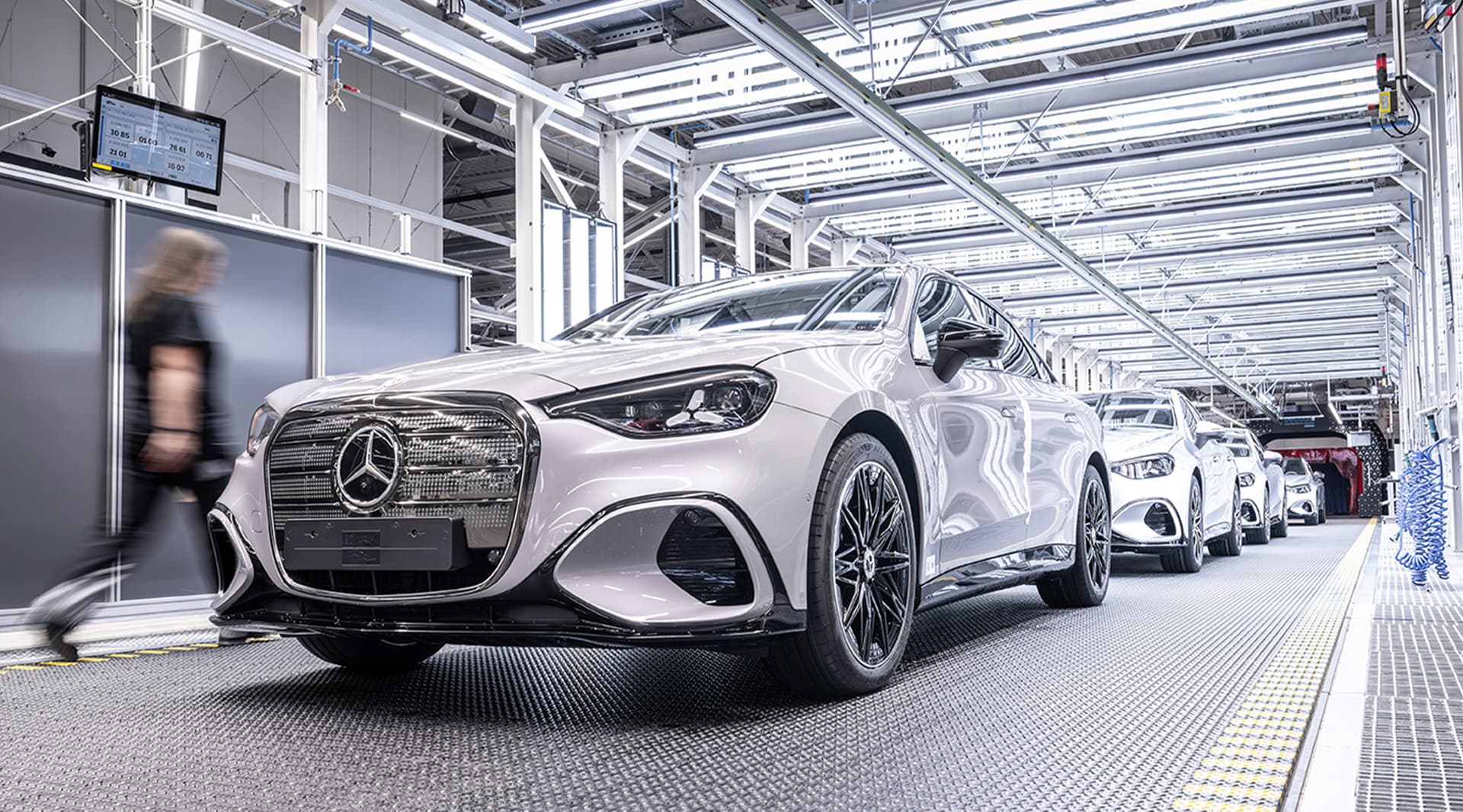
Mercedes has just opened one of the most advanced car factories in Europe, and started building its new electric C-Class there. The catch is where it is: not in Germany, but in Kecskemet, Hungary. It is a genuinely impressive plant, and at the same time a pointed signal about where European car manufacturing is heading.
A billion euro and a doubled footprint
Mercedes has poured around 1 billion euro into Kecskemet over its 2022 to 2026 business plan, expanding the site from 200 to 440 hectares. That makes it Hungary's largest automotive factory and one of the biggest in the Mercedes network worldwide, employing more than 5,000 people. The build-out includes two new assembly halls, a second stamping plant, an advanced paint shop and an on-site battery assembly line.
What gets built there
The headline is the new electric C-Class, whose production start was marked at the official opening on 15 July 2026. Alongside it, Kecskemet builds the electric GLB and, exclusively, the upcoming compact G-Class, plus existing combustion models on flexible lines that can run electric and petrol cars together. It all sits within the European MMA production network, which lets Mercedes shift volume between Kecskemet and its German plants in Bremen and Rastatt, with the electric GLC built in both Bremen and Hungary depending on demand.
Genuinely modern, and greener
To be fair to Mercedes, this is not a cheap-labour shed. The new paint shop cuts CO2 by 80% and energy use by 20% versus the older facility, and 42.3 MWp of solar covers roughly a quarter of the plant's annual energy needs. Digitally it is state of the art, running the MO360 data platform, a full digital factory twin inside NVIDIA Omniverse and AI-powered vision systems for quality control. Battery packs and body parts are made on site under a local-for-local approach. "This factory defines our production's future: intelligent, connected, digital and consistently focused on efficiency, quality and sustainability," said board member for production Michael Schiebe.
The uncomfortable context back in Germany
The timing is awkward. Mercedes is currently pressing German staff to move from a 35-hour to a 40-hour working week without a matching pay rise, affecting production, development, sales and administration. The economics behind that are blunt: a German industrial worker costs an employer roughly 49.50 euro an hour, against about 15.60 euro in Hungary, making Hungarian labour some 68% cheaper. Around 33,000 Mercedes employees protested in early July, and the works council argues longer hours solve little when some plants lack work. Schiebe has said Mercedes wants to keep producing in Germany, while warning that in extreme scenarios German factories could close if talks fail.
AutoNext Take
Judged purely as a factory, Kecskemet is genuinely exciting: solar-powered, digitally twinned, flexible enough to build electric and combustion cars side by side. But it is impossible to separate that from what it represents. When a premium German brand builds its new electric C-Class and its exclusive compact G-Class in Hungary while asking German workers to do five extra hours for free, the message about European cost competitiveness is hard to miss.
This is the same squeeze pushing Volkswagen towards huge job cuts, and it will not be the last example. Eastern Europe is no longer just where the cheap cars are made; it is where the premium and electric models increasingly are too. That is good news for Hungary and worrying news for Germany's industrial heartland, and the coming negotiations will matter to far more people than Mercedes alone.