New Lexus ES 2026 revealed with electric and hybrid powertrains
This might be exactly the kind of calm, spacious, comfortable electric sedan Europe needs.
The new eighth-generation Lexus ES feels more important than usual. Because for the first time, Lexus is not only offering it as a self-charging hybrid. The ES is now also fully electric, larger than before and positioned directly in the territory of cars like the BMW i5, Audi A6 e-tron, Mercedes-Benz EQE and Volvo ES90.
A bigger ES with a more serious mission
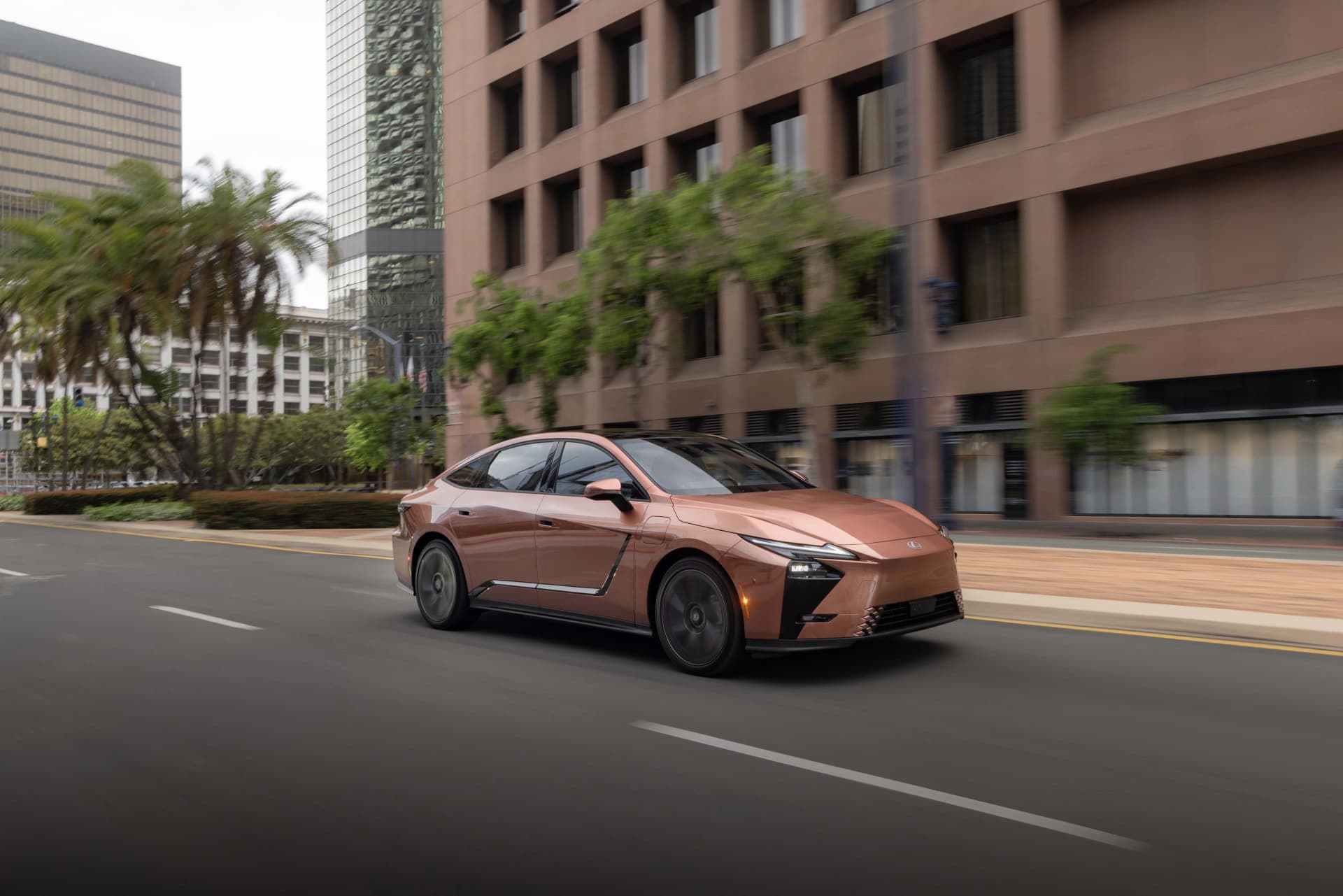
The new Lexus ES measures 5,140 mm long, 1,920 mm wide and up to 1,560 mm high, with a 2,950 mm wheelbase. That makes it significantly larger than the previous generation and gives the car a much more premium presence.
Visually, Lexus calls the design language Clean Tech x Elegance, inspired by the LF-ZC Concept. In normal words: it is smoother, more aerodynamic, more minimalist and more futuristic without completely abandoning the classic sedan shape.
While the rear profile almost makes it look like a liftback, the ES remains a proper four-door sedan. In a market full of crossovers and SUV-coupés, that already makes it feel a little more elegant.
Electric for the first time
The new ES follows Lexus’ multipath philosophy, meaning buyers can choose between battery-electric and self-charging hybrid versions.
The electric range starts with the ES 350e, a front-wheel-drive EV with 224 hp, a 77 kWh gross battery and up to 581 km WLTP range depending on version. Above that sits the ES 500e, using Lexus’ DIRECT4 all-wheel drive system with 343 hp, a 0-100 km/h time of 5.5 seconds and up to 529 km WLTP range.
Charging is respectable, but not class-leading. The ES supports 150 kW DC fast charging, taking the battery from 10 to 80 percent in around 30 minutes. More impressive is the standard 22 kW AC charging, which is still optional or unavailable on many rivals.
The hybrid is still very much alive
Lexus is not abandoning what made the ES successful. The new ES will also be offered as the ES 300h in Western Europe and the ES 350h in Eastern Europe, both using sixth-generation Lexus hybrid technology. The ES 300h produces 196 hp, while the ES 350h reaches 247 hp. E-Four all-wheel drive is available for the first time on an ES hybrid.
This is probably the smartest part of the whole strategy. Because Europe is clearly not moving in one clean direction. Some buyers want full EV. Some want hybrid efficiency without charging. Some still do huge motorway kilometres. Some want company-car logic. Some just want comfort and reliability.
Rear-seat comfort is the real luxury play
The strongest argument for the new ES might not be the battery, the range or the tech. It might be the back seat.
The longer wheelbase gives rear passengers serious space, and in higher-grade BEV versions Lexus offers a proper rear comfort package with reclining seats, heating, ventilation, massage and an ottoman-style leg rest. The front passenger seat can even fold forward to create an almost chauffeur-style experience.
That is where the ES starts to feel clever. It is not trying to be a sports sedan. It is not trying to out-German the Germans on steering aggression. It is playing the comfort card. Quiet cabin, soft ride, generous space, limousine energy.
Inside: clean, calm, but maybe not quite LS-level
The cabin takes a minimalist approach, with a new 14-inch LexusConnect multimedia system, a compact digital driver display and Lexus-first Hidden Switches that appear only when the car is switched on.
There are also some genuinely interesting luxury details, including new Bamboo Layering trim that changes appearance with ambient lighting, plus an available 17-speaker Mark Levinson audio system.
AutoNext Take
This is a car built around calmness, space, comfort and trust. It does not scream for attention like some EVs. It does not try to reinvent luxury with absurd doors or spaceship drama. It simply takes the ES formula and makes it bigger, quieter, more modern and finally electric.
And as an alternative to the BMW i5, Audi A6 e-tron, Mercedes-Benz EQE and Volvo ES90, it suddenly makes a lot of sense. Especially for buyers who care more about rear-seat comfort, silence, reliability and long-distance ease than about fake sportiness.