Polestar 3 gets the update it needed: 800V, 350 kW charging and up to 680 hp
That is exactly the kind of upgrade Polestar needed.
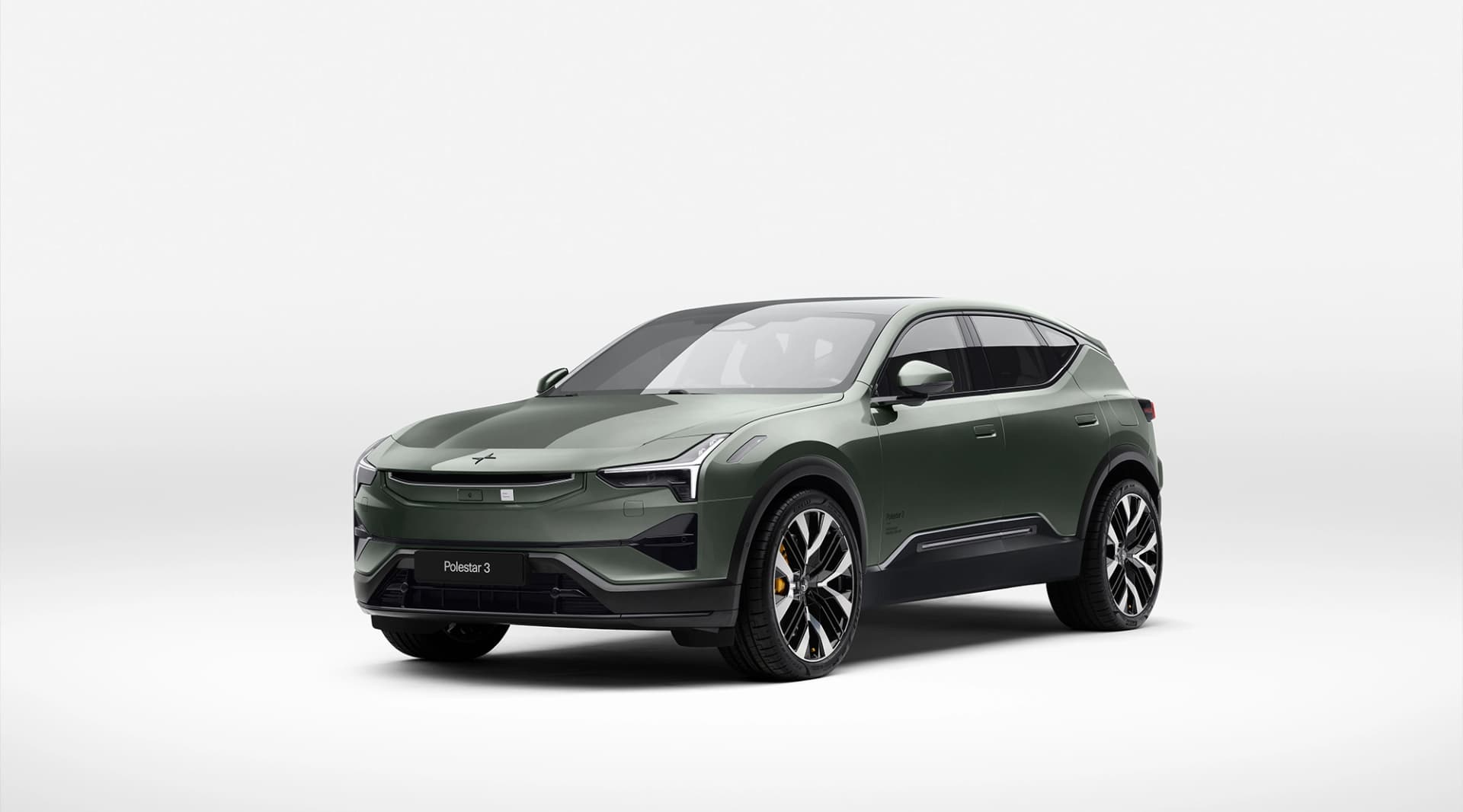
The upgraded Polestar 3 now moves to an 800V electrical architecture, gains new batteries, new motors, faster charging, more computing power and a new range structure. The result is a flagship electric SUV that finally looks much sharper on paper, with DC fast charging up to 350 kW, a 10 to 80% charge in as little as 22 minutes, and a new Performance version producing 680 hp and 870 Nm.
800V changes the conversation
The headline is the move from 400V to 800V. Polestar says the new architecture enables a peak DC charging rate of up to 350 kW, allowing the 10 to 80% benchmark to take as little as 22 minutes. The brand also claims efficiency gains of up to 6% on the WLTP cycle, helped by the new electrical architecture and new lithium-ion batteries from CATL.
That puts the Polestar 3 much closer to where it should have been from the start. Large premium EVs live or die by road-trip confidence. Range matters, but charging speed matters just as much. A big battery is useful only if it does not keep you parked too long. With this update, the Polestar 3 becomes far more convincing as a long-distance electric SUV.
Three versions, more power everywhere
The updated Polestar 3 range is now easier to understand: Rear motor, Dual motor and Performance. The Rear motor version produces 333 hp and 480 Nm, uses a 92 kWh battery, reaches 100 km/h in 6.5 seconds and offers up to 604 km WLTP range. DC charging peaks at 310 kW, which is already strong for an entry version.
The Dual motor version steps up to 544 hp and 740 Nm, with a 106 kWh battery, 0 to 100 km/h in 4.7 seconds and up to 635 km WLTP range. It can charge at up to 350 kW. Then there is the new Performance version: 680 hp, 870 Nm, 0 to 100 km/h in 3.9 seconds, a 106 kWh battery and up to 593 km WLTP range. It also supports up to 350 kW DC charging.
Breathe Charge is the clever part
Polestar also introduces Breathe Charge, adaptive battery software designed to optimise DC fast charging in real time. The system continuously monitors the battery’s condition and adjusts charging speed moment by moment, with the goal of improving charging speed while protecting long-term battery health.
Polestar says a 10-minute stop can add up to 38% more range compared with charging without Breathe Charge software. That matters because real-world EV ownership is not only about peak numbers. It is about consistency.
Design changes are subtle, but the positioning is clearer
There is a new Storm exterior colour, updated door graphics, new interior combinations and more visible differentiation between versions. The Rear motor gets black seatbelts, the Dual motor adds Swedish gold detailing, and the Performance gets full Swedish gold belts. The standard interior now uses Bio-attributed MicroTech in Charcoal with repurposed aluminium trim.
But the more important change is the clearer product logic. Rear motor, Dual motor, Performance. Easy to understand. Easy to position. Much better than a confusing stack of long names and packages.
AutoNext Take
The original car already had presence, design quality and brand appeal, but in the premium EV segment, those things only get you so far. A large electric SUV needs to be technically excellent, especially in Europe where long-distance driving, charging reliability and efficiency are crucial.
The move to 800V changes the car’s credibility immediately. The 350 kW charging capability, 22-minute 10 to 80% time, stronger motors and NVIDIA Orin upgrade make the Polestar 3 feel far more future-proof.