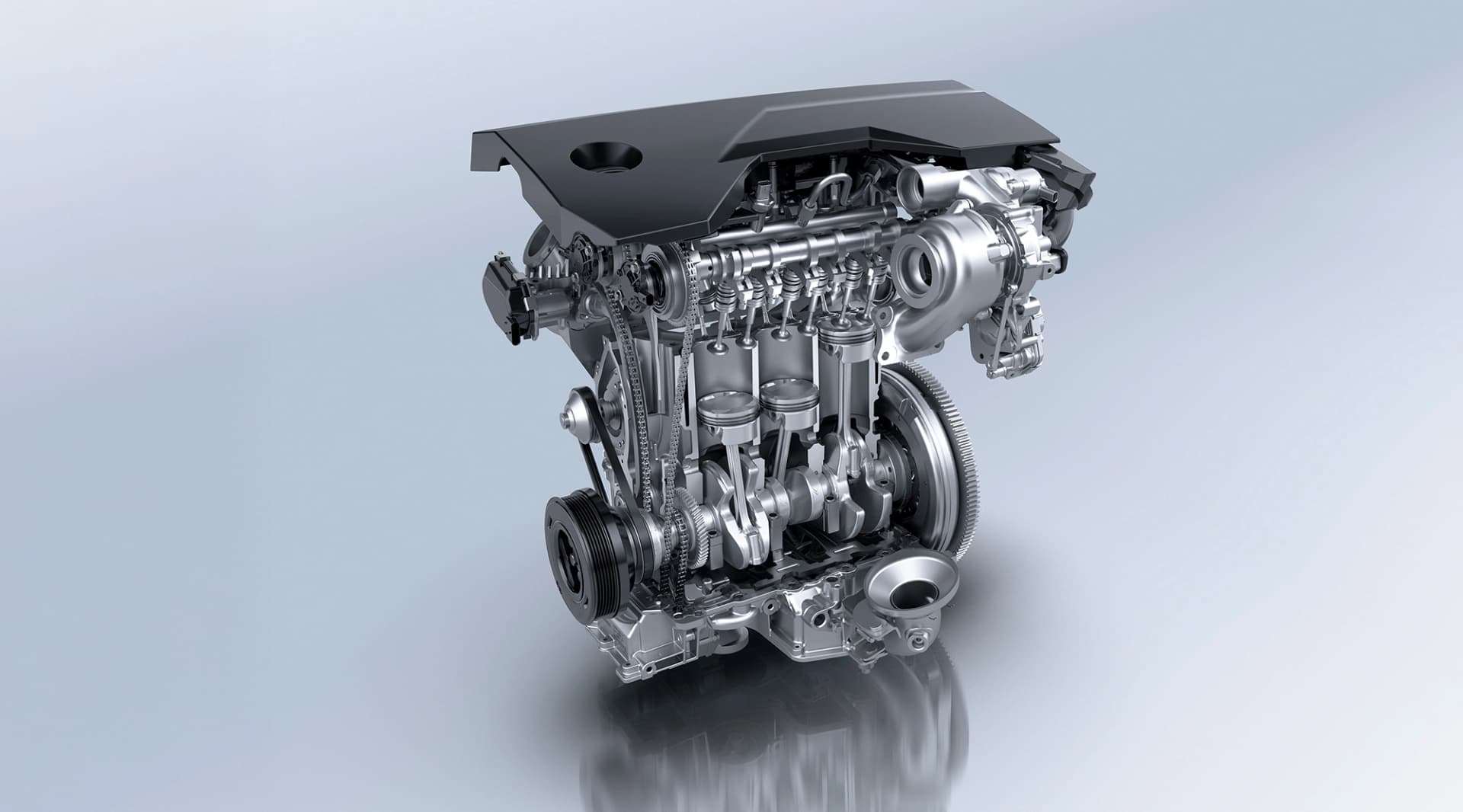
Peugeot unveils new Turbo 100 engine for the 208 and 2008
At a time when electrification dominates headlines across Europe, Peugeot is quietly reinforcing the relevance of combustion engines.
The French brand has just introduced its new Turbo 100 petrol engine, a next-generation three-cylinder unit designed to power the Peugeot 208 and Peugeot 2008 starting from 2026. And while the numbers may not seem revolutionary at first glance, the story behind this engine is far more interesting.
A new-generation engine, not just an update
The Turbo 100 is not a simple evolution of Peugeot’s existing powertrains. According to the brand, it represents a third-generation engine with around 70% new components. That includes key elements such as:
a new variable-geometry turbocharger
a redesigned high-pressure direct injection system
updated pistons and engine block
and, notably, the return to a timing chain instead of a belt
The engine produces 101 hp and 205 Nm of torque from just 1,750 rpm, making it particularly suited for urban driving and everyday usability. But the real focus here isn’t outright performance, it’s responsiveness, efficiency and long-term durability.
Bringing diesel-like characteristics to petrol
One of the most notable technical upgrades is the introduction of a variable-geometry turbocharger, a solution traditionally associated with diesel engines. In a petrol engine, this technology allows for strong low-end response, improving acceleration at low revs and making city driving noticeably smoother.
Combined with a 350-bar high-pressure direct injection system and operation based on the Miller cycle, Peugeot aims to significantly improve combustion efficiency. The result is an engine that delivers better real-world drivability, rather than chasing headline performance figures.
Reliability becomes a priority again
Perhaps the most telling aspect of the Turbo 100 is Peugeot’s renewed focus on reliability. The switch to a timing chain is a clear signal. In recent years, timing belt issues have been a sensitive topic across the industry, particularly within the broader Stellantis portfolio.
To validate durability, Peugeot subjected the engine to:
over 30,000 hours of bench testing
more than 3 million kilometres of real-world testing
with several vehicles exceeding 200,000 km
In addition, the engine benefits from extended service intervals of 2 years or 25,000 km, reducing ownership costs.
A combustion engine in an electric era
The introduction of the Turbo 100 comes at a time when most manufacturers are accelerating their transition to electric mobility. Models like the Peugeot e-208 already play a key role in Peugeot’s lineup, and Europe’s regulatory framework continues to push electrification forward.
Yet this new engine highlights a more nuanced reality. Not all markets (or customers) are ready to go fully electric. And for many, a refined, efficient petrol engine still makes perfect sense, especially in segments like compact hatchbacks and SUVs.
AutoNext Take
At first glance, launching a new petrol engine in 2026 might seem like a step backwards. In reality, it’s a highly pragmatic move.
The Turbo 100 isn’t about reinventing the internal combustion engine. It’s about making it as efficient, reliable and usable as possible for the years it still matters. And that’s the key takeaway.
The future may be electric, but the present is still hybrid, transitional and, in many cases, very much combustion-driven.
