Skoda's Peaq covered 936 km on one charge, at under 40 km/h
Nobody is going to drive a Peaq like this, and Skoda says so itself
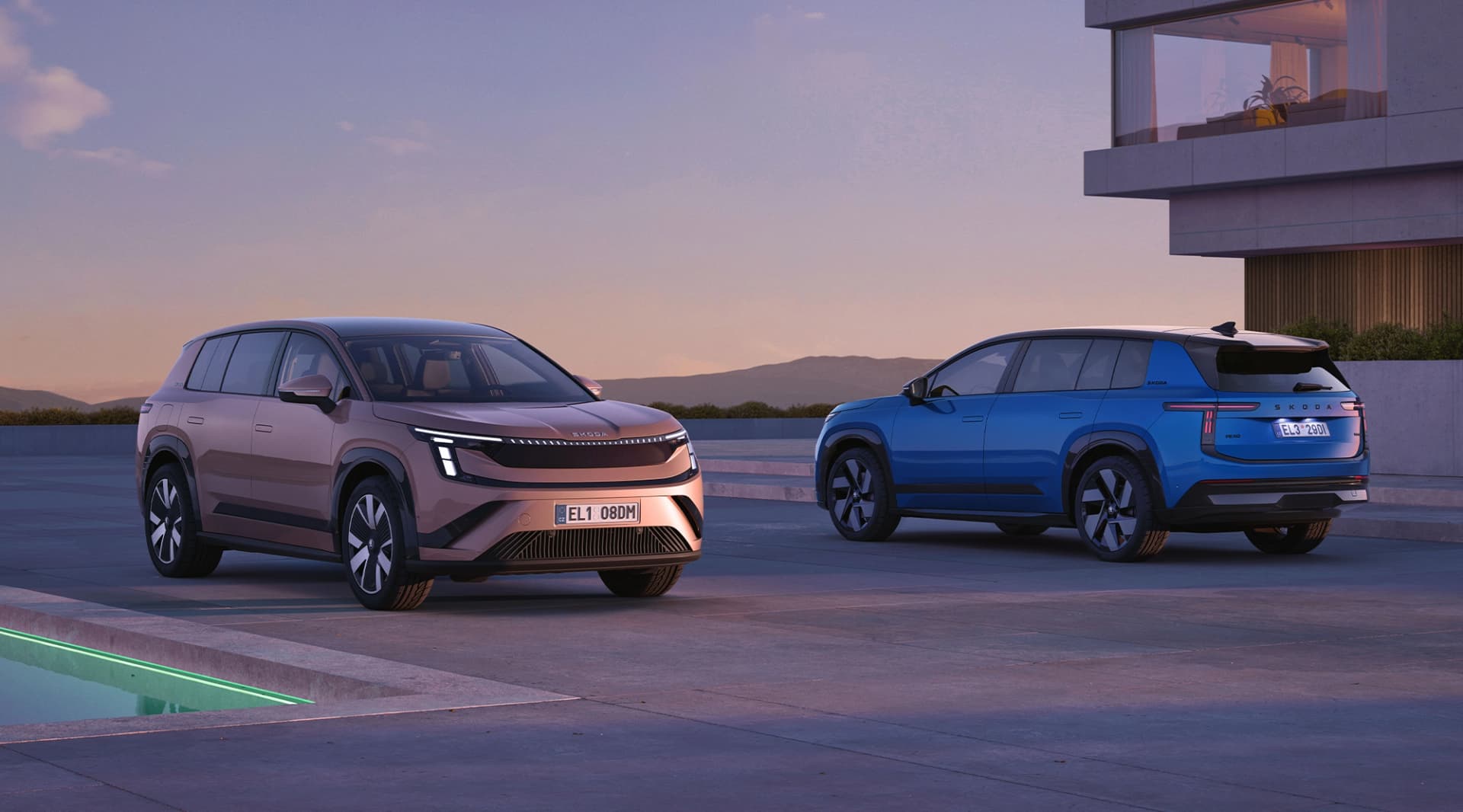
Skoda sent a production Peaq 90 from its Mladá Boleslav factory to Zandvoort on the Dutch coast, 936 km, without plugging in once, and had TÜV SÜD watch it happen. The car is the brand's seven-seat electric flagship, and the run beat its homologated WLTP range by 289 km. The distance is not the interesting part. What the distance cost is.
The Peaq 90 covered 936 km on 86 kWh of usable battery
The record car was a standard Peaq 90, with nothing modified: a 91 kWh battery of which 86 kWh is usable, a single rear motor with 286 PS, 19-inch wheels on the production low-rolling-resistance tyres and the series drag coefficient of 0.249. Two Skoda staff drove it, Marek Jež, who heads the Peaq model line, and Jakub Krs, who is responsible for high-voltage battery strategy. The route ran from Bohemia across Germany to the North Sea.
9.2 kWh/100 km is about 31% below the Peaq's own WLTP consumption
The car averaged 9.2 kWh/100 km, which is exactly what 86 kWh divided over 936 km gives you: the battery went to empty. Now set that against the homologation. A WLTP range of 647 km from the same 86 kWh implies 13.3 kWh/100 km, so the record run used roughly 31% less energy per kilometre than the cycle Skoda advertises. The extra 289 km came out of the driving, not out of the hardware, and as with BYD's 30,000 km battery claim, the headline survives the arithmetic while quietly changing meaning.
Midday Tuesday to Wednesday afternoon works out below 40 km/h
Skoda's own timeline is the giveaway. The car left Mladá Boleslav at midday on Tuesday 25 August, reached the Netherlands early on Wednesday morning and only finished in Zandvoort that afternoon. That is more than 24 hours of elapsed time for 936 km, or under 40 km/h once every stop is counted in. Hypermiling is not a mode you switch on. It is a day of your life.
Jakub Krs: customers are unlikely to drive the car this way
Skoda did not oversell any of it. Krs said plainly that in everyday use customers are unlikely to drive the Peaq this way, and will instead use its driving dynamics, infotainment and comfort. Jež described the attempt as a demonstration of what the technology can achieve when pushed to its limits. TÜV SÜD's supervision is what lifts the 936 km above a press-release number, and it is the same reason the caveat that came with it should be believed.
The seven-seat class record rests on a €990 option
Skoda is claiming a range record for seven-seat electric SUVs with a car that is only a seven-seater once you pay for the third row: €990 in Germany, where the Peaq range opens at €49,900 and the Peaq 90 that made the run lists at €57,900. That is the same money Polestar is asking for its new 4 SUV. Dutch buyers start at €49,990 with first deliveries in mid-October, and Skoda says more than 10,000 orders are already in.
AutoNext Take
Records like this usually deserve the eye-roll they get, and this one does not, because Skoda punctured it first. A manufacturer that puts its own battery strategist on the record saying customers will not drive like this is not trying to fool anyone. What the run actually proves is narrower and more useful than 936 km: the Peaq's aerodynamics and rolling resistance are good enough that the ceiling on its range is the person holding the wheel. A 4.87-metre seven-seater that homologates at 13.3 kWh/100 km is the real achievement, and Skoda buried it under a stunt.
So here is the figure to hold Skoda to. Drive a Peaq 90 at a steady 130 km/h with the third row up and the boot loaded and it will sit north of 20 kWh/100 km, which puts the usable range closer to 400 km than to 936. That is still a strong number for a seven-seat electric SUV, and it is the one those 10,000 orders will actually live with. Skoda has proved where the ceiling is. It has not yet shown us the floor.