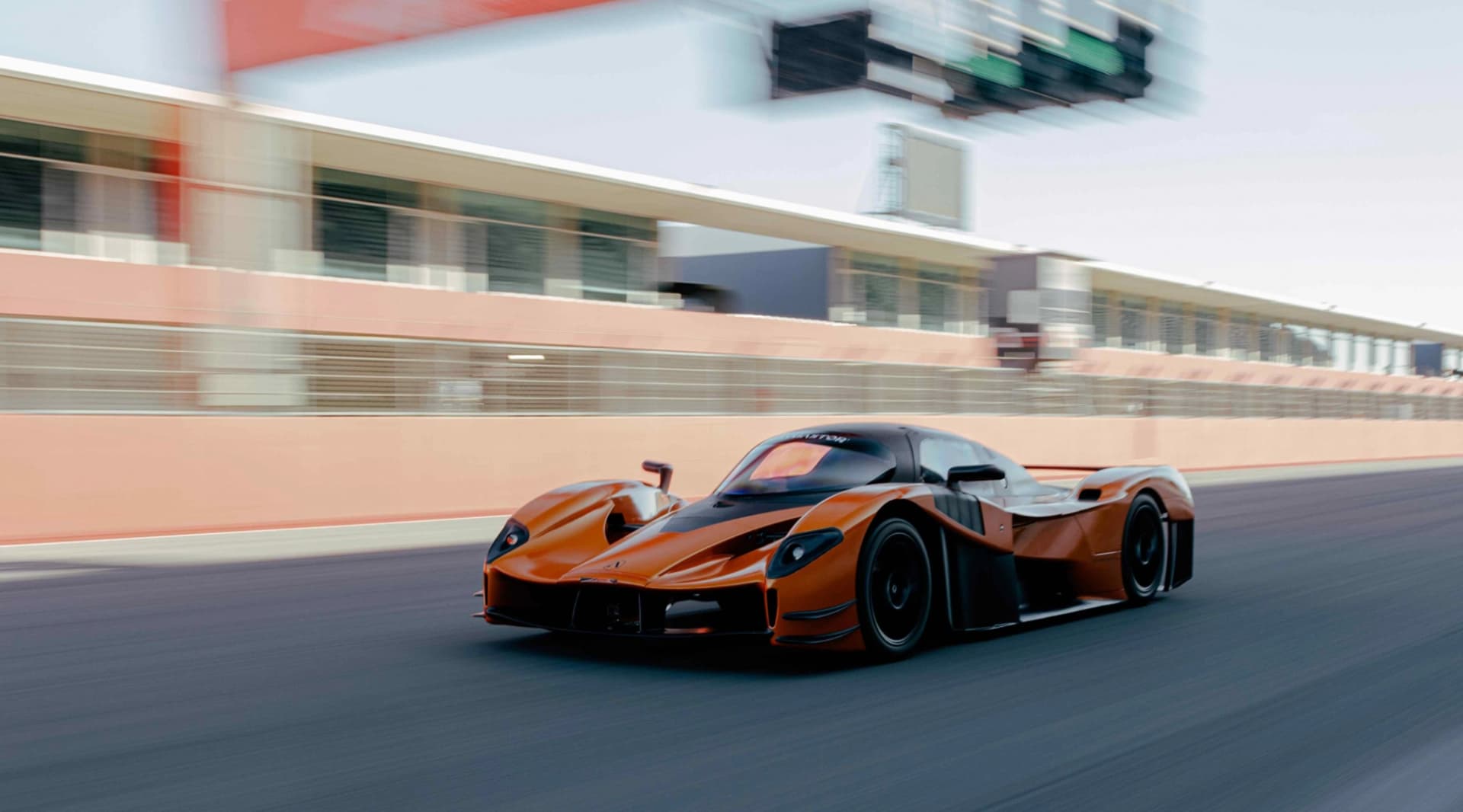
The Adamastor Furia is Portugal’s first supercar and this with Ford GT V6 power
Portugal has entered the supercar conversation.
Meet the Adamastor Furia, a carbon-fibre, Ford V6-powered, track-focused machine developed just north of Porto by a company that has spent years working with advanced composites. And that detail matters, because the Furia does not feel like random startup fantasy. It feels like a very ambitious, very Portuguese attempt to build a real supercar from the ground up. Adamastor calls it the first Portuguese supercar.
A carbon fibre supercar from Porto
The Adamastor Furia is built around a carbon fibre structure and body, with a dry weight of around 1,050 kg. That is extremely light by modern supercar standards, especially in a world where performance cars are getting heavier, more electrified and increasingly dependent on software to hide their mass. The Furia takes a different route:
Low weight.
Mechanical focus.
Serious aero.
Minimal electronics.
Adamastor has designed the car around massive Venturi tunnels underneath the body, using ground effect to generate serious downforce. The claimed figure is around 1,000 kg of downforce at 250 km/h for the road car, while the planned race version could reach up to 1,800 kg.
Ford GT power, Portuguese execution
At the centre of the Furia sits a 3.5-litre twin-turbo V6, sourced from Ford Performance and closely related to the engine used in the second-generation Ford GT. In the Furia, it produces around 650 hp and 571 Nm of torque.
That may not sound outrageous in a hypercar world where everyone wants to shout about 1,500 or 2,000 hp, but the context is important. With only around 1,050 kg to move, the Furia does not need absurd power to feel violent. Adamastor claims 0 to 100 km/h in around 3.5 seconds, 0 to 200 km/h in around 10.2 seconds, and a top speed of more than 300 km/h in road specification.
The gearbox is a Hewland sequential transmission with paddle shifters, because this is clearly not trying to be a soft grand tourer, this is a road-legal track weapon.
A cockpit built around ritual, not convenience
The Furia is also full of strange, charming details. The start button is placed on the roof, which Adamastor describes as a ritual. That sounds slightly ridiculous, but it also tells you what kind of car this is trying to be. The Furia is not designed to make daily life easier. It is designed to make every interaction feel theatrical.
The cabin is built around carbon fibre, two seats, an LMP-style steering wheel and extensive personalisation possibilities. Buyers will be able to choose materials, colours, stitching and other bespoke details. It will not be the most comfortable car for crossing Europe but that is not the point.
Only 60 units, and the price is not shy
Adamastor plans to build just 60 units of the Furia. The price is expected to start around €1.6 million before taxes, which means final European pricing will move significantly higher depending on market and VAT.
At that level, buyers are not simply comparing performance. They are comparing brand heritage, resale value, collector status, aftersales confidence and emotional pull. Adamastor is entering a space occupied by names such as Pagani, Koenigsegg, Rimac, Aston Martin and Gordon Murray Automotive. That is not an easy room to walk into.
Le Mans ambition: crazy, but interesting
Adamastor has also spoken about a racing version and long-term ambitions around the 24 Hours of Le Mans. Is that realistic? Hard to say.
Le Mans is brutal, expensive and politically complex. Turning a low-volume supercar into a serious endurance racing project is not simply a matter of adding stickers and a bigger wing. It requires homologation, budget, reliability, technical partners and years of development.
But ambition matters, and if Adamastor is serious about using motorsport as part of the Furia’s identity, that could help give the brand credibility beyond being a one-car curiosity. A Portuguese supercar at Le Mans would be a fantastic story.
AutoNext Take
A new Portuguese supercar brand, a Ford-derived V6, a €1.6 million-plus price tag, 60 planned units, Le Mans ambition and a market full of established monsters? On paper, it sounds almost impossible.
The biggest challenge will not be performance. With 650 hp, 571 Nm, 1,050 kg and serious downforce, the Furia should be more than quick enough. The challenge will be trust. Buyers at this level need to believe in the company, the service, the reliability and the long-term story.