The Citroën 2CV Spot turns 50: the limited edition that changed automotive marketing
The limited edition that changed automotive marketing.
In 1976, Citroën introduced something that would quietly reshape automotive marketing: the Citroën 2CV Spot, the brand’s very first limited-edition model. Only 1,800 cars were produced, and they sold out within days. Now, exactly 50 years later, the cheerful orange-and-white city car returns to the spotlight, celebrated as one of the most charming milestones in Citroën’s history.
A bold idea born in a design studio
The story of the 2CV Spot begins in 1974, inside Citroën’s design studios. Designer Serge Gevin proposed two radically different ideas for a special edition of the humble 2CV. One explored darker, sportier contrasts. The other embraced something far more playful.
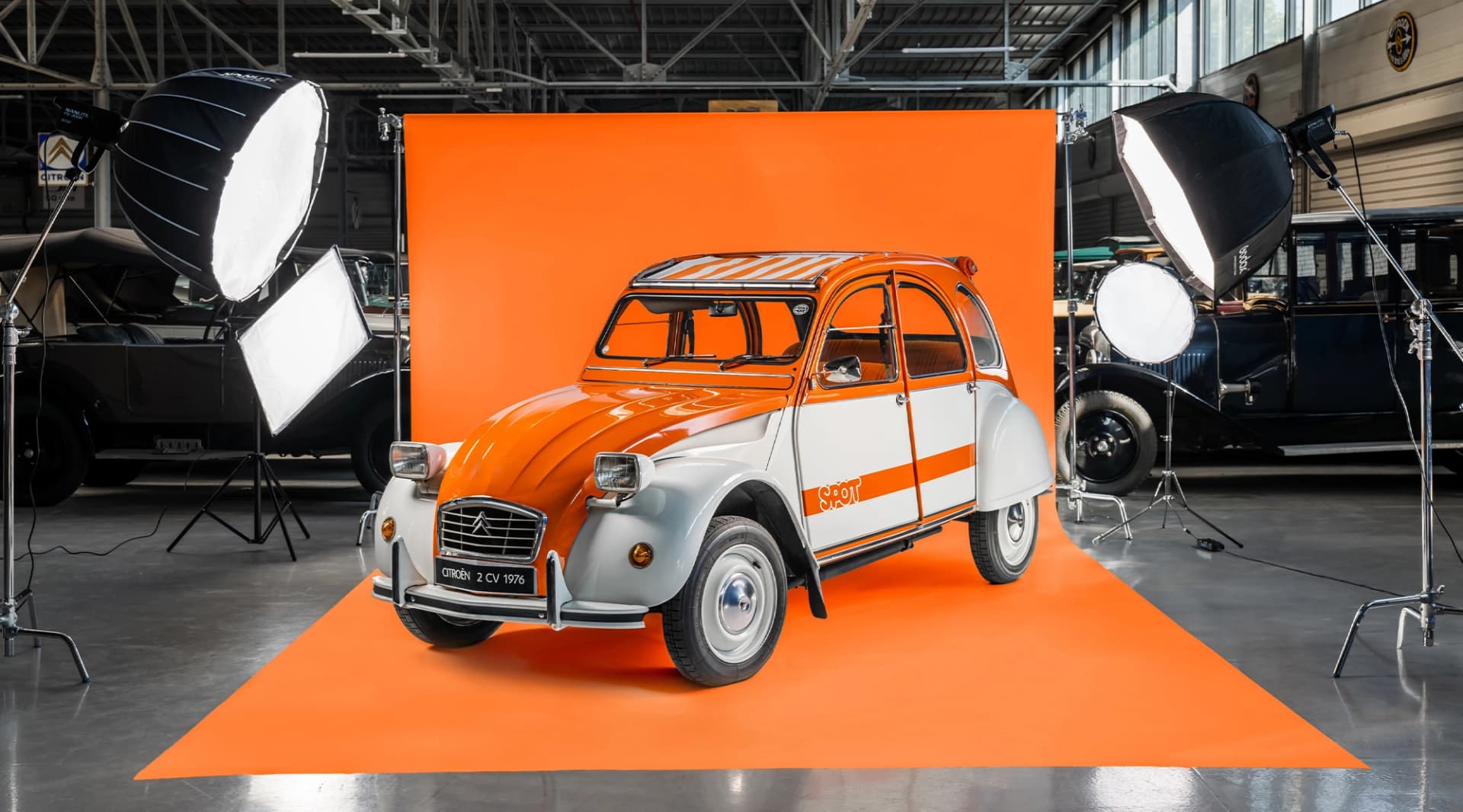
The winning proposal featured an unforgettable colour scheme: Orange Ténéré bodywork paired with Blanc Meije fenders. The roof and door panels carried orange-and-white stripes inspired by striped beach deck chairs, giving the car a carefree, almost seaside personality.
Originally, the model was supposed to be called “Transat,” a name suggested by Micheline Gevin that perfectly reflected the maritime inspiration. But because the name was already registered in France, Citroën ultimately chose the simpler name “Spot.” It was a small decision that would eventually become a big part of the brand’s heritage.
A small car with a perfectly coherent identity
What made the 2CV Spot so appealing was the consistency of its design. Every detail contributed to the car’s joyful character.
The striped canvas roof echoed the orange-and-white theme of the interior door panels. The seats were upholstered in Venetian orange jersey fabric, while stainless steel hubcaps borrowed from the Citroën Dyane added a subtle touch of refinement.
Even the branding was distinctive: a white “Spot” decal sat proudly on an orange band across the doors. Technically, the car was based on the 2CV 4, powered by a modest 435cc engine capable of pushing the car past 100 km/h while consuming just 5.4 litres per 100 kilometres.
The price at launch was 13,600 French francs. In other words, it remained exactly what the 2CV had always been: simple, affordable and brilliantly practical.

An instant success across Europe
When the 2CV Spot was launched on April 10, 1976, Citroën organised something relatively new at the time: a national launch event across its entire dealer network. For the first time, a limited edition model was introduced as a coordinated marketing campaign. The response was immediate.
Orders flooded in as soon as dealership doors opened, and the entire production run sold out within just a few days. Dealers quickly found themselves with more customers than available cars. By May 1976, deliveries were already nearing completion.
Demand was so strong that Citroën soon decided to expand sales to other European markets. Additional examples were produced in the Forest, Belgium, where the brand manufactured versions for the Benelux and Italian markets. While most countries received the same 435cc version as France, the UK and Switzerland were offered variants powered by the stronger 602cc engine of the 2CV 6.
From cheerful city car to automotive heritage
Fifty years later, the 2CV Spot has become much more than a quirky special edition. It has become a piece of automotive culture. In 2026, the model will be celebrated at two major events dedicated to classic motoring.
At the 31st National Meeting of 2CV Clubs of France, held in Villiers-sur-Loir between May 13 and 17, nearly 3,000 Citroën 2CV models are expected to gather for one of the largest celebrations of the car ever organised.
Later in the year, the 2CV Spot will also appear on the official poster of Epoqu’Auto, one of Europe’s most important historic automotive exhibitions. Being featured on the event’s poster places the little orange Citroën among an exclusive group of vehicles that truly shaped automotive history.
AutoNext Take
The 2CV Spot may look like a simple special edition today. But in reality, it introduced a concept that would later become standard practice across the industry.
Back in 1976, the idea of producing a limited-edition version of an everyday car was almost unheard of. The 2CV Spot proved that even the simplest vehicle could become something special through design, storytelling and clever marketing.