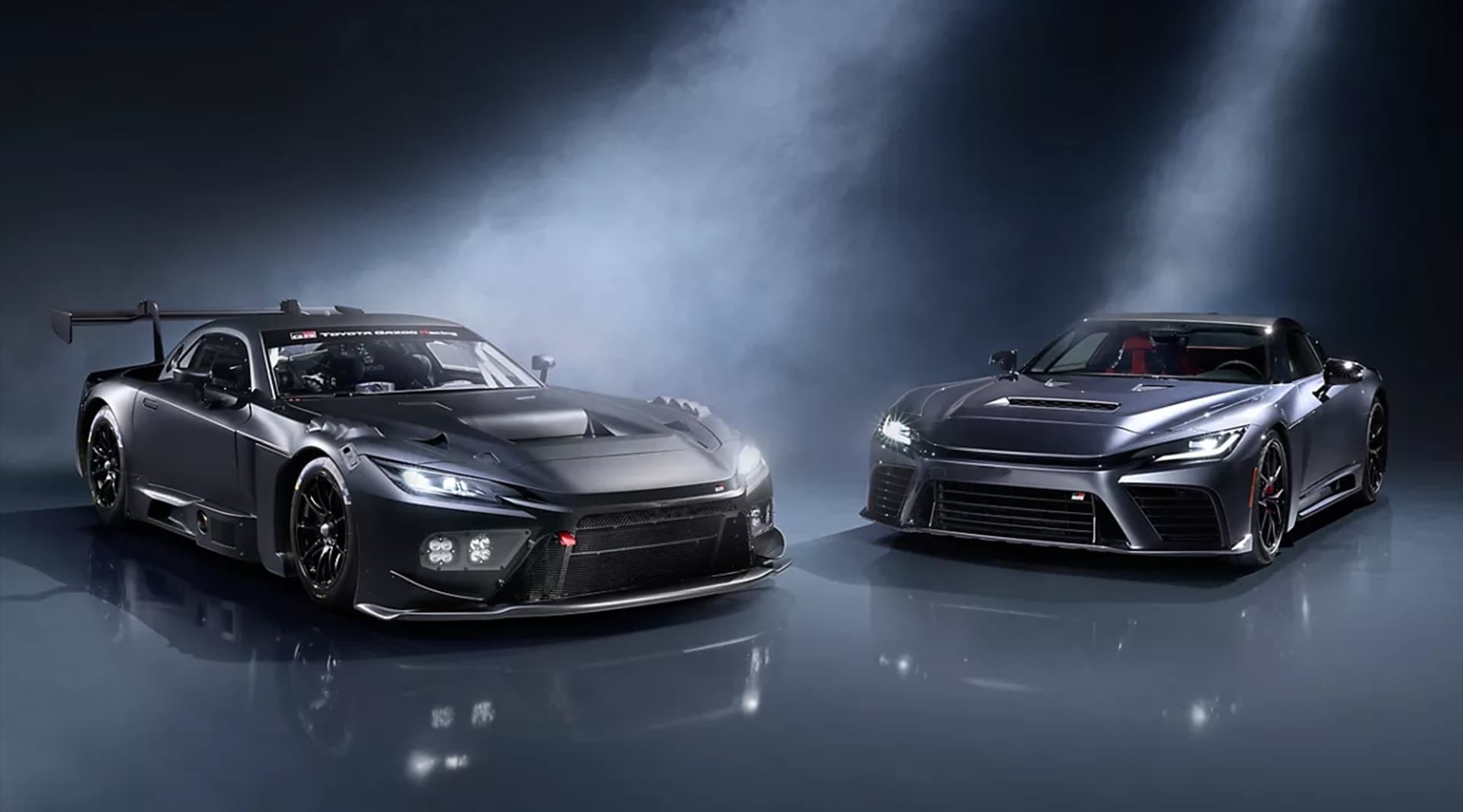
Toyota's GR GT3 shares 80% of its parts with the road car
Toyota's GR GT3 borrows more from its road car than any rival
Toyota Gazoo Racing says its new GR GT3 customer racer shares more than 80 percent of its parts with the road-going GR GT supercar, a figure the brand's outgoing Lexus RC F GT3 never approached. Andrew Gilleland, Toyota's senior vice president of automotive operations, told IMSA's YouTube channel the road car was shaped by the race car's needs, calling the GR GT3 “a race car first.”
Toyota's 80 percent is triple the Lexus RC F GT3's 25
Andrew Gilleland, Toyota's senior vice president of automotive operations, drew the comparison himself in a video posted to IMSA's YouTube channel. The outgoing Lexus RC F GT3, which took Vasser Sullivan Racing to the 2023 GTD Pro title, shared roughly 25 percent of its parts with the road-going RC F it was nominally based on. The GR GT3 needed more than 80 percent, Gilleland said, because the road car was designed around the race car's requirements from the start, not the other way round.
The road car's hybrid V8 output dropped from 650 to 640 hp
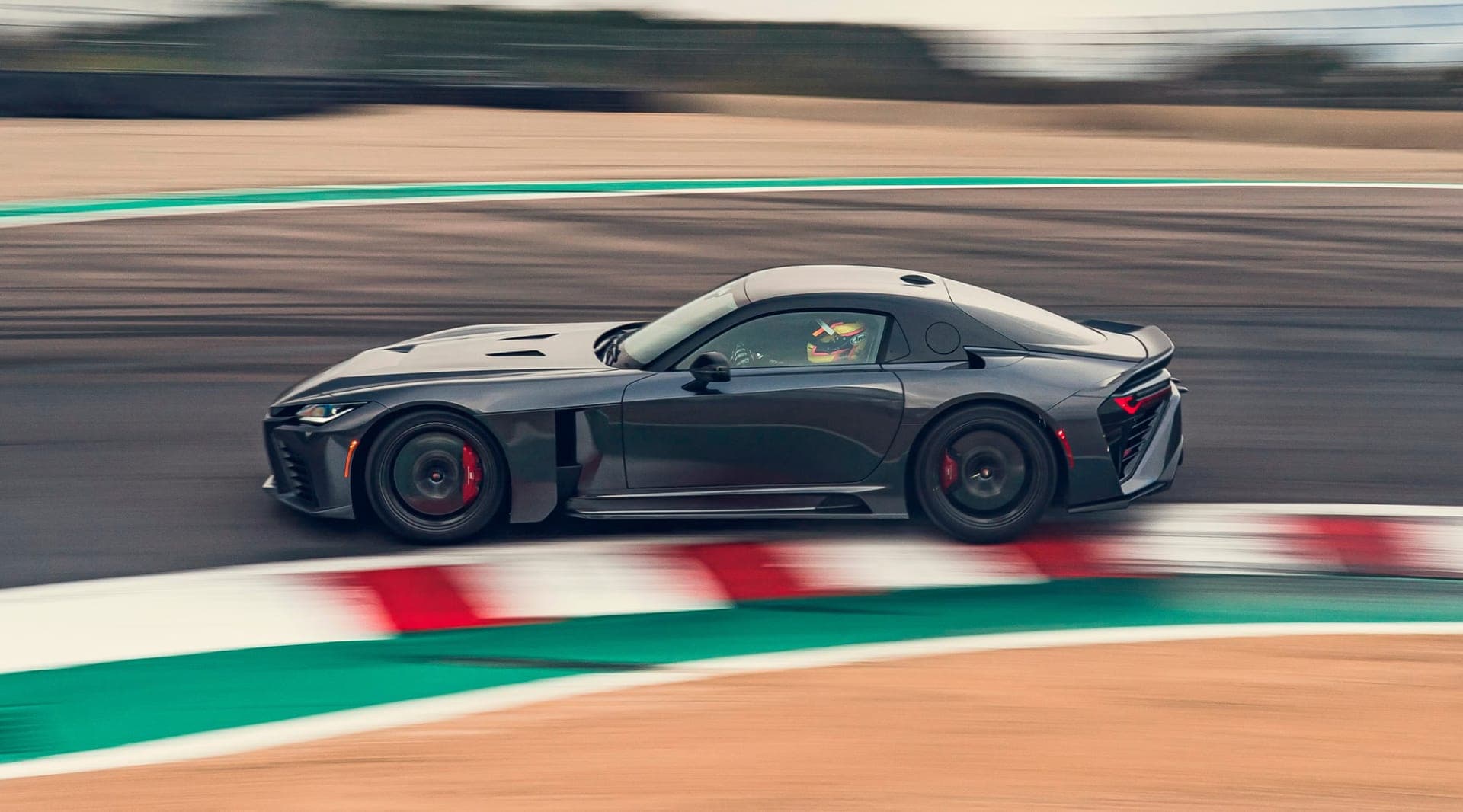
Toyota's own target for the road-going GR GT, set at its December 2025 reveal, was at least 650 hp from a 4.0-litre twin-turbo hybrid V8 mounted low in a hot-V layout. Nearly a year on, Toyota's own account of the finished car puts combined output at 640 hp and 850 Nm, sent through an eight-speed dual-clutch gearbox to the rear wheels. The GR GT3 keeps the same V8 block and turbo layout but drops the hybrid system entirely, since FIA GT3 rules do not allow electric assistance.
A red and black test car turns laps at the Nürburgring
Footage posted this week shows a red and black GR GT3 test car working hard around the Nürburgring Nordschleife, its oversized rear wing and vented front fenders setting it apart from the road-going GR GT at a glance. It follows testing alongside the GR GT at California's Laguna Seca earlier this year. AutoNext previously covered
a separate, road-legal flagship variant of the GR GT chasing Porsche's 911 GT3 RS on the same Nordschleife, a hotter version of the customer car rather than the FIA GT3 racer in this week's video, and the two should not be confused.IMSA's GTD Pro is where the Lexus won, Mercedes still waits
Toyota has not named the series the GR GT3 will enter first, but the road car's 2027 target date points at the same window when IMSA's GTD Pro class becomes the obvious stage: the class the RC F GT3 already won once. Mercedes-AMG, one of the GR GT3's likely rivals, has confirmed
a new AMG GT3 of its own, but not in time for the 2027 season, leaving a gap Toyota's new car could fill first.Toyota's plan is more open-ended than Ford's Le Mans push
Reverse-engineering a racing programme into a road car is not new. Ford revived the GT nameplate to win the GTE class at Le Mans in 2016, marking the GT40's 50th anniversary, then built a narrow run of road cars to satisfy homologation rules before winding the programme down. Toyota is not chasing one anniversary or one race: Gazoo Racing has described the GR GT and GR GT3 as a standing commitment, with no announced end date.
AutoNext Take
The Lexus RC F GT3 already proved a badge-deep GT3 car can win. Vasser Sullivan took it to the 2023 GTD Pro title with a chassis that shared roughly a quarter of its parts with the road-going RC F. Toyota did not need to beat that number to justify building a new car, so pushing commonality past 80 percent reads less like a marketing figure and more like Toyota admitting the old approach was reaching its limit.
Toyota has not confirmed which series gets the first customer cars, but FIA GT3 homologation typically follows a manufacturer's first Balance of Performance submission by about a year. If the GR GT3 lines up for the 2027 IMSA season that its road-going sibling's launch date implies, the RC F GT3's championship record becomes the benchmark Toyota's commonality claim has to beat on track, in real lap times, not in a press release.