BMW M2 xDrive onthuld met 480 pk en sprint in 3,7 seconden
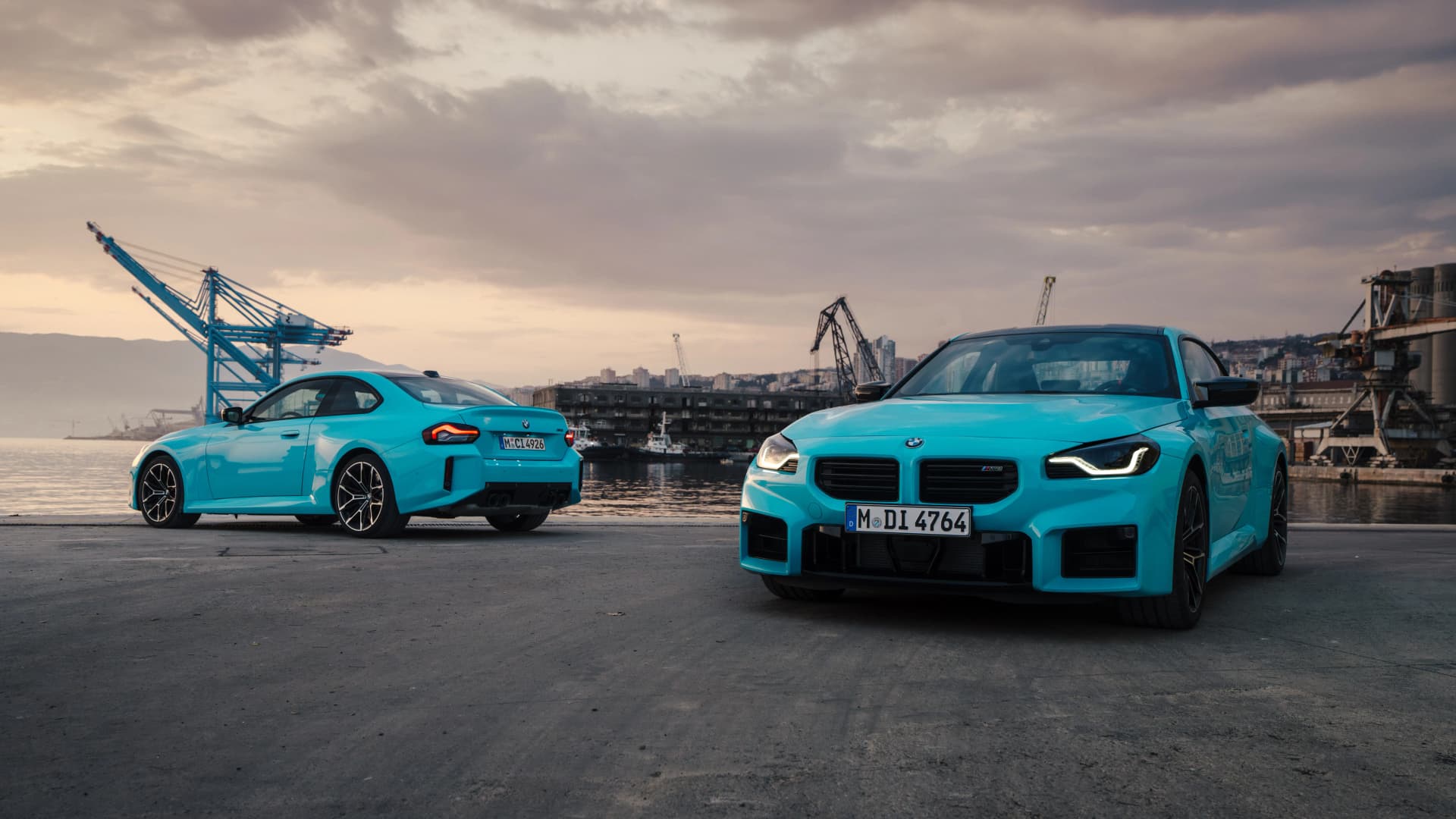
BMW heeft het eindelijk gedaan. De BMW M2 krijgt M xDrive.
Voor het eerst wordt BMW’s compacte high-performance coupé beschikbaar met vierwielaandrijving, goed voor meer tractie, snellere acceleratie en betere bruikbaarheid in alle weersomstandigheden. Op papier klopt het volledig. Maar emotioneel? Daar wordt het interessant. Want een deel van de charme van de M2 was altijd dat hij als de laatste simpele aanvoelde. Compact, agressief, achterwielaangedreven, een beetje wild. De auto die je kocht omdat een M3 groter, duurder en serieuzer was geworden.
Dezelfde 480 pk, veel meer tractie
De nieuwe BMW M2 met M xDrive gebruikt de bekende 3,0-liter zescilinder-in-lijn turbomotor, goed voor 353 kW / 480 pk. Het vermogen wordt verdeeld via BMW’s M xDrive-vierwielaandrijving, in samenwerking met het Active M Differential achteraan. Het systeem blijft rear-biased, en dat is belangrijk. In normale omstandigheden gaat het vermogen eerst naar de achterwielen. Pas wanneer de achteras hulp nodig heeft, komt de vooras erbij.
Dit moet de M2 niet veranderen in een veilige, gevoelloze all-weather machine. Het moet de auto meer bruikbare performance geven, terwijl het kerngevoel van M overeind blijft. BMW laat de bestuurder M xDrive ook configureren via het M Setup-menu, inclusief een 2WD-modus met DSC uitgeschakeld, waarbij het koppel enkel naar de achterwielen gaat.
De cijfers zijn serieus
De tractiewinst zie je meteen in de prestaties. De M2 xDrive accelereert van 0 naar 100 km/u in 3,7 seconden, wat 0,3 seconden sneller is dan de achterwielaangedreven versie. Met de one-foot rollout-methode geeft BMW zelfs 3,4 seconden op.
De sprint van 0 naar 200 km/u duurt 12,8 seconden, of 12,5 seconden met rollout. Van 80 naar 120 km/u gaat in 3,7 seconden. De topsnelheid is begrensd op 250 km/u, of 285 km/u met het optionele M Driver’s Package. Dat zijn niet langer gewoon cijfers voor een compacte sportwagen. Dat zijn echt serieuze cijfers.
M Ignite: racetechnologie voor lager verbruik onder belasting
De nieuwe M2 xDrive introduceert ook BMW M Ignite-technologie, een nieuw gepatenteerd pre-chamber combustion-proces. BMW zegt dat het systeem uit racewagenontwikkeling komt en helpt om het brandstofverbruik onder hoge belasting aanzienlijk te verlagen. Het ondersteunt ook toekomstige EU7-vereisten en wordt vanaf midden 2026 geïntroduceerd op alle BMW M-zescilinders-in-lijn.
Dit is interessanter dan het klinkt. Want circuitrijden is exact waar krachtige benzinewagens op absurd tempo brandstof verbruiken. Als M Ignite bestuurders toelaat om langer hoge prestaties vol te houden met dezelfde hoeveelheid brandstof, dan is dat oprecht nuttige technologie, en niet zomaar een regulatoire voetnoot.
Alleen automaat, grotere karaktervraag
De M2 xDrive krijgt standaard een M Steptronic-transmissie met Drivelogic. Dat is niet verrassend. M xDrive en automaten zijn de normale combinatie in moderne BMW M-producten. Het helpt ook om die acceleratiecijfers te halen.
Maar het maakt de filosofische vraag scherper. Een achterwielaangedreven M2 met handbak voelt nog altijd als de puristische keuze. Het xDrive-model is sneller, bruikbaarder en waarschijnlijk vertrouwenwekkender bij slecht weer. Maar het is ook zwaarder, complexer en minder old-school. Dat maakt hem niet slechter. Het maakt hem gewoon anders. En misschien dichter bij een mini M4 xDrive dan bij een traditionele M2.
AutoNext Take
De M2 xDrive wordt extreem snel en technisch briljant. De 2WD-modus helpt. De rear-biased setup helpt. Het Active M Differential helpt. Maar een deel van ons denkt nog steeds dat de puurste M2 achterwielaangedreven moet blijven.
Want wanneer je veilige, dagelijkse, all-season performancewagen vierwielaandrijving nodig heeft, kijk je misschien eigenlijk al naar een M3 xDrive. De M2 xDrive is logisch. We zijn alleen niet helemaal zeker dat de M2 zó logisch moest worden.