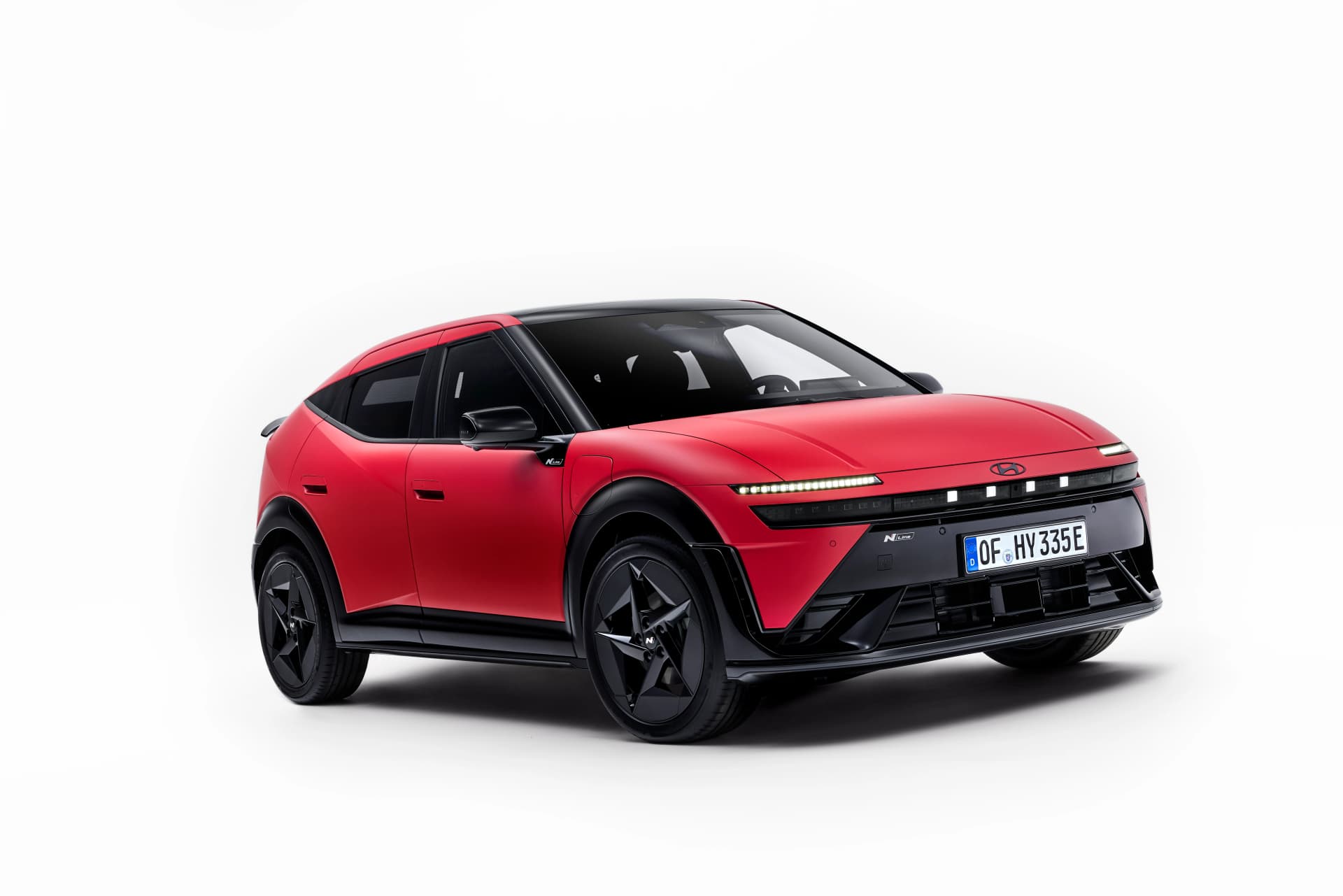
The Hyundai IONIQ 3 is the electric hatchback that might finally get Europe right
Less hype, more reality. Hyundai’s smartest EV yet?
The electric car market in Europe doesn’t need another statement piece. It needs something that actually works. That’s exactly where the new Hyundai IONIQ 3 comes in, not as a halo car, not as a design experiment, but as a deliberate answer to what European drivers have been asking for all along: a compact, efficient, usable electric car that makes sense every single day.
The “Aero Hatch” that quietly solves a real problem
Hyundai calls it an “Aero Hatch”. That might sound like marketing language, but the idea behind it is surprisingly honest. Low, clean front, a stretched roofline and a sharp rear cutoff. Not to look dramatic but to reduce drag and maximise space.
With a drag coefficient of just 0.263, this is one of the most aerodynamic cars in its class. But more importantly, that shape translates directly into something customers actually feel: more headroom, more rear space, and a proper usable boot.
441 litres, to be exact, plus a clever underfloor “Megabox” that finally makes charging cables less of a daily annoyance.
Finally, an EV that doesn’t overcomplicate things
Let’s be honest: a lot of modern EVs try too hard. Too many menus. Too many features nobody asked for. Too much friction in everyday use. The IONIQ 3 goes in the opposite direction.
It’s the first Hyundai in Europe to run on Android Automotive OS with the new Pleos Connect system. That matters, not because of the name, but because it changes how the car feels to use.
Cleaner interface. Faster responses. Less thinking required. You get a proper EV route planner, smartphone key functionality, and Vehicle-to-Load, all integrated in a way that feels natural instead of forced.
Range where it matters, not just on paper
Hyundai is targeting up to 496 km WLTP for the Long Range version, with a smaller battery option still delivering around 340 km. More importantly, charging is realistic:
10 to 80% in around 29 minutes
AC charging up to 22 kW
No headline-chasing. Just usable numbers. And that’s key, because this sits right in the heart of the European market, where people don’t need 1,000 km range… they need a car that fits their routine without stress.
Europe is the real battlefield and Hyundai knows it
What makes the IONIQ 3 interesting isn’t just the product. It’s the positioning. Designed for Europe. Built in Europe (Türkiye). Launched for European realities.
This is Hyundai going directly after cars like the Renault 5, Volvo EX30, MG4, and whatever Volkswagen is preparing in the ID. Polo space. And here’s where things get serious.
Because while European brands are still balancing heritage, electrification strategy and pricing pressure, brands like Hyundai are doing something simpler: They’re building cars that just make sense.
AutoNext Take
The IONIQ 3 isn’t trying to be the most exciting EV. It’s trying to be the most logical one. And that might be far more dangerous for the competition.
Because if Hyundai gets this right (usability, pricing, efficiency) this isn’t just another model. It’s a volume weapon.